
About Max Wertheimer
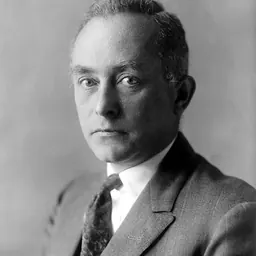
Lived 1880 – 1943 (aged 63). Max Wertheimer was an Austrian and American psychologist, university teacher and philosopher.
Max Wertheimer (; April 15, 1880 – October 12, 1943) was a psychologist who was one of the three founders of Gestalt psychology, along with Kurt Koffka and Wolfgang Köhler. He is known for his book Productive Thinking and for conceiving the phi phenomenon as part of his work in Gestalt psychology.
Wertheimer became interested in psychology and studied under Carl Stumpf at the University of Berlin. Wertheimer then went on to obtain his PhD in 1904 under Oswald Külpe, at the University of Würzburg
Early life (1880–1903) Max Wertheimer was born on April 15, 1880, in Prague, then part of Austria-Hungary. He was born to Wilhelm and Rosa Wertheimer, second to his brother Walter. Wilhelm Wertheimer was an educator and financier. Rosa Wilhelm, born Rosa Zwicker, had a rich classical education. The Wertheimers were active in the Jewish community in which they lived. The Wertheimer household was extremely intellectual, therefore Max received education from both his parents; he engaged in political and educational discussions at home, as well as taking piano and violin lessons. After he received one of Baruch Spinoza's books as a gift, he developed an interest in philosophy. He felt that he and Spinoza shared a culture and common traits.
Wertheimer began his formal education aged five, at a private elementary school maintained by the Piarist order of the Roman Catholic Church. It was not uncommon at this time for Jewish children in central Europe to receive educations from the Catholic Church. Aged ten, he graduated from the Piarist Grammar School and enrolled in the Royal Imperial New City German State High School, where he could expect to obtain a degree that would qualify him for admittance to a university. Due to the diverse courses offered by the university, he began to contemplate his future, and realized his deep fascination with philosophy. He first began to study law at Charles University, where he also explored philosophy, and other fields such as music, physiology, and psychology. After a year, Max left and enrolled in University of Berlin where he shifted his study to philosophy. At Berlin, Max was able to work in the company of figures such as Carl Stumpf, Friederich Schumann, Georg Elias Müller, and Erich von Hornbostel. Later on, in 1903, he gained his PhD from the University of Würzburg. There he completed research on the lie detector.
Time in Frankfurt and Berlin (1910–1933)
Max Wertheimer began his academic career at the Psychological Institute in Frankfurt, later to become the University of Frankfurt. From 1910 to 1916 he worked there and conducted pioneering experiments in the perception of motion and phi phenomenon. Wertheimer first founded his Gestalt theory before World War I, publishing his research on perception in "Experimental Studies on Motion Vision" in 1912. During World War I Wertheimer was a research psychologist with the Prussian Artillery Testing Commission, the center of which was located in the Bavarian Quarter of Berlin, close to Albert Einstein's house. Wertheimer's friendship with Einstein began at this time, in his visits he attempted to understand the Gestalt-like processes Einstein had used to conceive the theory of relativity. In the war years Wertheimer also became friends with physicist Max Born.
Time after leaving Germany (1933–1943) In 1933, the change in Germany's government convinced Wertheimer to leave Germany. Hearing Adolf Hitler's declarations, he felt his Jewish roots placed him in danger. The Wertheimer family joined other German emigrees and moved to the United States. The Wertheimers' emigration was arranged through the U.S. consulate in Prague, and he and his wife and their children arrived in New York harbor on September 13, 1933. The family became citizens as well; that's why Max Wertheimer is referred to as a German-American psychologist. Along with his move to America, Wertheimer accepted a professional position at age fifty-three at the New School for Social Research in New York City. The New School had been founded only fourteen-years before when he gained the opportunity to teach courses there, remaining at the New School for the last decade of his life. The movement an observer experiences is based on feedback from the moving eye.
Productive thinking As a Gestalt theorist, Max Wertheimer was interested in perception, but additionally interested in thought. These ideas formed the basis of his posthumously published book, Productive Thinking (1945). He believes that this blind obedience forestalls a person from uncovering the solution.
Gestalt theory
Wertheimer developed his Gestalt theory in 1910 while he was on board a train from Vienna for a vacation in Germany's Rhineland. Gestalt, in the closest English definition of the term, is translated potentially as configuration, form, holistic, structure, and pattern. Later efforts to discover such laws had limited success. He believed in the importance of the "will to truth" and the need look at the "total situation" in order to live justly. It was published in Freedom: Its Meaning, a collected works by many famous thinkers on the topic of freedom. A synthesis of the ideas that he wrote about in the first three papers, this one was written in the style of an autobiographical parable, like the sort of narrative seen in a pilgrim's progress. It is Wertheimer's "final affirmation of faith in the power of Gestalt, of the will to truth and justice, to lead the world into a post-Hitler era of freedom".
Publications
Wertheimer, M. (1922). Untersuchungen zur Lehre von der Gestalt, I: Prinzipielle Bemerkungen [Investigations in Gestalt theory: I. The general theoretical situation]. Psychologische Forschung, 1, 47–58. Wertheimer, M. (1923). Untersuchungen zur Lehre von der Gestalt, II. [Investigations in Gestalt Theory: II. Laws of organization in perceptual forms]. Psychologische Forschung, 4, 301–350. Wertheimer, M. (1934). "On Truth." Social Research. The Johns Hopkins University Press. 1 (2): 135–146 Wertheimer, M. (1935). "Some Problems in the Theory of Ethics." Social Research. 2 (3) Wertheimer. M. (1937). "On the Concept of Democracy" in M. Ascoli & F. Lehmann (Ed.), Political and Economic Democracy. W. W. Norton and Company. Wertheimer, M. (1938a). "The general theoretical situation". In W. D. Ellis (Ed.), A source book of Gestalt psychology (pp. 12–16). London, England: Routledge & Kegan Paul. (Original work published 1922) Wertheimer, M. (1938b). "Gestalt theory". In W. D. Ellis (Ed.), A source book of Gestalt psychology (pp. 1–11). London, England: Routledge & Kegan Paul. (Original work published 1924) Wertheimer, M. (1938c). Laws of organization in perceptual forms. In W. D. Ellis (Ed.), A source book of Gestalt psychology (pp. 71–94). London, England: Routledge & Kegan Paul. (Original work published 1923) Wertheimer, M. (1940). "A Story of Three Days" in R.N. Anshen (Ed.), Freedom: Its Meaning. Harcourt, Brace and Company, Inc. Wertheimer, M. (1945). Productive Thinking. New York, NY: Harper. Wertheimer, M. (1959). Productive Thinking. 2nd ed., New York, NY: Harper
Don’t just read it —
keep it.
Full-length biographies made to live with: read them, listen on the way to work, watch them tonight.
- E-book
- Audio
- Video
Instant download · yours to keep · every purchase keeps this site free
Important facts
People in Max Wertheimer's life
Named in this biography and alive at the same time






Related people
Same field, nearest in time


Contemporaries
People whose lives overlapped Max Wertheimer's


Frequently asked questions
Who was Max Wertheimer?
Austro-Hungarian psychologist (1880–1943)
When was Max Wertheimer born?
Max Wertheimer was born on 15 April 1880 in Prague.
When did Max Wertheimer die?
Max Wertheimer died on 12 October 1943 in New Rochelle.
What was Max Wertheimer's occupation?
Max Wertheimer was a psychologist, university teacher and philosopher.
What nationality was Max Wertheimer?
Max Wertheimer was Austrian and American.
Sources & further reading
Cite this page
APA: Biography.guide. (2026). Max Wertheimer. https://biography.guide/max-wertheimer/
MLA: "Max Wertheimer." Biography.guide, https://biography.guide/max-wertheimer/.
Chicago: "Max Wertheimer." Biography.guide. https://biography.guide/max-wertheimer/.
Data last updated: 2026-09-20 · Spot an error? Report a correction.
Page generated 2026-09-27 05:23 UTC