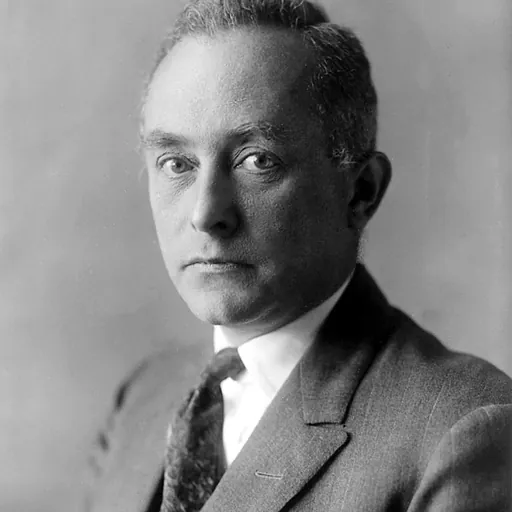
Max Born
German-Jewish physicist and mathematician
About Max Born
Lived 1882 – 1970 (aged 87). Max Born was a British physicist, mathematician, university teacher, theoretical physicist and scientist, known for Adiabatic theorem, BBGKY hierarchy and Born approximation.
Education Max Born was born on 11 December 1882 in Breslau (now Wrocław, Poland), Germany, into a family of Jewish descent. He was one of two children of anatomist and embryologist Gustav Jacob Born, who was Professor of Embryology at the University of Breslau, and Margarethe Gretchen Kauffmann, who came from a Silesian family of industrialists. Margarethe died on 29 August 1886, when Max was age four. He had a sister, Käthe, who was born in 1884, and a half-brother—Wolfgang—from his father's second wife, Bertha Lipstein. Wolfgang later became Professor of Art History at the City College of New York.
Initially educated at the König-Wilhelm-Gymnasium in Breslau, Born entered the University of Breslau in 1901. The German university system allowed students to move easily from one university to another, so he spent summer semesters at Heidelberg University in 1902 and the University of Zurich in 1903. Fellow students at the University of Breslau, Otto Toeplitz and Ernst Hellinger, told him about the University of Göttingen, and he went there in April 1904. At Göttingen he found three renowned mathematicians: Felix Klein, David Hilbert, and Hermann Minkowski. Very soon after his arrival, he formed close ties to the latter two men. From the first class he took with Hilbert, Hilbert identified him as having exceptional abilities and selected him as the lecture scribe, whose function was to write up the class notes for the students' mathematics reading room at the University of Göttingen. Being class scribe put him into regular, invaluable contact with Hilbert. Hilbert became his mentor after selecting him to be the first to hold the unpaid, semi-official position of assistant. Born's introduction to Minkowski came through his stepmother, Bertha, as she knew Minkowski from dancing classes in Königsberg. The introduction netted him invitations to the Minkowski household for Sunday dinners. In addition, while performing his duties as scribe and assistant, he often saw Minkowski at Hilbert's house.
Born's relationship with Felix Klein was more problematic. He attended a seminar conducted by Klein, Carl Runge, and Ludwig Prandtl on the subject of elasticity. Although not particularly interested in the subject, he was obliged to present a paper. He presented one in which, taking the simple case of a curved wire with both ends fixed, he used Hilbert's calculus of variations to determine the configuration that would minimise potential energy and therefore be the most stable. Klein was impressed, and invited him to submit a thesis on the subject of "Stability of Elastica in a Plane and Space" – a subject near and dear to Klein – which Klein had arranged to be the subject for the prestigious annual Philosophy Faculty Prize offered by the university. Entries could also qualify as doctoral dissertations. He responded by turning down the offer, as applied mathematics was not his preferred area of study. Klein was greatly offended.
Felix Klein had the power to make or break academic careers, so Born felt compelled to atone by submitting an entry for the prize. Because Klein refused to supervise him, Born arranged for Carl Runge to be his thesis advisor. Woldemar Voigt and Karl Schwarzschild became his other examiners. Starting from his paper, he developed the equations for the stability conditions. As he became more interested in the topic, he had an apparatus constructed that could test his predictions experimentally. On 13 June 1906, the rector announced that he had won the prize. A month later, he passed his oral examination and was awarded his Ph.D. in Mathematics with distinction.
On graduation, Born was obliged to perform his military service, which he had deferred while a student. He found himself drafted into the German Army, and posted to the 2nd Guards Dragoons "Empress Alexandra of Russia", which was stationed in Berlin. His service was brief, as he was discharged early after an asthma attack in January 1907. He then travelled to England, where he was admitted to Gonville and Caius College, Cambridge, and studied physics for six months in the Cavendish Laboratory, under J. J. Thomson, George Searle, and Joseph Larmor. After he returned to Germany, the army reinducted him, and he served with the elite 1st (Silesian) Life Cuirassiers "Great Elector" until he was again medically discharged after just six weeks' service. He then returned to Breslau, where he worked under the supervision of Otto Lummer and Ernst Pringsheim, hoping to do his habilitation in physics. A minor accident involving Born's black body experiment, a ruptured cooling water hose, and a flooded laboratory, led to Lummer telling him that he would never become a physicist.
In 1905, Albert Einstein published his paper On the Electrodynamics of Moving Bodies about special relativity. He was intrigued, and began researching the subject. He was devastated to discover that Hermann Minkowski was also researching special relativity along the same lines, but when he wrote to Minkowski about his results, Minkowski asked him to return to Göttingen and do his habilitation there. Born accepted. Toeplitz helped him brush up on his matrix algebra so he could work with the four-dimensional Minkowski space matrices used in the latter's project to reconcile relativity with electrodynamics. Born and Minkowski got along well, and their work made good progress, but Minkowski died suddenly of appendicitis on 12 January 1909. The mathematics students had him speak on their behalf at the funeral.
A few weeks later, Born attempted to present their results at a meeting of the Göttingen Mathematics Society. He did not get far before he was publicly challenged by Felix Klein and Max Abraham, who rejected relativity, forcing him to terminate the lecture. However, David Hilbert and Carl Runge were interested in his work, and, after some discussion with him, they became convinced of the veracity of his results and persuaded him to give the lecture again. This time he was not interrupted, and Woldemar Voigt offered to sponsor his habilitation thesis. He subsequently published his talk as an article titled Die Theorie des starren Elektrons in der Kinematik des Relativitätsprinzips (The Theory of the Rigid Electron in the Kinematics of the Principle of Relativity), which introduced the concept of Born rigidity. On 23 October, he presented his habilitation lecture on the Thomson model of the atom.
Career and research Berlin and Frankfurt Born settled in as a young academic at the University of Göttingen as a . In Göttingen, he stayed at a boarding house run by Sister Annie at Dahlmannstrasse 17, known as El BoKaReBo. The name was derived from the first letters of the last names of its boarders: "El" for Ella Philipson (a medical student), "Bo" for Born and Hans Bolza (a physics student), "Ka" for Theodore von Kármán (a ), and "Re" for Albrecht Renner (another medical student). A frequent visitor to the boarding house was Paul Peter Ewald, a doctoral student of Arnold Sommerfeld, on loan to Hilbert at Göttingen as a special assistant for physics. Richard Courant, a mathematician and , called these people the "in group."
In 1912, Born met Hedwig (Hedi) Ehrenberg, the daughter of a Leipzig University law professor, and a friend of Carl Runge's daughter Iris. She was of Jewish background on her father's side, although he had become a practising Lutheran when he got married, as did his sister Käthe. Despite never practising his religion, he refused to convert, and his wedding on 2 August 1913 was a garden ceremony. However, he was baptised as a Lutheran in March 1914 by the same pastor who had performed his wedding ceremony. Born regarded "religious professions and churches as a matter of no importance." His decision to be baptised was made partly in deference to his wife, and partly due to his desire to assimilate into German society. The marriage produced three children: two daughters, Irene, born in 1914, and Margarethe (Gritli), born in 1915, and a son, Gustav, born in 1921. Through marriage, he is related to jurists Victor Ehrenberg, his father-in-law, and Rudolf von Jhering, his wife's maternal grandfather, as well as to philosopher and theologian Hans Ehrenberg, and is a great uncle of British comedian Ben Elton.
By the end of 1913, Born had published 27 papers, including important work on relativity and the dynamics of crystal lattices (3 with Theodore von Karman), which became a book. In 1914, he received a letter from Max Planck explaining that a new Chair of Theoretical Physics had been created at the Friedrich Wilhelm University of Berlin. The chair had been offered to Max von Laue, but he had turned it down. Born accepted. The First World War was now raging. Soon after arriving in Berlin in 1915, he enlisted in an Army signals unit. In October, he joined the Artillerie Prüfungskommission, the Army's Berlin-based artillery research and development organisation, under Rudolf Ladenburg, who had established a special unit dedicated to the new technology of sound ranging. In Berlin, he formed a lifelong friendship with Albert Einstein, who became a frequent visitor to Born's home. Within days of the armistice in November 1918, Planck had the Army release Born. A chance meeting with Fritz Haber that month led to discussion of the manner in which an ionic compound is formed when a metal reacts with a halogen, which is today known as the Born–Haber cycle.
Even before Born had taken up the chair in Berlin, Laue had changed his mind, and decided that he wanted it after all; he arranged with Born and the faculties concerned for them to exchange jobs. In April 1919, he became and Director of the Institute of Theoretical Physics on the science faculty at the University of Frankfurt am Main. While there, he was approached by the University of Göttingen, which was looking for a replacement for Peter Debye as Director of the Physical Institute. "Theoretical physics," Einstein advised him, "will flourish wherever you happen to be; there is no other Born to be found in Germany today." In negotiating for the position with the education ministry, Born arranged for another chair, of experimental physics, at Göttingen for his long-time friend and colleague James Franck.
In 1919, Elisabeth Bormann joined the Institute for Theoretical Physics as his assistant. She developed the first atomic beams. Working with Born, Bormann was the first to measure the free path of atoms in gases and the size of molecules.
Göttingen Solvay Conference, 1927. Born is second from the right in the second row, between Louis de Broglie and Niels Bohr.
For the 12 years Born and Franck were at the University of Göttingen (1921–1933), Born had a collaborator with shared views on basic scientific concepts, a benefit for teaching and research. His collaborative approach with experimental physicists was similar to that of Arnold Sommerfeld at the Ludwig-Maximilians-Universität München, who was Ordinarius Professor of Theoretical Physics and Director of the Institute of Theoretical Physics—also a prime mover in the development of quantum theory. Born and Sommerfeld collaborated with experimental physicists to test and advance their theories. In 1922, when lecturing in the United States at the University of Wisconsin–Madison, Sommerfeld sent his student Werner Heisenberg to be Born's assistant. Heisenberg returned to Göttingen in 1923, where he completed his habilitation under Born in 1924, and became a there.
In 1919 and 1920, Born became displeased about the large number of objections against Einstein's relativity, and gave speeches in the winter of 1919 in support of Einstein. He received pay for his relativity speeches which helped with expenses through the year of rapid inflation. The speeches in the German language became a book published in 1920 of which Einstein received the proofs before publication. A third edition was published in 1922 and an English translation was published in 1924. He represented light speed as a function of curvature, "the velocity of light is much greater for some directions of the light ray than its ordinary value c, and other bodies can also attain much greater velocities."
In 1925, Born and Heisenberg formulated the matrix mechanics representation of quantum mechanics. On 9 July, Heisenberg gave Born a paper titled Über quantentheoretische Umdeutung kinematischer und mechanischer Beziehungen (Quantum-Theoretical Re-interpretation of Kinematic and Mechanical Relations) to review, and submit for publication. In the paper, Heisenberg formulated quantum theory, avoiding the concrete, but unobservable, representations of electron orbits by using parameters such as transition probabilities for quantum jumps, which necessitated using two indexes corresponding to the initial and final states. When Born read the paper, he recognised the formulation as one which could be transcribed and extended to the systematic language of matrices, which he had learned from his study under Jakob Rosanes at the University of Breslau.
Up until this time, matrices were seldom used by physicists; they were considered to belong to the realm of pure mathematics. Gustav Mie had used them in a paper on electrodynamics in 1912, and Born had used them in his work on the lattices theory of crystals in 1921. While matrices were used in these cases, the algebra of matrices with their multiplication did not enter the picture as they did in the matrix formulation of quantum mechanics. With the help of his assistant and former student Pascual Jordan, he began immediately to make a transcription and extension, and they submitted their results for publication; the paper was received for publication just 60 days after Heisenberg's paper. A follow-on paper was submitted for publication before the end of the year by all three authors. The result was a surprising formulation:
where p and q were matrices for location and momentum, and I is the identity matrix. The left hand side of the equation is not zero because matrix multiplication is not commutative. while Schrödinger and Dirac shared the 1933 Prize "for the discovery of new productive forms of atomic theory." Born's assistants at the University of Göttingen's Institute for Theoretical Physics included Enrico Fermi, Werner Heisenberg, Gerhard Herzberg, Friedrich Hund, Pascual Jordan, Wolfgang Pauli, Léon Rosenfeld, Edward Teller, and Eugene Wigner. Walter Heitler became an assistant to Born in 1928, and completed his habilitation under him in 1929. Born not only recognised talent to work with him, but he "let his superstars stretch past him; to those less gifted, he patiently handed out respectable but doable assignments." Delbrück, and Goeppert Mayer went on to be awarded Nobel Prizes.
Later life In January 1933, the Nazi Party came to power in Germany. In May, Born became one of six Jewish professors at Göttingen who were suspended with pay; Franck had already resigned. In twelve years, they had built Göttingen into one of the world's foremost centres for physics. Born began looking for a new job, writing to Maria Goeppert Mayer at Johns Hopkins University and Rudi Ladenburg at Princeton University. He accepted an offer from St John's College, Cambridge. At Cambridge, he wrote a popular science book, The Restless Universe, and a textbook, Atomic Physics, that soon became a standard text, going through seven editions. His family soon settled into life in England, with his daughters Irene and Gritli becoming engaged to Welshman Brinley (Bryn) Newton-John and Englishman Maurice Pryce respectively. Born's granddaughter Olivia Newton-John was the daughter of Irene.
Born's position at Cambridge was only a temporary one, and his tenure at Göttingen was terminated in May 1935. He therefore accepted an offer from C. V. Raman to go to Bangalore in 1935. Born considered taking a permanent position there, but the Indian Institute of Science did not create an additional chair for him. During his residency in Bangalore, Born worked with mathematician B. S. Madhava Rao on Born's nonlinear electromagnetic field theory; Madhava Rao's doctoral thesis and eight published papers in the Proceedings of the Indian Academy of Sciences were a direct product of this collaboration. On 18 March 1936, at the close of his residency, Born signed and dated a studio portrait taken by Cyril Studio, Bangalore — a personal gift to Madhava Rao that is now preserved in the Madhava Rao family archive. In November 1935, the Born family had their German citizenship revoked, rendering them stateless. A few weeks later Göttingen cancelled Born's doctorate. Born considered an offer from Pyotr Kapitsa in Moscow, and started taking Russian lessons from Rudolf Peierls's Russian-born wife Genia. But then Charles Galton Darwin asked Born if he would consider becoming his successor as Tait Professor of Natural Philosophy at the University of Edinburgh, an offer that Born promptly accepted, assuming the chair in October 1936.
In Edinburgh, Born promoted the teaching of mathematical physics. He had two German assistants, Ernst Walter Kellermann and Klaus Fuchs, and one Scottish assistant, Robert Schlapp, and together they continued to investigate the mysterious behaviour of electrons. Born became a Fellow of the Royal Society of Edinburgh in 1937, and of the Royal Society in March 1939. During 1939, he got as many of his remaining friends and relatives still in Germany as he could out of the country, including his sister Käthe, in-laws Kurt and Marga, and the daughters of his friend Heinrich Rausch von Traubenberg. Hedi ran a domestic bureau, placing young Jewish women in jobs. Born received his certificate of naturalisation as a British subject on 31 August 1939, one day before the Second World War broke out in Europe.
Born's gravestone in Göttingen is inscribed with the canonical commutation relation, which he put on rigorous mathematical footing.
Born remained at Edinburgh until he reached the retirement age of 70 in 1952. He retired to Bad Pyrmont, in West Germany, in 1954. In October, he received word that he was being awarded the Nobel Prize in Physics. His fellow physicists had never stopped nominating him. Franck and Fermi had nominated him in 1947 and 1948 for his work on crystal lattices, and over the years, he had also been nominated for his work on solid-state physics, quantum mechanics, and other topics. In 1954, he received the Prize "for his fundamental research in quantum mechanics, especially for his statistical interpretation of the wavefunction,"
In retirement, he continued scientific work, and produced new editions of his books. In 1955 he became one of signatories to the Russell–Einstein Manifesto. He died at age 87 in hospital in Göttingen on 5 January 1970,
Global policy He was one of the signatories of the agreement to convene a convention for drafting a world constitution. As a result, for the first time in human history, a World Constituent Assembly convened to draft and adopt a Constitution for the Federation of Earth.
Family Born's wife Hedwig (Hedi) Martha Ehrenberg (1891–1972) was a daughter of the jurist Victor Ehrenberg and Elise von Jhering (a daughter of the jurist Rudolf von Jhering). Born was survived by his wife Hedi and their children Irene, Gritli and Gustav. Singer and actress Olivia Newton-John was a daughter of Irene (1914–2003), while Gustav is the father of musician and academic Georgina Born, actor Max Born (Fellini Satyricon) and filmmaker Carey Born who are thus also Max's grandchildren. His great-grandchildren include songwriter Brett Goldsmith, singer Tottie Goldsmith, racing car driver Emerson Newton-John, and singer Chloe Rose Lattanzi. Born helped his nephew, architect, Otto Königsberger (1908–1999) obtain a commission in the Mysore State.
Recognition Memberships Year Organisation Type 1937 Royal Society of Edinburgh Fellow 1950 Royal Society Hughes Medal "For his contributions to theoretical physics in general and to the development of quantum mechanics in particular." 1954 Royal Swedish Academy of Sciences Nobel Prize in Physics "For his fundamental research in quantum mechanics, especially for his statistical interpretation of the wavefunction." 1982: Ceremony at the University of Göttingen in the 100th Birth Year of Max Born and James Franck, Institute Directors 1921–1933. 1991: – Institute named in his honor. 11 December 2017: Google showed a Google doodle, designed by Kati Szilagyi, in honouring the 135th birth anniversary of Born.
Don’t just read it —
keep it.
Full-length biographies made to live with: read them, listen on the way to work, watch them tonight.
- E-book
- Audio
- Video
Instant download · yours to keep · every purchase keeps this site free
Important facts
more
Born reciprocity, Born rigidity, Born rule, Born series, Born–Haber cycle, Born–Huang approximation, Born–Infeld theory, Born–Landé equation, Born–Oppenheimer approximation, Born–von Karman boundary condition, Canonical commutation relation, Cauchy–Born rule, Thermodynamic squareFamily & relationships
People in Max Born's life
Named in this biography and alive at the same time



Related people
Same field, nearest in time


Contemporaries
People whose lives overlapped Max Born's




Frequently asked questions
Who was Max Born?
German-Jewish physicist and mathematician (1882–1970)
When was Max Born born?
Max Born was born on 11 December 1882 in Wrocław.
When did Max Born die?
Max Born died on 5 January 1970 in Göttingen.
What was Max Born's occupation?
Max Born was a physicist, mathematician, university teacher, theoretical physicist and scientist.
What was Max Born known for?
Max Born was known for Adiabatic theorem, BBGKY hierarchy, Born approximation, Born coordinates, Born equation and Born probability.
What nationality was Max Born?
Max Born was British.
Sources & further reading
Cite this page
APA: Biography.guide. (2026). Max Born. https://biography.guide/max-born/
MLA: "Max Born." Biography.guide, https://biography.guide/max-born/.
Chicago: "Max Born." Biography.guide. https://biography.guide/max-born/.
Data last updated: 2026-09-20 · Spot an error? Report a correction.
Portrait: Wikimedia Commons · author & licence
Page generated 2026-09-27 04:58 UTC