
About Osborne Reynolds
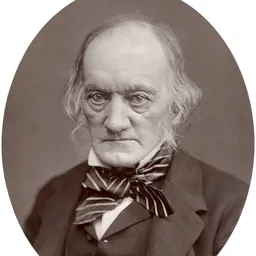
Lived 1842 – 1912 (aged 69). Osborne Reynolds was a British physicist, civil engineer, university teacher and engineer, known for Fluid dynamics and Reynolds number.
Osborne Reynolds (23 August 1842 – 21 February 1912) was an Irish-born innovator in the understanding of fluid dynamics. Separately, his studies of heat transfer between solids and fluids brought improvements in boiler and condenser design. He spent his entire career at what is now the University of Manchester.
Life Osborne Reynolds was born in Belfast and moved with his parents soon afterward to Dedham, Essex. He had chosen to study mathematics at Cambridge because, in his own words in his 1868 application for the professorship, "From my earliest recollection I have had an irresistible liking for mechanics and the physical laws on which mechanics as a science is based.... my attention drawn to various mechanical phenomena, for the explanation of which I discovered that a knowledge of mathematics was essential." For the year immediately following his graduation from Cambridge he again took up a post with a civil engineering firm, Lawson and Mansergh of London, as a practising civil engineer working with the London (Croydon) sewage transport system. and as a Fellow of the Royal Society in 1877. He was awarded the Royal Medal in 1888 and in 1903, the Dalton Medal of the Manchester Literary and Philosophical Society.
Regarding his family life, Osborne Reynolds married Charlotte Jemima in 1868. She died in 1869 after giving birth to their first-born child, also named Osborne . Their son died of an illness in 1879 In 1883 Reynolds demonstrated the transition to turbulent flow in a classic experiment in which he examined the behaviour of water flow under different flow rates using a small jet of dyed water introduced into the centre of flow in a larger pipe.
The larger pipe was glass so the behaviour of the layer of dyed flow could be observed, and at the end of this pipe there was a flow control valve used to vary the water velocity inside the tube. When the velocity was low, the dyed layer remained distinct through the entire length of the large tube. When the velocity was increased, the layer broke up at a given point and diffused throughout the fluid's cross-section. The point at which this happened was the transition point from laminar to turbulent flow.
From these experiments came the dimensionless Reynolds number for dynamic similarity—the ratio of inertial forces to viscous forces. Reynolds also proposed what is now known as Reynolds-averaging of turbulent flows, where quantities such as velocity are expressed as the sum of mean and fluctuating components. Such averaging allows for 'bulk' description of turbulent flow, for example using the Reynolds-averaged Navier–Stokes equations.
Reynolds' contributions to fluid mechanics were not lost on ship designers ("naval architects"). The ability to make a small scale model of a ship, and extract useful predictive data with respect to a full size ship, depends directly on the experimentalist applying Reynolds' turbulence principles to friction drag computations, along with a proper application of William Froude's theories of gravity wave energy and propagation. Reynolds himself had a number of papers concerning ship design published in Transactions of the Institution of Naval Architects.
Publications His publications in fluid dynamics began in the early 1870s. His final theoretical model published in the mid-1890s is still the standard mathematical framework used today. Examples of titles from his more groundbreaking reports:
Other work
Reynolds published about seventy science and engineering research reports. When towards the end of his career these were republished as a collection they filled three volumes. For a catalogue and short summaries of them see the External links. Areas covered besides fluid dynamics included thermodynamics, kinetic theory of gases, condensation of steam, screw-propeller-type ship propulsion, turbine-type ship propulsion, hydraulic brakes, hydrodynamic lubrication, and laboratory apparatus for better measurement of Joule's mechanical equivalent of heat. For his work on lubrication, he was named by Duncan Dowson as one of the 23 "Men of Tribology".
One of the subjects that Reynolds studied in the 1880s was the properties of granular materials, including dilatant materials. In 1903 appeared his 250-page book The Sub-Mechanics of the Universe, in which he tried to generalise the mechanics of granular materials to be "capable of accounting for all the physical evidence, as we know it, in the Universe". His aim seems to have been to construct a theory of aether, which he considered to be in a liquid state. The ideas were extremely difficult to understand or evaluate, and in any case were overtaken by other developments in physics around the same time.
To honour Prof Reynolds' life and achievements, the University of Manchester has been running an annual event focused on latest developments in fluid mechanics and turbulence since 2001.
Don’t just read it —
keep it.
Full-length biographies made to live with: read them, listen on the way to work, watch them tonight.
- E-book
- Audio
- Video
Instant download · yours to keep · every purchase keeps this site free
Important facts
People in Osborne Reynolds's life
Named in this biography and alive at the same time
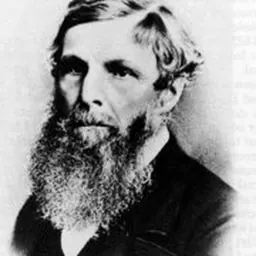
Related people
Same field, nearest in time


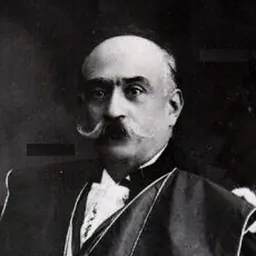

Contemporaries
People whose lives overlapped Osborne Reynolds's
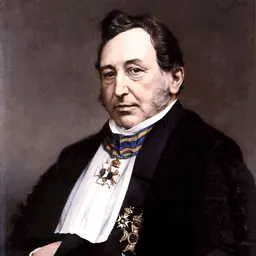

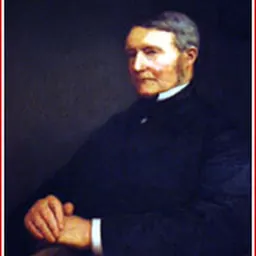
Frequently asked questions
Who was Osborne Reynolds?
Anglo-Irish innovator (1842-1912)
When was Osborne Reynolds born?
Osborne Reynolds was born on 23 August 1842 in Belfast.
When did Osborne Reynolds die?
Osborne Reynolds died on 21 February 1912 in Watchet.
What was Osborne Reynolds's occupation?
Osborne Reynolds was a physicist, civil engineer, university teacher and engineer.
What was Osborne Reynolds known for?
Osborne Reynolds was known for Fluid dynamics and Reynolds number.
What nationality was Osborne Reynolds?
Osborne Reynolds was British.
Sources & further reading
Cite this page
APA: Biography.guide. (2026). Osborne Reynolds. https://biography.guide/osborne-reynolds/
MLA: "Osborne Reynolds." Biography.guide, https://biography.guide/osborne-reynolds/.
Chicago: "Osborne Reynolds." Biography.guide. https://biography.guide/osborne-reynolds/.
Data last updated: 2026-09-20 · Spot an error? Report a correction.
Page generated 2026-09-27 05:22 UTC