
About Antoine Henri Becquerel
Lived 1852 – 1908 (aged 55). Antoine Henri Becquerel was a French physicist, engineer, university teacher, nuclear physicist and chemist, known for Radioactivity.
Antoine Henri Becquerel (15 December 1852 – 25 August 1908) was a French experimental physicist who shared the 1903 Nobel Prize in Physics with Marie and Pierre Curie for his discovery of radioactivity.
Education and career Antoine Henri Becquerel was born on 15 December 1852 in Paris. His grandfather, Antoine César Becquerel, father, Edmond Becquerel, and later his son, Jean Becquerel, were all notable physicists. In 1888, he received his D.Sc. from the University of Paris. His thesis was on the plane polarisation of light, with the phenomenon of phosphorescence and absorption of light by crystals.
In 1878, Becquerel became an assistant at the Muséum national d'histoire naturelle, where in 1892 he was appointed Professor of Applied Physics. In 1894, he became chief engineer in the Department of Roads and Bridges. He became a professor at École polytechnique in 1895. Becquerel learned of Röntgen's discovery during a meeting of the French Academy of Sciences on 20 January where his colleague Henri Poincaré read out Röntgen's preprint paper. Becquerel "began looking for a connection between the phosphorescence he had already been investigating and the newly discovered X-rays" There followed a period of intense research into radioactivity, including the determination that the element thorium is also radioactive and the discovery of additional radioactive elements polonium and radium by Marie Curie and her husband, Pierre Curie. The intensive research of radioactivity led to Becquerel publishing seven papers on the subject in 1896.
As simultaneity often happens in science, radioactivity came close to being discovered nearly four decades earlier in 1857, when Abel Niépce de Saint-Victor, who was investigating photography under Michel Eugène Chevreul, observed that uranium salts emitted radiation that could darken photographic emulsions. By 1861, Niepce de Saint-Victor realized that uranium salts produce "a radiation that is invisible to our eyes". Niepce de Saint-Victor knew Edmond Becquerel, Henri Becquerel's father. In 1868, Edmond Becquerel published a book, La lumière: ses causes et ses effets (Light: Its causes and its effects). On page 50 of volume 2, Edmond noted that Niepce de Saint-Victor had observed that some objects that had been exposed to sunlight could expose photographic plates even in the dark.
Experiments
Describing them to the French Academy of Sciences on 27 February 1896, he said:
One wraps a Lumière photographic plate with a bromide emulsion in two sheets of very thick black paper, such that the plate does not become clouded upon being exposed to the sun for a day. One places on the sheet of paper, on the outside, a slab of the phosphorescent substance, and one exposes the whole to the sun for several hours. When one then develops the photographic plate, one recognizes that the silhouette of the phosphorescent substance appears in black on the negative. If one places between the phosphorescent substance and the paper a piece of money or a metal screen pierced with a cut-out design, one sees the image of these objects appear on the negative ... One must conclude from these experiments that the phosphorescent substance in question emits rays which pass through the opaque paper and reduce silver salts.
But further experiments led him to doubt and then abandon this hypothesis. On 2 March 1896 he reported:
I will insist particularly upon the following fact, which seems to me quite important and beyond the phenomena which one could expect to observe: The same crystalline crusts [of potassium uranyl sulfate], arranged the same way with respect to the photographic plates, in the same conditions and through the same screens, but sheltered from the excitation of incident rays and kept in darkness, still produce the same photographic images. Here is how I was led to make this observation: among the preceding experiments, some had been prepared on Wednesday the 26th and Thursday the 27th of February, and since the sun was out only intermittently on these days, I kept the apparatuses prepared and returned the cases to the darkness of a bureau drawer, leaving in place the crusts of the uranium salt. Since the sun did not come out in the following days, I developed the photographic plates on the 1st of March, expecting to find the images very weak. Instead the silhouettes appeared with great intensity ... One hypothesis which presents itself to the mind naturally enough would be to suppose that these rays, whose effects have a great similarity to the effects produced by the rays studied by M. Lenard and M. Röntgen, are invisible rays emitted by phosphorescence and persisting infinitely longer than the duration of the luminous rays emitted by these bodies. However, the present experiments, without being contrary to this hypothesis, do not warrant this conclusion. I hope that the experiments which I am pursuing at the moment will be able to bring some clarification to this new class of phenomena.
Later life and death In 1900, Becquerel measured the properties of beta particles, and he realized that they had the same measurements as high speed electrons leaving the nucleus. The following year, he discovered that radioactivity could be used for medicine; he left a piece of radium in his vest pocket, and noticed that he had been burnt by it. This discovery led to the development of radiotherapy, which is now used to treat cancer.
Recognition Chivalric titles Year Head of state Title 1882 Jules Grévy Knight of the Legion of Honour 1900 Émile Loubet Officer of the Legion of Honour 1902 American Philosophical Society International Member 1908 Royal Society Foreign Member
Awards Year Organization Award Citation 1900 Royal Society Rumford Medal "For his discoveries in radiation proceding from uranium." 1903 Royal Swedish Academy of Sciences Nobel Prize in Physics "In recognition of the extraordinary services he has rendered by his discovery of spontaneous radioactivity." A crater on the Moon, as well as a crater on Mars, are named after him. Becquerelite, a uranium mineral, is named after him. Minor planet 6914 Becquerel is named in his honour.
Don’t just read it —
keep it.
Full-length biographies made to live with: read them, listen on the way to work, watch them tonight.
- E-book
- Audio
- Video
Instant download · yours to keep · every purchase keeps this site free
Important facts
People in Antoine Henri Becquerel's life
Named in this biography and alive at the same time
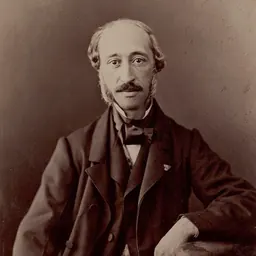


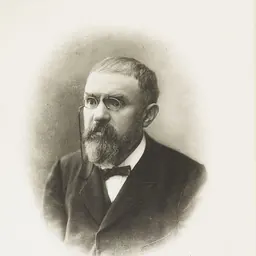

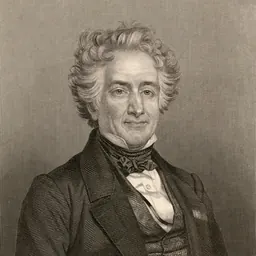
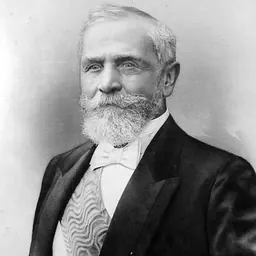
Related people
Same field, nearest in time
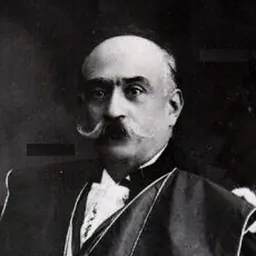
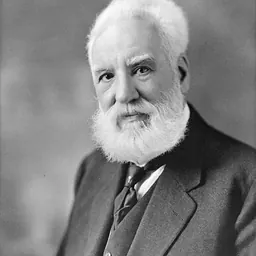
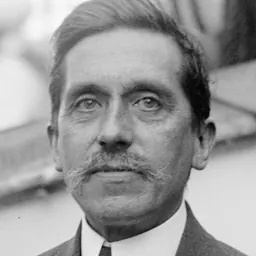

Contemporaries
People whose lives overlapped Antoine Henri Becquerel's
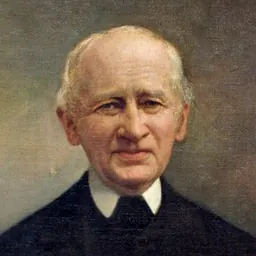
Frequently asked questions
Who was Antoine Henri Becquerel?
French physicist (1852–1908)
When was Antoine Henri Becquerel born?
Antoine Henri Becquerel was born on 15 December 1852 in Paris.
When did Antoine Henri Becquerel die?
Antoine Henri Becquerel died on 25 August 1908 in manoir de Pen Castel.
What was Antoine Henri Becquerel's occupation?
Antoine Henri Becquerel was a physicist, engineer, university teacher, nuclear physicist and chemist.
What was Antoine Henri Becquerel known for?
Antoine Henri Becquerel was known for Radioactivity.
What nationality was Antoine Henri Becquerel?
Antoine Henri Becquerel was French.
Sources & further reading
· Wikipedia: Antoine Henri Becquerel
Cite this page
APA: Biography.guide. (2026). Antoine Henri Becquerel. https://biography.guide/antoine-henri-becquerel/
MLA: "Antoine Henri Becquerel." Biography.guide, https://biography.guide/antoine-henri-becquerel/.
Chicago: "Antoine Henri Becquerel." Biography.guide. https://biography.guide/antoine-henri-becquerel/.
Data last updated: 2026-09-20 · Spot an error? Report a correction.
Page generated 2026-09-27 05:29 UTC