
About Richard Owen
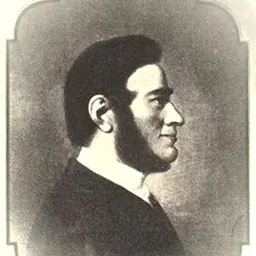
Lived 1804 – 1892 (aged 88). Richard Owen was a British curator, biologist, paleontologist, zoologist, university teacher and anatomist, known for British Museum of Natural History and Dinosaur.
Biography Owen was the driving force behind the establishment, in 1881, of the British Museum (Natural History) in London. Owen became a surgeon's apprentice in 1820 and was appointed to the Royal College of Surgeons in 1826. In 1836, Owen was appointed Hunterian professor at the Royal College, and in 1849, he succeeded William Clift as conservator of the Hunterian Museum. He held the latter office until 1856 when he became superintendent of the natural history department of the British Museum. He then devoted much of his energies to a great scheme for a National Museum of Natural History, which eventually resulted in the removal of the natural history collections of the British Museum to a new building at South Kensington: the British Museum (Natural History) (now the Natural History Museum). He retained office until the completion of this work, in December 1883, when he was made a knight of the Order of the Bath.
Owen always tended to support orthodox men of science and the status quo. The royal family presented him with the cottage in Richmond Park and Robert Peel put him on the Civil List. In 1843, he was elected a foreign member of the Royal Swedish Academy of Sciences. In 1844 he became an associated member of the Royal Institute of the Netherlands. When this Institute became the Royal Netherlands Academy of Arts and Sciences in 1851, he joined as a foreign member. In 1845, he was elected as a member to the American Philosophical Society.
He died at home on 15 December 1892 and is buried in the churchyard at St Andrew's Church, Ham, near Richmond, Surrey.
Work on invertebrates
While occupied with the cataloguing of the Hunterian collection, Owen did not confine his attention to the preparations before him but also seized every opportunity to dissect fresh subjects. He was allowed to examine all animals that died in London Zoo's gardens and, when the Zoo began to publish scientific proceedings, in 1831, he was the most prolific contributor of anatomical papers. His first notable publication, however, was his Memoir on the Pearly Nautilus (London, 1832), which was soon recognized as a classic. Thenceforth, he continued to make important contributions to every department of comparative anatomy and zoology for a period of over fifty years. In the sponges, Owen was the first to describe the now well-known Venus' Flower Basket or Euplectella (1841, 1857). Among Entozoa, his most noteworthy discovery was that of Trichina spiralis (1835), the parasite infesting the muscles of man in the disease now termed trichinosis (see also, however, Sir James Paget). Of Brachiopoda he made very special studies, which much advanced knowledge and settled the classification that has long been accepted. Among Mollusca, he described not only the pearly nautilus but also Spirula (1850) and other Cephalopoda, both living and extinct, and it was he who proposed the universally-accepted subdivision of this class into the two orders of Dibranchiata and Tetrabranchiata (1832). In 1852 Owen named Protichnites – the oldest footprints found on land. Applying his knowledge of anatomy, he correctly postulated that these Cambrian trackways were made by an extinct type of arthropod, Owen envisioned a resemblance of the animal to the living arthropod Limulus. Some models were initially created for the Great Exhibition of 1851 held in London's Hyde Park, but 33 were eventually produced when the Crystal Palace was relocated to Crystal Palace Park, in south London.
Work on mammals
Owen was granted right of first refusal on any freshly dead animal at the London Zoo. His wife once arrived home to find the carcass of a newly deceased rhinoceros in her front hallway. While occupied with so much material from abroad, Owen was also busily collecting facts for an exhaustive work on similar fossils from the British Isles and, in 1844–1846, he published his History of British Fossil Mammals and Birds, which was followed by many later memoirs, notably his Monograph of the Fossil Mammalia of the Mesozoic Formations (Palaeont. Soc., 1871). One of his latest publications was a little work entitled Antiquity of Man as deduced from the Discovery of a Human Skeleton during Excavations of the Docks at Tilbury (London, 1884).
Owen, Darwin, and the theory of evolution Sometime during the 1840s Owen came to the conclusion that species arise as the result of some sort of evolutionary process. He believed that there were a total of six possible mechanisms: Parthenogenesis, prolonged development, premature birth, congenital malformations, Lamarckian atrophy, Lamarckian hypertrophy and transmutation, of which he thought transmutation was the least likely. At the end of On the Nature of Limbs, Owen suggested that humans ultimately evolved from fish as the result of natural laws, which resulted in Owen being criticized in the Manchester Spectator for denying that species such as humans were created by God. Owen's main argument was that humans have much larger brains for their body size than other mammals including the great apes.
Owen countered Huxley by saying the brains of all human races were really of similar size and intellectual ability, and that the fact that humans had brains that were twice the size of large apes like male gorillas, even though humans had much smaller bodies, made humans distinguishable. In 2025, a fossil snake from Hordle Cliff was named Paradoxophidion richardoweni in recognition of Owen's pioneering work on fossil snakes from the area and his role in establishing the Natural History Museum, where the specimen had been stored since 1981.
The Sir Richard Owen Wetherspoons pub in central Lancaster is named in his honour.
Conflicts with his peers Owen has been described by some as a malicious, dishonest and hateful individual. He has been described in one biography as being a "social experimenter with a penchant for sadism. Addicted to controversy and driven by arrogance and jealousy". Deborah Cadbury stated that Owen possessed an "almost fanatical egoism with a callous delight in savaging his critics." An Oxford University professor once described Owen as "a damned liar. He lied for God and for malice". Gideon Mantell said it was "a pity a man so talented should be so dastardly and envious". Richard Broke Freeman described him as "the most distinguished vertebrate zoologist and palaeontologist ... but a most deceitful and odious man". Charles Darwin stated that "No one fact tells so strongly against Owen ... as that he has never reared one pupil or follower."
Caricature of Owen "riding his hobby", by Frederick Waddy (1873). Owen famously credited himself and Georges Cuvier with the discovery of the Iguanodon, completely excluding any credit for the original discoverer of the dinosaur, Gideon Mantell. This was not the first or last time Owen would falsely claim a discovery as his own. It has also been suggested by some authors
Another reason for his criticism of the Origin, some historians claim, was that Owen felt upstaged by Darwin and supporters such as Huxley, and his judgment was clouded by jealousy. In Darwin's opinion, Owen was "spiteful, extremely malignant, clever; the Londoners say he is mad with envy because my book is so talked about".
Owen also resorted to the same subterfuge he used against Mantell, writing another anonymous article in the Edinburgh Review in April 1860. Owen did praise, however, the Origin 's description of Darwin's work on insect behaviour and pigeon breeding as "real gems".
Owen was also a party to the threat to end government funding of the Royal Botanic Gardens, Kew botanical collection (see Attacks on Hooker and Kew), orchestrated by Acton Smee Ayrton: "There is no doubt that rivalry resulted between the British Museum, where there was the very important Herbarium of the Department of Botany, and Kew. The rivalry at times became extremely personal, especially between Hooker and Owen ... At the root was Owen's feeling that Kew should be subordinate to the British Museum (and to Owen) and should not be allowed to develop as an independent scientific institution with the advantage of a great botanic garden."
Owen's lost scientific standing was not due solely to his underhanded dealings with colleagues; it was also due to serious errors of scientific judgement that were discovered and publicised. A fine example was his decision to classify man in a separate subclass of the Mammalia (see Man's place in nature). In this, Owen had no supporters at all. Also, his unwillingness to come off the fence concerning evolution became increasingly damaging to his reputation as time went on. Owen continued working after his official retirement at the age of 79, but he never recovered the good opinions he had garnered in his younger days.
Don’t just read it —
keep it.
Full-length biographies made to live with: read them, listen on the way to work, watch them tonight.
- E-book
- Audio
- Video
Instant download · yours to keep · every purchase keeps this site free
Important facts
more
Owen R, R. Owen, Prof OWEN F.R.S.People in Richard Owen's life
Named in this biography and alive at the same time




Related people
Same field, nearest in time

Contemporaries
People whose lives overlapped Richard Owen's





Frequently asked questions
Who was Richard Owen?
English biologist and paleontologist (1804–1892)
When was Richard Owen born?
Richard Owen was born on 20 July 1804 in Lancaster.
When did Richard Owen die?
Richard Owen died on 18 December 1892 in Richmond Park, London.
What was Richard Owen's occupation?
Richard Owen was a curator, biologist, paleontologist, zoologist, university teacher and anatomist.
What was Richard Owen known for?
Richard Owen was known for British Museum of Natural History and Dinosaur.
What nationality was Richard Owen?
Richard Owen was British.
Sources & further reading
Cite this page
APA: Biography.guide. (2026). Richard Owen. https://biography.guide/richard-owen/
MLA: "Richard Owen." Biography.guide, https://biography.guide/richard-owen/.
Chicago: "Richard Owen." Biography.guide. https://biography.guide/richard-owen/.
Data last updated: 2026-09-26 · Spot an error? Report a correction.
Page generated 2026-09-27 05:15 UTC