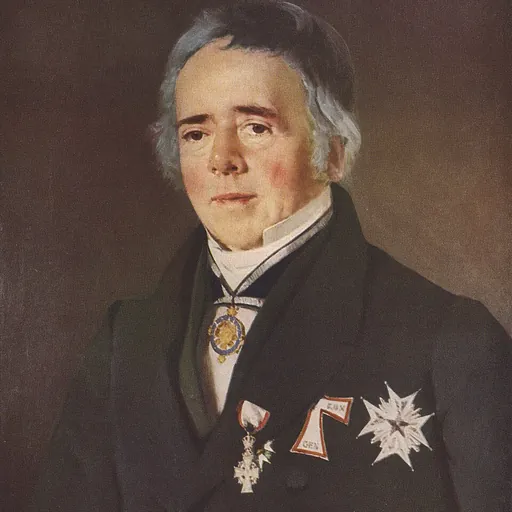
About Hans Christian Ørsted
Lived 1777 – 1851 (aged 73). Hans Christian Ørsted was a Danish physicist, chemist, inventor, university teacher, engineer and pharmacist, known for Aluminium, Electromagnetism and Thought experiment.
Hans Christian Ørsted (; 14 August 1777 – 9 March 1851), sometimes transliterated as Oersted , was a Danish chemist and physicist who discovered that electric currents create magnetic fields. This phenomenon is known as Oersted's law. He also discovered aluminium, a chemical element.
A leader of the Danish Golden Age, Ørsted was a close friend of Hans Christian Andersen and the brother of politician and jurist Anders Sandøe Ørsted, who served as Prime Minister of Denmark from 1853 to 1854.
Early life and studies
Ørsted was born in Rudkøbing in 1777. As a young boy he developed an interest in science while working for his father, who was a pharmacist in the town's pharmacy. He and his brother Anders received most of their early education through self-study at home, going to Copenhagen in 1793 to take entrance exams for the University of Copenhagen, where both brothers excelled academically. By 1796, Ørsted had been awarded honors for his papers in both aesthetics and physics. He earned his doctorate in 1799 for a dissertation based on the works of Kant entitled The Architectonics of Natural Metaphysics.
In 1800, Alessandro Volta reported his invention of the voltaic pile, which inspired Ørsted to investigate the nature of electricity and to conduct his first electrical experiments. In 1801, Ørsted received a travel scholarship and public grant which enabled him to spend three years traveling across Europe. He toured science headquarters throughout the continent, including in Berlin and Paris.
In Germany, Ørsted met Johann Wilhelm Ritter, a physicist who believed there was a connection between electricity and magnetism. This idea made sense to Ørsted as he subscribed to Kantian thought regarding the unity of nature. Ørsted's conversations with Ritter drew him into the study of physics. He became a professor at the University of Copenhagen in 1806 and continued research on electric currents and acoustics. Under his guidance the university developed a comprehensive physics and chemistry program and established new laboratories.
Ørsted welcomed William Christopher Zeise to his family home in autumn 1806. He granted Zeise a position as his lecturing assistant and took the young chemist under his tutelage. In 1812, Ørsted again visited Germany and France after publishing and (1811).
Ørsted was the first modern thinker to explicitly describe and name the thought experiment. He used the Latin-German term circa 1812 and the German term in 1820.
In 1819 Ørsted was the first to extract piperine and subsequently name it. He extracted it from Piper nigrum, the plant from which are obtained both white and black pepper.
Ørsted designed a new type of piezometer to measure the compressibility of liquids in 1822.
Electromagnetism
In 1820, Ørsted published his discovery that a compass needle was deflected from magnetic north by a nearby electric current, confirming a direct relationship between electricity and magnetism. The often reported story that Ørsted made this discovery incidentally during a lecture is a myth. He had, in fact, been looking for a connection between electricity and magnetism since 1818, but was quite confused by the results he was obtaining. a Foreign Member of the Royal Society of London in April 1821, and a Foreign Honorary Member of the American Academy of Arts and Sciences in 1849.
In 1824, Ørsted founded the Society for the Dissemination of Natural Sciences (Selskabet for Naturlærens Udbredelse, or SNU). He was also the founder of other organizations which eventually became the Danish Meteorological Institute and the Danish Patent and Trademark Office. In 1829, Ørsted founded (College of Advanced Technology), which was later renamed the Technical University of Denmark (DTU).
In 1824, Ørsted made a significant contribution to chemistry by being the first person to successfully produce aluminium in its metallic state, albeit in a less-than-pure form. In 1808, Humphry Davy had predicted the existence of the metal which he gave the name of alumium. However his attempts to isolate it using electrolysis processes were unsuccessful; the closest he came was an aluminium-iron alloy. Ørsted succeeded in isolating the metallic form by reacting aluminium chloride with potassium amalgam (an alloy of potassium and mercury) and then boiling away the mercury, which left small "chunks" of metal that he described as appearing similar to tin. This ambivalence, coupled with the limited audience for the Danish Academy's journal in which the results had been published, meant that the discovery went mostly unnoticed by the wider scientific community at the time. Busy with other work, in 1827 Ørsted gave his friend, the German chemist Friedrich Wöhler, permission to take over the research.
Awards and lectures Two medals are awarded in Ørsted's name: the H. C. Ørsted Medal for Danish scientists, awarded by the Danish Society for the Dissemination of Natural Science (SNU), as founded by Ørsted, and the Oersted Medal for notable contributions in the teaching of physics in America, awarded by American Association of Physics Teachers.
The Technical University of Denmark hosts the H. C. Ørsted Lecture series for prominent and engaging researchers from around the world.
Works Ørsted was a published poet, as well as scientist. His poetry series ("The Airship") was inspired by the balloon flights of fellow physicist and stage magician Étienne-Gaspard Robert.
In 1850, shortly before his death, he submitted for publication a two-volume collection of philosophical articles in German under the title ("The Soul in Nature"). It was translated into English and published in one volume in 1852, the year after his death.
Other works:
Volume I, containing correspondence with Jöns Jacob Berzelius, Christopher Hansteen, and Christian Samuel Weiss. Volume II, containing correspondence with Johann Wilhelm Ritter and numerous others, including Michael Faraday and Carl Friedrich Gauss.
A significant number of Ørsted's papers were made available in English for the first time in a compilation published in 1998:
Don’t just read it —
keep it.
Full-length biographies made to live with: read them, listen on the way to work, watch them tonight.
- E-book
- Audio
- Video
Instant download · yours to keep · every purchase keeps this site free
Important facts
People in Hans Christian Ørsted's life
Named in this biography and alive at the same time




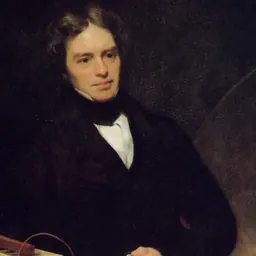
Related people
Same field, nearest in time

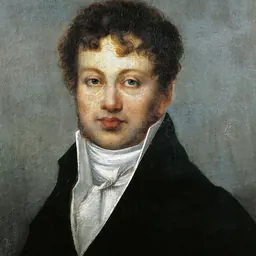
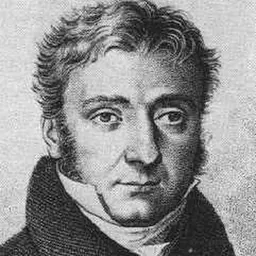

Contemporaries
People whose lives overlapped Hans Christian Ørsted's


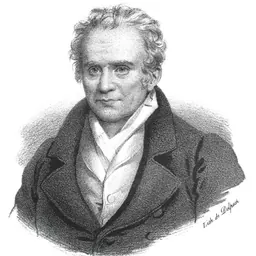
Frequently asked questions
Who was Hans Christian Ørsted?
Danish physicist and chemist (1777-1851)
When was Hans Christian Ørsted born?
Hans Christian Ørsted was born on 14 August 1777 in Rudkøbing.
When did Hans Christian Ørsted die?
Hans Christian Ørsted died on 9 March 1851 in Copenhagen.
What was Hans Christian Ørsted's occupation?
Hans Christian Ørsted was a physicist, chemist, inventor, university teacher, engineer and pharmacist.
What was Hans Christian Ørsted known for?
Hans Christian Ørsted was known for Aluminium, Electromagnetism, Thought experiment and Ørsted's law.
What nationality was Hans Christian Ørsted?
Hans Christian Ørsted was Danish.
Sources & further reading
· Wikipedia: Hans Christian Ørsted
· DBpedia: Hans Christian Ørsted
Cite this page
APA: Biography.guide. (2026). Hans Christian Ørsted. https://biography.guide/hans-christian-orsted/
MLA: "Hans Christian Ørsted." Biography.guide, https://biography.guide/hans-christian-orsted/.
Chicago: "Hans Christian Ørsted." Biography.guide. https://biography.guide/hans-christian-orsted/.
Data last updated: 2026-09-20 · Spot an error? Report a correction.
Portrait: Wikimedia Commons · author & licence
Page generated 2026-09-27 05:29 UTC