
Gaspard Monge
French mathematician, inventor of descriptive geometry and father of differential geometry
About Gaspard Monge
Lived 1746 – 1818 (aged 72). Gaspard Monge was a French mathematician, politician, physicist, university teacher, engineer and chemist, known for Descriptive geometry and Transportation theory (mathematics).
Early life Monge was born at Beaune, Côte-d'Or, the son of a merchant. He was educated at the college of the Oratorians at Beaune.
After finishing his education in 1764 he returned to Beaune, where he made a large-scale plan of the town, inventing the methods of observation and constructing the necessary instruments; the plan was presented to the town, and is still preserved in their library. When in the Royal School, he became a member of a Freemasonry, initiated into ″L’Union parfaite″ lodge.
Career
1764–1818 Those studying at the officer school were exclusively drawn from the aristocracy, so he was not allowed admission to the institution itself. His manual skill was highly regarded, but his mathematical skills were not made use of. Nevertheless, he worked on the development of his ideas in his spare time. At this time he came to contact with Charles Bossut, the professor of mathematics at the École Royale du Génie. "I was a thousand times tempted," he said long afterwards, "to tear up my drawings in disgust at the esteem in which they were held, as if I had been good for nothing better."
A fort should protect the defenders. That is, from any point on the terrain outside, there cannot be direct line of sight into defending positions inside. This safe space is called the defilade, and could be pictured as follows: Place a lamp at each location where the attacker may fire, then the shadow space cast by the walls is the defilade. The défilement is a kind of defilade, where the attackers may be raised above the ground. This would protect the defenders against artillery placed on raised platforms built during a siege. Defilade and défilement would avoid enfilade.
A particularly dangerous kind of artillery fire is enfilade fire. The top edge of a fort wall is a polygonal line. On each segment, defenders can move. If an attacker can place an artillery on a point along that straight segment, then the attacker can shoot directly along the line, and hit all the defenders on that line segment.
Computing the défilement is a complex problem, since to counter the development of artillery, European forts was becoming increasingly complicated in their geometry, as represented by the star fort. The famous military engineer Vauban proposed a slow and manual process to measure the défilement. Soldiers would be sent to strategically critical positions outside the fort. At each position, they would measure the shape of the polygonal line created by the upper edge of the curtain wall. This creates a sequence of triangles that together create a polygonal dome in space. The space under the polygonal dome would then be the défilement of the walls, within which the defenders are safe from direct lines of sight.
Other than the observational method, there was also an established method for doing this, which involved lengthy calculations that would take a week, but Monge devised a way of solving the problems by using drawings. At first his solution was not accepted, since it had only taken two days, but upon examination the value of the work was recognised, and Monge's exceptional abilities were recognised. The essence of Monge's method was to graphically construct visibility cones. For example, consider a hemisphere H, with a raised point p above H, representing a point on the fortification wall. The visibility cone at p is a cone that is tangent to H and apexed at p. Continuing his researches, Monge began the subject descriptive geometry, which was kept as a French military secret for years.
After Bossut left the École Royale du Génie, Monge took his place in January 1769, and in 1770 he was also appointed instructor in experimental physics. His remains were first interred in a mausoleum in Le Père Lachaise Cemetery in Paris and later transferred to the Panthéon in Paris.
A statue portraying him was erected in Beaune in 1849. Monge's name is one of the 72 names inscribed on the base of the Eiffel Tower.
Since 4 November 1992 the Marine Nationale operate the MRIS Monge, named after him.
Work Between 1770 and 1790 Monge contributed various papers on mathematics and physics to the Memoirs of the Academy of Turin, the Mémoires des savantes étrangers of the Academy of Paris, the Mémoires of the same Academy, and the Annales de chimie, including "Sur la théorie des déblais et des remblais" ["On the theory of cut and fill"] (Mém. de l’acad. de Paris, 1781), This made them the first to liquefy a pure gas.
Selected publications 1781: Mémoire sur la théorie des déblais et des remblais De l'Imprimerie Royale. 1793: (with Alexandre-Théophile Vandermonde and Claude-Louis Berthollet) Avis aux ouvriers en fer, sur la fabrication de l'acier. Tome 8 (Advice to ironworkers, on the manufacture of steel) 1794: Description de l'art de fabriquer des canons (Description of the art of making cannon) 1795: Application d'analyse à la géométrie 1799: Géométrie descriptive. Leçons données aux écoles normales (Descriptive Geometry) 1807: Application de l'analyse à la géométrie, à l'usage de l'Ecole impériale polytechnique. 1810: (with Jean Nicolas Pierre Hachette) Traité élémentaire de statique, a l'usage des écoles de la Marine, chez Courcier, Imprimeur-libraire, pour les mathematiques, quai des Augustins, 1852 translation: An elementary treatise on statics.
Don’t just read it —
keep it.
Full-length biographies made to live with: read them, listen on the way to work, watch them tonight.
- E-book
- Audio
- Video
Instant download · yours to keep · every purchase keeps this site free
Important facts
People in Gaspard Monge's life
Named in this biography and alive at the same time
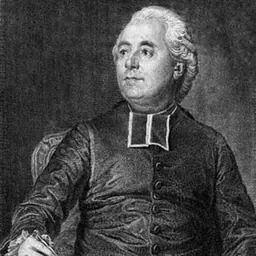
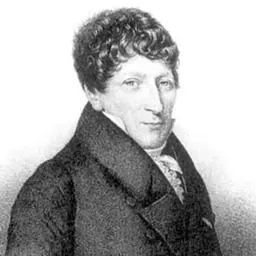

Related people
Same field, nearest in time

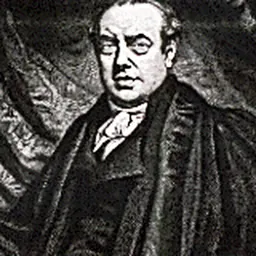
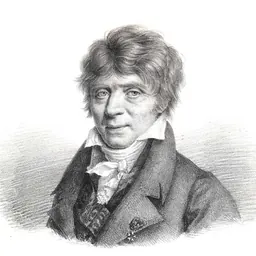

Contemporaries
People whose lives overlapped Gaspard Monge's
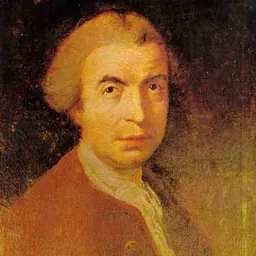



Frequently asked questions
Who was Gaspard Monge?
French mathematician, inventor of descriptive geometry and father of differential geometry (1746-1818)
When was Gaspard Monge born?
Gaspard Monge was born on 9 May 1746 in Beaune.
When did Gaspard Monge die?
Gaspard Monge died on 28 July 1818 in Paris.
What was Gaspard Monge's occupation?
Gaspard Monge was a mathematician, politician, physicist, university teacher, engineer and chemist.
What was Gaspard Monge known for?
Gaspard Monge was known for Descriptive geometry and Transportation theory (mathematics).
What nationality was Gaspard Monge?
Gaspard Monge was French.
Sources & further reading
Cite this page
APA: Biography.guide. (2026). Gaspard Monge. https://biography.guide/gaspard-monge/
MLA: "Gaspard Monge." Biography.guide, https://biography.guide/gaspard-monge/.
Chicago: "Gaspard Monge." Biography.guide. https://biography.guide/gaspard-monge/.
Data last updated: 2026-09-26 · Spot an error? Report a correction.
Page generated 2026-09-27 05:16 UTC