
Nevil Maskelyne
Fifth Astronomer Royal (*1765 – †1811)
About Nevil Maskelyne
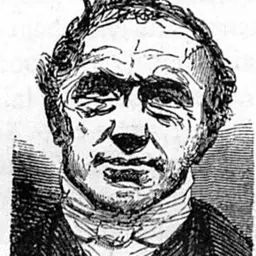
Lived 1732 – 1811 (aged 78). Nevil Maskelyne was a British mathematician, astronomer, scientist and university teacher, known for Astronomer Royal.
Nevil Maskelyne (; 6 October 1732 – 9 February 1811) was the fifth British Astronomer Royal. He held the office from 1765 to 1811. He was the first person to scientifically measure the mass of the planet Earth. He created The Nautical Almanac, in full the British Nautical Almanac and Astronomical Ephemeris for the Meridian of the Royal Observatory at Greenwich, using Tobias Mayer's corrections for Leonhard Euler's Lunar Theory tables.
Biography Maskelyne was born in London, the third son of Edmund Maskelyne of Purton in Wiltshire, and his wife, Elizabeth Booth. Maskelyne's father died when he was 12, leaving the family in reduced circumstances. Maskelyne attended Westminster School and was still a pupil there when his mother died in 1748. His interest in astronomy had begun while at Westminster School, shortly after the eclipse of 14 July 1748.
Maskelyne entered St Catharine's College, Cambridge, in 1749, graduating as seventh wrangler in 1754. Ordained as a minister in 1755, he became a fellow of Trinity College, Cambridge in 1756 and a Fellow of the Royal Society in 1758. Maskelyne became a member of the American Philosophical Society, elected in 1771.
Originally pursuing his career as a Church of England minister, he was Rector of Shrawardine in Shropshire from 1775 to 1782 and then Rector of North Runcton in Norfolk from 1782. In 1784 he was elected a Fellow of the Royal Society of Edinburgh. His proposers were John Playfair, John Robison and Dugald Stewart. On 21 August 1784 Maskelyne married Sophia Rose, then of St Andrew Holborn, Middlesex. Their only child, Margaret (25 June 1785 –1858), was the mother of Mervyn Herbert Nevil Story-Maskelyne (1823–1911) professor of mineralogy at Oxford (1856–95). Maskelyne's younger sister, Margaret, married Robert Clive.
Maskelyne is buried in the churchyard of St Mary the Virgin, the parish church of the village of Purton, Wiltshire, England.
Career
Measurement of longitude In 1760 the Royal Society appointed Maskelyne as an astronomer on one of their expeditions to observe the 1761 transit of Venus. He and the mathematician Robert Waddington were sent to the island of Saint Helena in the South Atlantic. This was an important observation since accurate measurements would allow the accurate calculation of Earth's distance from the Sun, which would in turn allow the actual rather than the relative scale of the Solar System to be calculated. This would allow, it was argued, the production of more accurate astronomical tables, in particular those predicting the motion of the Moon.
Bad weather prevented observation of the transit, but Maskelyne used his journey to trial a method of determining longitude using the position of the moon, which became known as the lunar distance method. He returned to England, resuming his position as curate at Chipping Barnet in 1761, and began work on a book, publishing the lunar-distance method of longitude calculation and providing tables to facilitate its use in 1763 in The British Mariner's Guide, which included the suggestion that to facilitate the finding of longitude at sea, lunar distances should be calculated beforehand for each year and published in a form accessible to navigators. On 26 February 1765 he had been appointed Astronomer Royal
The Board of Longitude therefore decided that rewards should be given to Harrison (£10,000), Mayer (£3000, posthumously) and others involved in helping to develop the lunar-distance method. Harrison was told that a further reward of £10,000 would be forthcoming if he could demonstrate the replicability of his watch. Although Harrison and his son later accused Maskelyne of bias against the timekeeping method, charges repeated by authors such as Dava Sobel and Rupert Gould, Maskelyne never submitted a method or an idea of his own for consideration by the Board of Longitude. He was to play a significant role in having marine timekeepers, as well as the lunar-distance method, developed, tested and used on board voyages of exploration.
Measurement of latitude Maskelyne took a great interest in various geodetical operations, including the measurement of the length of a degree of latitude in Maryland and Pennsylvania,
Schiehallion experiment
In 1772 Maskelyne proposed to the Royal Society what was to become known as the Schiehallion experiment (named after the Scottish mountain on which it was performed), for the determination of the Earth's density using a plumb line. He was not the first to suggest this, Pierre Bouguer and Charles-Marie de la Condamine having attempted the same experiment in 1738 in the Andes.
Maskelyne performed his experiment in 1774 on Schiehallion in Perthshire, Scotland, the mountain being chosen due to its regular conical shape which permitted a reasonably accurate determination of its volume. The apparent difference of latitude between two stations on opposite sides of the mountain were compared with the real difference of latitude obtained by triangulation.
Maskelyne in literature and the arts
Maskelyne features prominently in Dava Sobel's 1995 book, Longitude: The True Story of a Lone Genius Who Solved the Greatest Scientific Problem of His Time, as well as the television serial based on the book, where he is portrayed by Samuel West. Maskelyne is a supporting character in the novel Mason & Dixon by Thomas Pynchon. He and Charles Mason (and briefly, Jeremiah Dixon before he returns to Cape Town) meet on Saint Helena - with the characters of the two clashing while they spend time with each other. Maskelyne is portrayed as "Dr. Vickery" in Kate Grenville's semi-historical novel The Lieutenant.
Honours
1775 – Awarded the Royal Society's Copley Medal 1776 – Elected a Member of the Saint Petersburg Academy of Sciences. 1778 – Elected a Foreign Honorary Member of the American Academy of Arts and Sciences. The lunar crater Maskelyne in the Sea of Tranquility is named after him. William Wales named the Maskelyne Islands in southern Malekule, Vanuatu after him while on James Cook's second voyage on HMS Resolution. Also during Cook's second voyage, the colony at Botany Bay had a small area next to the newly established observatory named Point Maskelyne.
Works
Don’t just read it —
keep it.
Full-length biographies made to live with: read them, listen on the way to work, watch them tonight.
- E-book
- Audio
- Video
Instant download · yours to keep · every purchase keeps this site free
Important facts
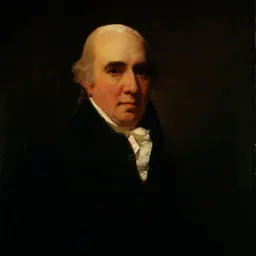
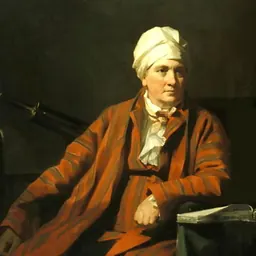
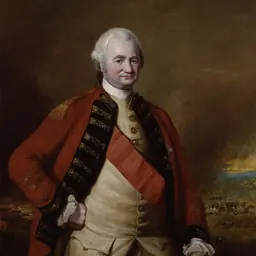
People in Nevil Maskelyne's life
Named in this biography and alive at the same time


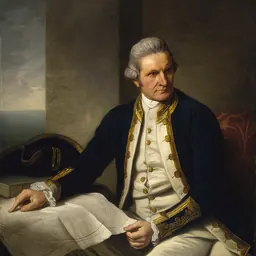
Related people
Same field, nearest in time

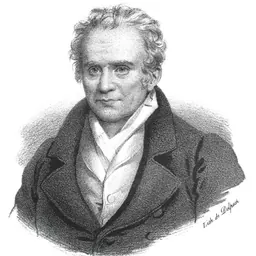
Contemporaries
People whose lives overlapped Nevil Maskelyne's





Frequently asked questions
Who was Nevil Maskelyne?
fifth Astronomer Royal (*1765 – †1811)
When was Nevil Maskelyne born?
Nevil Maskelyne was born on 6 October 1732 in London.
When did Nevil Maskelyne die?
Nevil Maskelyne died on 9 February 1811 in Greenwich.
What was Nevil Maskelyne's occupation?
Nevil Maskelyne was a mathematician, astronomer, scientist and university teacher.
What was Nevil Maskelyne known for?
Nevil Maskelyne was known for Astronomer Royal.
What nationality was Nevil Maskelyne?
Nevil Maskelyne was British.
Sources & further reading
Cite this page
APA: Biography.guide. (2026). Nevil Maskelyne. https://biography.guide/nevil-maskelyne-mathematician/
MLA: "Nevil Maskelyne." Biography.guide, https://biography.guide/nevil-maskelyne-mathematician/.
Chicago: "Nevil Maskelyne." Biography.guide. https://biography.guide/nevil-maskelyne-mathematician/.
Data last updated: 2026-09-26 · Spot an error? Report a correction.
Page generated 2026-09-27 05:15 UTC