
About Johann Hedwig
Lived 1730 – 1799 (aged 68). Johann Hedwig was a German botanist, bryologist, university teacher, physician and biologist, known for Bryology.
Johann Hedwig (8 December 1730 – 18 February 1799), also styled as Johannes Hedwig, was a German botanist notable for his studies of mosses. He is sometimes called the "father of bryology". He is known for his particular observations of sexual reproduction in the cryptogams. Many of his writings were in Latin, and his name is rendered in Latin as Ioannis Hedwig or Ioanne Hedwig.
Early life
Hedwig was born in Brașov, Transylvania, on 8 December 1730. As the son of a shoemaker, he grew up in poverty. It was in his childhood he became fascinated with mosses. He went on to study medicine at the University of Leipzig, and received his medical degree in 1759.
Career
After receiving his degree, Hedwig worked as a physician for the next twenty years. When he was not granted a license to practice in Transylvania with his Leipzig degree, he worked as a general practitioner in Chemnitz. It was during this time when he first pursued botany as a hobby.
In 1781, he moved to Leipzig, where he worked as a doctor at the city hospital. It was here that he published his first major work, the two volume Fundamentum historiae naturalis muscorum frondosorum in 1782. In 1786, he was hired as an associate professor of medicine at the University of Leipzig. In 1789, he became a professor of botany and director of the botanical garden at the school. In 1790, he became a foreign member of the Royal Swedish Academy of Sciences. In 1792, he was elected a member of the Academy of Sciences Leopoldina.
Today, Hedwig is commemorated both by the moss genus Hedwigia as well as the peer-reviewed journal Nova Hedwigia. In appreciation of Hedwig's achievements, the International Association of Bryologists awards the Hedwig Medal to scientists for extraordinary contributions in the field of Bryology.
Hedwig's personal herbarium was auctioned off in 1810, but it was largely acquired by the Botanical Garden of Geneva, where the collection is still located today.
Selected publications
Editions
Don’t just read it —
keep it.
Full-length biographies made to live with: read them, listen on the way to work, watch them tonight.
- E-book
- Audio
- Video
Instant download · yours to keep · every purchase keeps this site free
Important facts
Related people
Same field, nearest in time




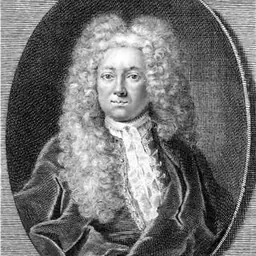

Contemporaries
People whose lives overlapped Johann Hedwig's

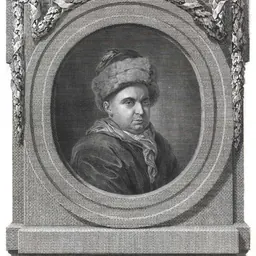



Frequently asked questions
Who was Johann Hedwig?
German botanist and physician (1730–1799)
When was Johann Hedwig born?
Johann Hedwig was born on 8 December 1730 in Brașov.
When did Johann Hedwig die?
Johann Hedwig died on 18 February 1799 in Leipzig.
What was Johann Hedwig's occupation?
Johann Hedwig was a botanist, bryologist, university teacher, physician and biologist.
What was Johann Hedwig known for?
Johann Hedwig was known for Bryology.
What nationality was Johann Hedwig?
Johann Hedwig was German.
Sources & further reading
Cite this page
APA: Biography.guide. (2026). Johann Hedwig. https://biography.guide/johann-hedwig/
MLA: "Johann Hedwig." Biography.guide, https://biography.guide/johann-hedwig/.
Chicago: "Johann Hedwig." Biography.guide. https://biography.guide/johann-hedwig/.
Data last updated: 2026-09-25 · Spot an error? Report a correction.
Page generated 2026-09-27 05:12 UTC