
Johann Wilhelm Ritter
German chemist, physicist and philosopher
About Johann Wilhelm Ritter
Lived 1776 – 1810 (aged 33). Johann Wilhelm Ritter was a German physicist, university teacher, chemist, naturalist and philosopher, known for Electrochemistry and Ultraviolet light.
Johann Wilhelm Ritter (16 December 1776 – 23 January 1810) was a German chemist, physicist and philosopher. He is associated with the German Romanticism. He is also known for discovering the ultraviolet part of the electromagnetic spectrum. He is also credited for the first achieved sustained electrolysis of water and the discovery of electroplating.
Biography He was born in Samitz (Zamienice) near Haynau (Chojnów) in Silesia (then part of Prussia, since 1945 in Poland), and died in Munich.
German Romanticism Ritter belonged to the German Romantic movement. He was personally acquainted with Johann Wolfgang von Goethe, Alexander von Humboldt, Johann Gottfried Herder and Clemens Brentano. He was strongly influenced by Friedrich Wilhelm Joseph Schelling, who was the main philosopher of the Naturphilosophie movement. In 1801, Hans Christian Ørsted visited Jena and became his friend. Several of Ritter's researches were later reported by Ørsted, who was also strongly influenced by the philosophical outlook of Naturphilosophie.
Scientific research Johann Wilhelm Ritter's first involvement with science began when he was 14 years old. He became an apprentice to an apothecary in Liegnitz (Legnica), and acquired a deep interest in chemistry. He began medicine studies at the University of Jena in 1796. A self-taught scientist, he made many experimental researches on chemistry, electricity and other fields. In 1802 he built his first electrochemical cell, with 50 copper discs separated by cardboard disks moistened by a salt solution.
Ritter made several self-experiments applying the poles of a voltaic pile to his own hands, eyes, ears, nose and tongue. He also described the difference between the physiological effects of the two poles of the pile, although some of the effects he reported were not confirmed afterwards.
Many of Ritter's researches were guided by a search for polarities in the several "forces" of nature, and for the relation between those "forces" – two of the assumptions of Naturphilosophie. In 1801, after hearing about the discovery of "heat rays" (infrared radiation) by William Herschel (in 1800), Ritter looked for an opposite (cooling) radiation at the other end of the visible spectrum. He did not find exactly what he expected to find, but after a series of attempts he noticed that silver chloride was transformed faster from white to black when it was placed at the dark region of the Sun's spectrum, close to its violet end. The "chemical rays" found by him were afterwards called ultraviolet radiation.
Some of Ritter's researches were acknowledged as important scientific contributions, but he also claimed the discovery of many phenomena that were not confirmed by other researchers. For instance: he reported that the Earth had electric poles that could be detected by the motion of a bimetallic needle; and he claimed that he could produce the electrolysis of water using a series of magnets, instead of Volta's piles.
Ritter had no regular income and never became a university professor, although in 1804 he was elected a member of the Bavarian Academy of Science (in Munich).
Personal life and death He married in 1804 and had four children, but he was unable to provide the needs of his family. Plagued by financial difficulties and suffering from weak health (perhaps aggravated by his electrical self-experimentation), he died young in 1810, as a poor man.
Don’t just read it —
keep it.
Full-length biographies made to live with: read them, listen on the way to work, watch them tonight.
- E-book
- Audio
- Video
Instant download · yours to keep · every purchase keeps this site free
Important facts
People in Johann Wilhelm Ritter's life
Named in this biography and alive at the same time

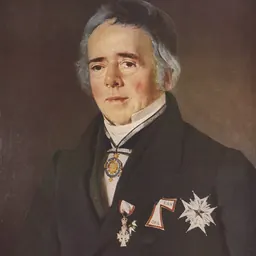

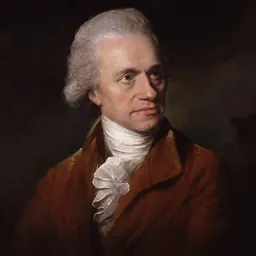

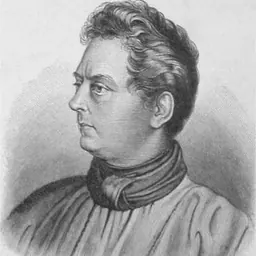
Related people
Same field, nearest in time
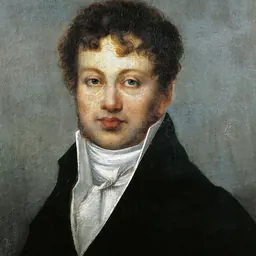

Contemporaries
People whose lives overlapped Johann Wilhelm Ritter's


Frequently asked questions
Who was Johann Wilhelm Ritter?
German chemist, physicist and philosopher
When was Johann Wilhelm Ritter born?
Johann Wilhelm Ritter was born on 16 December 1776 in Zamienice.
When did Johann Wilhelm Ritter die?
Johann Wilhelm Ritter died on 23 January 1810 in Munich.
What was Johann Wilhelm Ritter's occupation?
Johann Wilhelm Ritter was a physicist, university teacher, chemist, naturalist and philosopher.
What was Johann Wilhelm Ritter known for?
Johann Wilhelm Ritter was known for Electrochemistry and Ultraviolet light.
What nationality was Johann Wilhelm Ritter?
Johann Wilhelm Ritter was German.
Sources & further reading
· Wikipedia: Johann Wilhelm Ritter
· DBpedia: Johann Wilhelm Ritter
Cite this page
APA: Biography.guide. (2026). Johann Wilhelm Ritter. https://biography.guide/johann-wilhelm-ritter/
MLA: "Johann Wilhelm Ritter." Biography.guide, https://biography.guide/johann-wilhelm-ritter/.
Chicago: "Johann Wilhelm Ritter." Biography.guide. https://biography.guide/johann-wilhelm-ritter/.
Data last updated: 2026-09-26 · Spot an error? Report a correction.
Page generated 2026-09-27 05:15 UTC