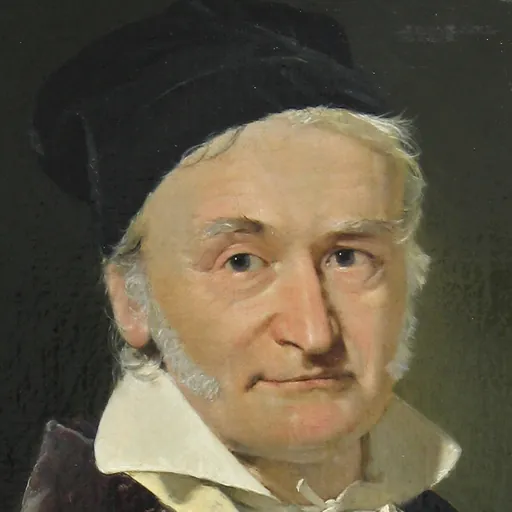
Carl Friedrich Gauss
German mathematician and physicist
About Carl Friedrich Gauss
Lived 1777 – 1855 (aged 77). Carl Friedrich Gauss was a mathematician, geophysicist, astronomer, science writer, physicist and surveyor, known for List of topics named after Carl Friedrich Gauss.
Johann Carl Friedrich Gauss (; ; 30 April 177723 February 1855) was a German mathematician, astronomer, geodesist, and physicist, who contributed to many fields in mathematics and science. His mathematical contributions spanned the branches of number theory, algebra, analysis, geometry, statistics, and probability. Gauss was director of the Göttingen Observatory in Germany and professor of astronomy from 1807 until his death in 1855.
From an early age, Gauss was known as a child prodigy in mathematics. While studying at the University of Göttingen, he propounded several mathematical theorems. As an independent scholar, he wrote the masterpieces Disquisitiones Arithmeticae and Theoria motus corporum coelestium. Gauss produced the second and third complete proofs of the fundamental theorem of algebra. He also introduced the triple bar symbol (≡) for congruence. In number theory, he made numerous contributions, such as the composition law, the law of quadratic reciprocity, and proved the triangular case of the Fermat polygonal number theorem. He also contributed to the theory of binary and ternary quadratic forms, and the theory of hypergeometric series. When Gauss was only 19 years old, he proved the construction of the heptadecagon, the first progress in regular polygon construction in over 2000 years. He also introduced the concept of Gaussian curvature and proved its key properties, especially with his Theorema Egregium. Gauss was the first to prove Gauss's inequality. Further, he was instrumental in the development of the arithmetic–geometric mean. He introduced the normal or Gaussian distribution in probability. Due to Gauss's extensive and fundamental contributions to science and mathematics, more than 100 mathematical and scientific concepts are named after him.
Gauss was instrumental in the identification of Ceres as a dwarf planet. His work on the motion of planetoids disturbed by large planets led to the introduction of the Gaussian gravitational constant and the method of least squares, which he had discovered before Adrien-Marie Legendre published it. Gauss also introduced the algorithm known as recursive least squares. Gauss led the geodetic survey of the Kingdom of Hanover together with an arc measurement project from 1820 to 1844; Gauss was one of the founders of geophysics and formulated the fundamental principles of magnetism. He provided the first absolute measurement of Earth's magnetic field in 1832, later applying one of his inventions, that of spherical harmonic analysis, to show that most of Earth's magnetic field was internal. He was the first to discover and study non-Euclidean geometry, which he also named. Gauss was the first to develop a fast Fourier transform, doing so some 160 years before John Tukey and James Cooley. His practical work led to the invention of the heliotrope in 1821, a magnetometer in 1833 and – with Wilhelm Eduard Weber – the first electromagnetic telegraph in 1833.
Gauss was awarded the Lalande Prize in 1809 for his work on planetary theory and determination of orbits, and the Copley Medal in 1838 for his mathematical research in magnetism. He is known for not publishing incomplete work and left several works to be edited posthumously, as a result; this practice delayed the dissemination of many of his discoveries. He believed that the act of learning, not possession of knowledge, provided the greatest enjoyment. While Gauss was not a committed or enthusiastic teacher, generally preferring to focus on his own work, some of his students, such as Richard Dedekind and Bernhard Riemann, became well-known and influential mathematicians in their own right. He married twice and had six children, several of whom later emigrated to the United States.
Biography Youth and education
Gauss was born on 30 April 1777 in Brunswick, in the Duchy of Brunswick-Wolfenbüttel (now in the German state of Lower Saxony). His family was of relatively low social status. His father Gebhard Dietrich Gauss (1744–1808) worked variously as a butcher, bricklayer, gardener, and treasurer of a death-benefit fund. Gauss characterized his father as honourable and respected, but rough and dominating at home. He was experienced in writing and calculating, whereas his second wife Dorothea, Carl Friedrich's mother, was nearly illiterate. He had one elder brother from his father's first marriage.
Gauss was a child prodigy in mathematics. When the elementary teachers noticed his intellectual abilities, they brought him to the attention of the Duke of Brunswick who sent him to the local Collegium Carolinum, which he attended from 1792 to 1795 with Eberhard August Wilhelm von Zimmermann as one of his teachers. Thereafter the Duke granted him the resources for studies of mathematics, sciences, and classical languages at the University of Göttingen until 1798. His professor in mathematics was Abraham Gotthelf Kästner, whom Gauss called "the leading mathematician among poets, and the leading poet among mathematicians" because of his epigrams. His favorite English author was Walter Scott, his favorite German Jean Paul. At the age of 62, he began to teach himself Russian, very likely to understand scientific writings from Russia, among them those of Lobachevsky on non-Euclidean geometry. Gauss liked singing and went to concerts. He was a busy newspaper reader; in his last years, he would visit an academic press salon of the university every noon. Gauss did not care much for philosophy, and mocked the "splitting hairs of the so-called metaphysicians", by which he meant proponents of the contemporary school of Naturphilosophie.
Gauss had an "aristocratic and through and through conservative nature", with little respect for people's intelligence and morals, following the motto "mundus vult decipi". He disliked Napoleon and his system and was horrified by violence and revolution of all kinds. Thus he condemned the methods of the Revolutions of 1848, though he agreed with some of their aims, such as that of a unified Germany. He had a low estimation of the constitutional system and he criticized parliamentarians of his time for their perceived ignorance and logical errors.
Some Gauss biographers have speculated on his religious beliefs. He sometimes said "God arithmetizes" and "I succeeded – not on account of my hard efforts, but by the grace of the Lord." Gauss was a member of the Lutheran church, like most of the population in northern Germany, but it seems that he did not believe all Lutheran dogma or understand the Bible fully literally. According to Sartorius, Gauss's religious tolerance, "insatiable thirst for truth" and sense of justice were motivated by his religious convictions.
Mathematics Algebra and number theory Fundamental theorem of algebra
In his doctoral thesis from 1799, Gauss proved the fundamental theorem of algebra which states that every non-constant single-variable polynomial with complex coefficients has at least one complex root. Mathematicians including Jean le Rond d'Alembert had produced false proofs before him, and Gauss's dissertation contains a critique of d'Alembert's work. He subsequently produced three other proofs, the last one in 1849 being generally rigorous. His attempts led to considerable clarification of the concept of complex numbers.
Disquisitiones Arithmeticae
In the preface to the Disquisitiones, Gauss dates the beginning of his work on number theory to 1795. By studying the works of previous mathematicians like Fermat, Euler, Lagrange, and Legendre, he realized that these scholars had already found much of what he had independently discovered. The Disquisitiones Arithmeticae, written in 1798 and published in 1801, consolidated number theory as a discipline and covered both elementary and algebraic number theory. Therein he introduces the triple bar symbol for congruence and uses it for a clean presentation of modular arithmetic. It deals with the unique factorization theorem and primitive roots modulo n. In the main sections, Gauss presents the first two proofs of the law of quadratic reciprocity and develops the theories of binary and ternary quadratic forms.
The Disquisitiones include the Gauss composition law for binary quadratic forms, as well as the enumeration of the number of representations of an integer as the sum of three squares. As an almost immediate corollary of his theorem on three squares, he proves the triangular case of the Fermat polygonal number theorem for n = 3. From several analytic results on class numbers that Gauss gives without proof towards the end of the fifth section, it appears that Gauss already knew the class number formula in 1801.
In the last section, Gauss gives proof for the constructibility of a regular heptadecagon (17-sided polygon) with straightedge and compass by reducing this geometrical problem to an algebraic one. This was the first progress in regular polygon construction in over 2000 years. He shows that a regular polygon is constructible if the number of its sides is either a power of 2 or the product of a power of 2 and any number of distinct Fermat primes. In the same section, he gives a result on the number of solutions of certain cubic polynomials with coefficients in finite fields, which amounts to counting integral points on an elliptic curve. An unfinished chapter, consisting of work done during 1797–1799, was found among his papers after his death.
Further investigations One of Gauss's first results was the empirically found conjecture of 1792 – the later called prime number theorem – giving an estimation of the number of prime numbers by using the integral logarithm.
In 1816, Olbers encouraged Gauss to compete for a prize from the French Academy for a proof for Fermat's Last Theorem; he refused, considering the topic uninteresting. However, after his death a short undated paper was found with proofs of the theorem for the cases n = 3 and n = 5. The particular case of n = 3 was proved much earlier by Leonhard Euler, but Gauss developed a more streamlined proof which made use of Eisenstein integers; though more general, the proof was simpler than in the real integers case.
Gauss contributed to solving the Kepler conjecture in 1831 with the proof that a greatest packing density of spheres in the three-dimensional space is given when the centres of the spheres form a cubic face-centred arrangement, when he reviewed a book of Ludwig August Seeber on the theory of reduction of positive ternary quadratic forms. Having noticed some lacks in Seeber's proof, he simplified many of his arguments, proved the central conjecture, and remarked that this theorem is equivalent to the Kepler conjecture for regular arrangements.
In two papers on biquadratic residues (1828, 1832) Gauss introduced the ring of Gaussian integers , showed that it is a unique factorization domain, and generalized some key arithmetic concepts, such as Fermat's little theorem and Gauss's lemma. The main objective of introducing this ring was to formulate the law of biquadratic reciprocity
In the second paper, he stated the general law of biquadratic reciprocity and proved several special cases of it. In an earlier publication from 1818 containing his fifth and sixth proofs of quadratic reciprocity, he claimed the techniques of these proofs (Gauss sums) can be applied to prove higher reciprocity laws.
Analysis One of Gauss's first discoveries was the notion of the arithmetic-geometric mean (AGM) of two positive real numbers. He discovered its relation to elliptic integrals in the years 1798–1799 through Landen's transformation, and a diary entry recorded the discovery of the connection of Gauss's constant to lemniscatic elliptic functions, a result that Gauss stated "will surely open an entirely new field of analysis". He also made early inroads into the more formal issues of the foundations of complex analysis, and from a letter to Bessel in 1811 it is clear that he knew the "fundamental theorem of complex analysis" – Cauchy's integral theorem – and understood the notion of complex residues when integrating around poles.
Euler's pentagonal numbers theorem, together with other researches on the AGM and lemniscatic functions, led him to plenty of results on Jacobi theta functions, His works show that he knew modular transformations of order 3, 5, 7 for elliptic functions since 1808.
Several mathematical fragments in his Nachlass indicate that he knew parts of the modern theory of modular forms. One of Gauss's sketches of this kind was a drawing of a tessellation of the unit disk by "equilateral" hyperbolic triangles with all angles equal to .
An example of Gauss's insight in analysis is the cryptic remark that the principles of circle division by compass and straightedge can also be applied to the division of the lemniscate curve, which inspired Abel's theorem on lemniscate division. Another example is his publication "Summatio quarundam serierum singularium" (1811) on the determination of the sign of quadratic Gauss sums, in which he solved the main problem by introducing q-analogs of binomial coefficients and manipulating them by several original identities that seem to stem from his work on elliptic function theory; however, Gauss cast his argument in a formal way that does not reveal its origin in elliptic function theory, and only the later work of mathematicians such as Jacobi and Hermite has exposed the crux of his argument.
In the "Disquisitiones generales circa series infinitam..." (1813), he provides the first systematic treatment of the general hypergeometric function , and shows that many of the functions known at the time are special cases of the hypergeometric function. This work is the first exact inquiry into convergence of infinite series in the history of mathematics. Furthermore, it deals with infinite continued fractions arising as ratios of hypergeometric functions, which are now called Gauss continued fractions.
In 1823, Gauss won the prize of the Danish Society with an essay on conformal mappings, which contains several developments that pertain to the field of complex analysis. Gauss stated that angle-preserving mappings in the complex plane must be complex analytic functions, and used the later-named Beltrami equation to prove the existence of isothermal coordinates on analytic surfaces. The essay concludes with examples of conformal mappings into a sphere and an ellipsoid of revolution.
Numerical analysis Gauss often deduced theorems inductively from numerical data he had collected empirically. As such, the use of efficient algorithms to facilitate calculations was vital to his research, and he made many contributions to numerical analysis, such as the method of Gaussian quadrature, published in 1816.
In a private letter to Gerling from 1823, he described a solution of a 4x4 system of linear equations with the Gauss-Seidel method – an "indirect" iterative method for the solution of linear systems, and recommended it over the usual method of "direct elimination" for systems of more than two equations.
Gauss invented an algorithm for calculating what is now called discrete Fourier transforms when calculating the orbits of Pallas and Juno in 1805, 160 years before Cooley and Tukey found their similar Cooley–Tukey algorithm. He developed it as a trigonometric interpolation method, but the paper Theoria Interpolationis Methodo Nova Tractata was published only posthumously in 1876, well after Joseph Fourier's introduction of the subject in 1807.
Geometry Differential geometry
The geodetic survey of Hanover fuelled Gauss's interest in differential geometry and topology, fields of mathematics dealing with curves and surfaces. This led him in 1828 to the publication of a work that marks the birth of modern differential geometry of surfaces, as it departed from the traditional ways of treating surfaces as cartesian graphs of functions of two variables, and that initiated the exploration of surfaces from the "inner" point of view of a two-dimensional being constrained to move on it. As a result, the Theorema Egregium (remarkable theorem), established a property of the notion of Gaussian curvature. Informally, the theorem says that the curvature of a surface can be determined entirely by measuring angles and distances on the surface, regardless of the embedding of the surface in three-dimensional or two-dimensional space.
The Theorema Egregium leads to the abstraction of surfaces as doubly-extended manifolds; it clarifies the distinction between the intrinsic properties of the manifold (the metric) and its physical realization in ambient space. A consequence is the impossibility of an isometric transformation between surfaces of different Gaussian curvature. This means practically that a sphere or an ellipsoid cannot be transformed to a plane without distortion, which causes a fundamental problem in designing projections for geographical maps. A portion of this essay is dedicated to a profound study of geodesics. In particular, Gauss proves the local Gauss–Bonnet theorem on geodesic triangles, and generalizes Legendre's theorem on spherical triangles to geodesic triangles on arbitrary surfaces with continuous curvature; he found that the angles of a "sufficiently small" geodesic triangle deviate from that of a planar triangle of the same sides in a way that depends only on the values of the surface curvature at the vertices of the triangle, regardless of the behaviour of the surface in the triangle interior.
Gauss's memoir from 1828 lacks the conception of geodesic curvature. However, in a previously unpublished manuscript, very likely written in 1822–1825, he introduced the term "side curvature" (German: "Seitenkrümmung") and proved its invariance under isometric transformations, a result that was later obtained by Ferdinand Minding and published by him in 1830. This Gauss paper contains the core of his lemma on total curvature, but also its generalization, found and proved by Pierre Ossian Bonnet in 1848 and known as the Gauss–Bonnet theorem.
Non-Euclidean geometry
During Gauss's lifetime, the parallel postulate of Euclidean geometry was heavily discussed. Numerous efforts were made to prove it in the frame of the Euclidean axioms, whereas some mathematicians discussed the possibility of geometrical systems without it. Gauss thought about the basics of geometry from the 1790s on, but only realized in the 1810s that a non-Euclidean geometry without the parallel postulate could solve the problem. In a letter to Franz Taurinus of 1824, he presented a short comprehensible outline of what he named a "non-Euclidean geometry", but he strongly forbade Taurinus to make any use of it. Gauss is credited with having been the one to first discover and study non-Euclidean geometry, even coining the term as well.
The first publications on non-Euclidean geometry in the history of mathematics were authored by Nikolai Lobachevsky in 1829 and János Bolyai in 1832. In the following years, Gauss wrote his ideas on the topic but did not publish them, thus avoiding influencing the contemporary scientific discussion. Gauss commended the ideas of János Bolyai in a letter to his father and university friend Farkas Bolyai claiming that these were congruent to his own thoughts of some decades. However, it is not quite clear to what extent he preceded Lobachevsky and Bolyai, as his written remarks are vague and obscure.
Sartorius first mentioned Gauss's work on non-Euclidean geometry in 1856, but only the publication of Gauss's Nachlass in Volume VIII of the Collected Works (1900) showed Gauss's ideas on the matter, at a time when non-Euclidean geometry was still an object of some controversy.
Early topology Gauss was also an early pioneer of topology or Geometria Situs, as it was called in his lifetime. The first proof of the fundamental theorem of algebra in 1799 contained an essentially topological argument; fifty years later, he further developed the topological argument in his fourth proof of this theorem.
Another encounter with topological notions occurred to him in the course of his astronomical work in 1804, when he determined the limits of the region on the celestial sphere in which comets and asteroids might appear, and which he termed "Zodiacus". He discovered that if the Earth's and comet's orbits are linked, then by topological reasons the Zodiacus is the entire sphere. In 1848, in the context of the discovery of the asteroid 7 Iris, he published a further qualitative discussion of the Zodiacus.
In Gauss's letters of 1820–1830, he thought intensively on topics with close affinity to Geometria Situs, and became gradually conscious of semantic difficulty in this field. Fragments from this period reveal that he tried to classify "tract figures", which are closed plane curves with a finite number of transverse self-intersections, that may also be planar projections of knots. To do so he devised a symbolical scheme, the Gauss code, that in a sense captured the characteristic features of tract figures.
In a fragment from 1833, Gauss defined the linking number of two space curves by a certain double integral, and in doing so provided for the first time an analytical formulation of a topological phenomenon. On the same note, he lamented the little progress made in Geometria Situs, and remarked that one of its central problems will be "to count the intertwinings of two closed or infinite curves". His notebooks from that period reveal that he was also thinking about other topological objects such as braids and tangles. he stated the fundamental theorem of axonometry, which tells how to represent a 3D cube on a 2D plane with complete accuracy, via complex numbers. He described rotations of this sphere as the action of certain linear fractional transformations on the extended complex plane, and gave a proof for the geometric theorem that the altitudes of a triangle always meet in a single orthocenter.
Gauss was concerned with John Napier's "Pentagramma mirificum" – a certain spherical pentagram – for several decades; he approached it from various points of view, and gradually gained a full understanding of its geometric, algebraic, and analytic aspects. In particular, in 1843 he stated and proved several theorems connecting elliptic functions, Napier spherical pentagons, and Poncelet pentagons in the plane.
Furthermore, he contributed a solution to the problem of constructing the largest-area ellipse inside a given quadrilateral, and discovered a surprising result about the computation of area of pentagons.
Sciences Astronomy
On 1 January 1801, Italian astronomer Giuseppe Piazzi discovered a new celestial object, presumed it to be the long searched planet between Mars and Jupiter according to the so-called Titius–Bode law, and named it Ceres. He could track it only for a short time until it disappeared behind the glare of the Sun. The mathematical tools of the time were not sufficient to predict the location of its reappearance from the few data available. Gauss tackled the problem and predicted a position for possible rediscovery in December 1801. This turned out to be accurate within a half-degree when Franz Xaver von Zach on 7 and 31 December at Gotha, and independently Heinrich Olbers on 1 and 2 January in Bremen, identified the object near the predicted position.
Gauss's method leads to an equation of the eighth degree, of which one solution, the Earth's orbit, is known. The solution sought is then separated from the remaining six based on physical conditions. In this work, Gauss used comprehensive approximation methods which he created for that purpose.
The discovery of Ceres led Gauss to the theory of the motion of planetoids disturbed by large planets, eventually published in 1809 as Theoria motus corporum coelestium in sectionibus conicis solem ambientum. It introduced the Gaussian gravitational constant. After long years of work, he finished it in 1816 without a result that seemed sufficient to him. This marked the end of his activities in theoretical astronomy.
One fruit of Gauss's research on Pallas perturbations was the Determinatio Attractionis... (1818) on a method of theoretical astronomy that later became known as the "elliptic ring method". It introduced an averaging conception in which a planet in orbit is replaced by a fictitious ring with mass density proportional to the time the planet takes to follow the corresponding orbital arcs. Gauss presents the method of evaluating the gravitational attraction of such an elliptic ring, which includes several steps; one of them involves a direct application of the arithmetic-geometric mean (AGM) algorithm to calculate an elliptic integral.
Even after Gauss's contributions to theoretical astronomy came to an end, more practical activities in observational astronomy continued and occupied him during his entire career. As early as 1799, Gauss dealt with the determination of longitude by use of the lunar parallax, for which he developed more convenient formulas than those were in common use. After appointment as director of observatory he attached importance to the fundamental astronomical constants in correspondence with Bessel. Gauss himself provided tables of nutation and aberration, solar coordinates, and refraction. He made many contributions to spherical geometry, and in this context solved some practical problems about navigation by stars. He published a great number of observations, mainly on minor planets and comets; his last observation was the solar eclipse of 28 July 1851.
Chronology Gauss's first publication following his doctoral thesis dealt with the determination of the date of Easter (1800), an elementary mathematical topic. Gauss aimed to present a convenient algorithm for people without any knowledge of ecclesiastical or even astronomical chronology, and thus avoided the usual terms of golden number, epact, solar cycle, domenical letter, and any religious connotations. This choice of topic likely had historical grounds. The replacement of the Julian calendar by the Gregorian calendar had caused confusion in the Holy Roman Empire since the 16th century and was not finished in Germany until 1700, when the difference of eleven days was deleted. Even after this, Easter fell on different dates in Protestant and Catholic territories, until this difference was abolished by agreement in 1776. In the Protestant states, such as the Duchy of Brunswick, the Easter of 1777, five weeks before Gauss's birth, was the first one calculated in the new manner. In the history of statistics, this disagreement is called the "priority dispute over the discovery of the method of least squares".
In the first paper he proved Gauss's inequality (a Chebyshev-type inequality) for unimodal distributions, and stated without proof another inequality for moments of the fourth order (a special case of the Gauss-Winckler inequality). He derived lower and upper bounds for the variance of the sample variance. In the second paper, Gauss described recursive least squares methods, which he discovered. Gauss's work on the theory of errors was extended in several directions by the geodesist Friedrich Robert Helmert to the Gauss-Helmert model.
Gauss also contributed to problems in probability theory that are not directly concerned with the theory of errors. One example appears as a diary note where he tried to describe the asymptotic distribution of entries in the continued fraction expansion of a random number uniformly distributed in (0,1). He derived this distribution, now known as the Gauss-Kuzmin distribution, as a by-product of the discovery of the ergodicity of the Gauss map for continued fractions. Gauss's solution is the first-ever result in the metrical theory of continued fractions.
Geodesy
Gauss was busy with geodetic problems since 1799 when he helped Karl Ludwig von Lecoq with calculations during his survey in Westphalia. Beginning in 1804, he taught himself some practical geodesy in Brunswick and Göttingen.
Since 1816, Gauss's former student Heinrich Christian Schumacher, then professor in Copenhagen, but living in Altona (Holstein) near Hamburg as head of an observatory, carried out a triangulation of the Jutland peninsula from Skagen in the north to Lauenburg in the south. This project was the basis for map production but also aimed at determining the geodetic arc between the terminal sites. Data from geodetic arcs were used to determine the dimensions of the earth geoid, and long arc distances brought more precise results. Schumacher asked Gauss to continue this work further to the south in the Kingdom of Hanover; Gauss agreed after a short time of hesitation. Finally, in May 1820, King George IV gave the order to Gauss.
An arc measurement needs a precise astronomical determination of at least two points in the network. Gauss and Schumacher used the coincidence that both observatories in Göttingen and Altona, in the garden of Schumacher's house, lay nearly in the same longitude. The latitude was measured with both their instruments and a zenith sector of Ramsden that was transported to both observatories.
Gauss and Schumacher had already determined some angles between Lüneburg, Hamburg, and Lauenburg for the geodetic connection in October 1818. During the summers of 1821 until 1825 Gauss directed the triangulation work personally, from Thuringia in the south to the river Elbe in the north. The triangle between Hoher Hagen, Großer Inselsberg in the Thuringian Forest, and Brocken in the Harz mountains was the largest one Gauss had ever measured with a maximum size of . In the thinly populated Lüneburg Heath without significant natural summits or artificial buildings, he had difficulties finding suitable triangulation points; sometimes cutting lanes through the vegetation was necessary.
In 1828, when studying differences in latitude, Gauss first defined a physical approximation for the figure of the Earth as the surface everywhere perpendicular to the direction of gravity; later his doctoral student Johann Benedict Listing called this the geoid.
Magnetism and telegraphy Geomagnetism
Gauss had been interested in magnetism since 1803. After Alexander von Humboldt visited Göttingen in 1826, both scientists began intensive research on geomagnetism, partly independently, partly in productive cooperation. In 1828, Gauss was Humboldt's guest during the conference of the Society of German Natural Scientists and Physicians in Berlin, where he got acquainted with the physicist Wilhelm Weber.
When Weber got the chair for physics in Göttingen as successor of Johann Tobias Mayer by Gauss's recommendation in 1831, both of them started a fruitful collaboration, leading to a new knowledge of magnetism with a representation for the unit of magnetism in terms of mass, charge, and time. They founded the Magnetic Association (German: Magnetischer Verein), an international working group of several observatories, which carried out measurements of Earth's magnetic field in many regions of the world using equivalent methods at arranged dates in the years 1836 to 1841.
In 1836, Humboldt suggested the establishment of a worldwide net of geomagnetic stations in the British dominions with a letter to the Duke of Sussex, then president of the Royal Society; he proposed that magnetic measures should be taken under standardized conditions using his methods. Together with other instigators, this led to a global program known as "Magnetical crusade" under the direction of Edward Sabine. The dates, times, and intervals of observations were determined in advance, the Göttingen mean time was used as the standard. 61 stations on all five continents participated in this global program. Gauss and Weber founded a series for publication of the results, six volumes were edited between 1837 and 1843. Weber's departure to Leipzig in 1843 as late effect of the Göttingen Seven affair marked the end of Magnetic Association activity.
Gauss carried out a General Theory of Terrestrial Magnetism (1839), in what he believed to describe the nature of magnetic force; according to Felix Klein, this work is a presentation of observations by use of spherical harmonics rather than a physical theory. The theory predicted the existence of exactly two magnetic poles on the Earth, thus Hansteen's idea of four magnetic poles became obsolete, and the data allowed to determine their location with rather good precision.
Gauss influenced the beginning of geophysics in Russia, when Adolph Theodor Kupffer, one of his former students, founded a magnetic observatory in St. Petersburg, following the example of the observatory in Göttingen, and similarly, Ivan Simonov in Kazan.
Gauss's main theoretical interests in electromagnetism were reflected in his attempts to formulate quantitive laws governing electromagnetic induction. In notebooks from these years, he recorded several innovative formulations; he discovered the vector potential function, independently rediscovered by Franz Ernst Neumann in 1845, and in January 1835 he wrote down an "induction law" equivalent to Faraday's law, which stated that the electromotive force at a given point in space is equal to the instantaneous rate of change (with respect to time) of this function.
Gauss tried to find a unifying law for long-distance effects of electrostatics, electrodynamics, electromagnetism, and induction, comparable to Newton's law of gravitation, but his attempt ended in a "tragic failure". He characterized optical systems under a paraxial approximation only by its cardinal points, and he derived the Gaussian lens formula, applicable without restrictions in respect to the thickness of the lenses.
Mechanics Gauss's first work in mechanics concerned the earth's rotation. When his university friend Benzenberg carried out experiments to determine the deviation of falling masses from the perpendicular in 1802, what today is known as the Coriolis force, he asked Gauss for a theory-based calculation of the values for comparison with the experimental ones. Gauss elaborated a system of fundamental equations for the motion, and the results corresponded sufficiently with Benzenberg's data, who added Gauss's considerations as an appendix to his book on falling experiments.
After Foucault had demonstrated the earth's rotation by his pendulum experiment in public in 1851, Gerling questioned Gauss for further explanations. This instigated Gauss to design a new apparatus for demonstration with a much shorter length of pendulum than Foucault's one. The oscillations were observed with a reading telescope, with a vertical scale and a mirror fastened at the pendulum. It is described in the Gauss–Gerling correspondence and Weber made some experiments with this apparatus in 1853, but no data were published.
Gauss's principle of least constraint of 1829 was established as a general concept to overcome the division of mechanics into statics and dynamics, combining D'Alembert's principle with Lagrange's principle of virtual work, and showing analogies to the method of least squares.
Metrology In 1828, Gauss was appointed as head of the board for weights and measures of the Kingdom of Hanover. He created standards for length and measure. Gauss himself took care of the time-consuming measures and gave detailed orders for the mechanical construction. In the correspondence with Schumacher, who was also working on this matter, he described new ideas for high-precision scales. He submitted the final reports on the Hanoverian foot and pound to the government in 1841. This work achieved international importance due to an 1836 law that connected the Hanoverian measures with the English ones. He has been called the "Prince of Mathematics".
According to mathematician Felix Klein, when asked who was the greatest mathematician in Germany, French polymath Pierre-Simon Laplace reportedly replied, "Pfaff." When his questioner expressed surprise that he had not named Gauss, Laplace responded, "Oh, Gauss is the greatest mathematician in Europe."
Mathematician and astronomer Henry John Stephen Smith ranked Gauss second only to Newton, writing that:
Honours and awards
Gauss first became member of a scientific society, the Russian Academy of Sciences, in 1802. Further memberships (corresponding, foreign or full) were awarded by the Academy of Sciences in Göttingen (1802/ 1807), the French Academy of Sciences (1804/ 1820), the Royal Society of London (1804), the Royal Prussian Academy in Berlin (1810), the National Academy of Science in Verona (1810), the Royal Society of Edinburgh (1820), the Bavarian Academy of Sciences of Munich (1820), the Royal Danish Academy in Copenhagen (1821), the Royal Astronomical Society in London (1821), the Royal Swedish Academy of Sciences (1821), the American Academy of Arts and Sciences in Boston (1822), the Royal Bohemian Society of Sciences in Prague (1833), the Royal Academy of Science, Letters and Fine Arts of Belgium (1841/1845), the Royal Society of Sciences in Uppsala (1843), the Royal Irish Academy in Dublin (1843), the Royal Institute of the Netherlands (1845/ 1851), the Spanish Royal Academy of Sciences in Madrid (1850), the Russian Geographical Society (1851), the Imperial Academy of Sciences in Vienna (1848), the American Philosophical Society (1853), the Cambridge Philosophical Society, and the Royal Hollandish Society of Sciences in Haarlem.
Both the University of Kazan and the Philosophy Faculty of the University of Prague appointed him honorary member in 1848.
Gauss received the Lalande Prize from the French Academy of Science in 1809 for the theory of planets and the means of determining their orbits from only three observations, the Danish Academy of Science prize in 1823 for his memoir on conformal projection, and the Copley Medal from the Royal Society in 1838 for "his inventions and mathematical researches in magnetism". and became one of the first members of the Prussian Order Pour le Merite (Civil class) when it was established in 1842. He received the Order of the Crown of Westphalia (1810), the Danish Order of the Dannebrog (1817), the Hanoverian Royal Guelphic Order (1815), the Swedish Order of the Polar Star (1844), the Order of Henry the Lion (1849), and the Bavarian Maximilian Order for Science and Art (1853).
The Kings of Hanover appointed him the honorary titles "Hofrath" (1816) and "Geheimer Hofrath" (1845). In 1949, on the occasion of his golden doctor degree jubilee, he received honorary citizenship of both Brunswick and Göttingen. Soon after his death a medal was issued by order of King George V of Hanover with the back inscription dedicated "to the Prince of Mathematicians".
The "Gauss-Gesellschaft Göttingen" ("Göttingen Gauss Society") was founded in 1964 for research on the life and work of Carl Friedrich Gauss and related persons. It publishes the Mitteilungen der Gauss-Gesellschaft (Communications of the Gauss Society).
Names and commemorations List of things named after Carl Friedrich Gauss
Selected writings Mathematics and astronomy
1799: (Doctoral thesis on the fundamental theorem of algebra, University of Helmstedt) Original book 1816: Original 1816: Original 1850: Original (Lecture from 1849) (German) 1800: Original 1801: (translated from the second German edition, Göttingen 1860) 1802: Original 1804: Original (on the Zodiacus) 1808: Original (Introduces Gauss's lemma, uses it in the third proof of quadratic reciprocity) 1808: 1809: Original book
1811: Original (from 1810) (Orbit of Pallas) 1811: Original (from 1808) (Determination of the sign of the quadratic Gauss sum, uses this to give the fourth proof of quadratic reciprocity) 1813: Original (from 1812, contains the Gauss's continued fraction) 1816: Original (from 1814) 1818: Original (from 1817) (Fifth and sixth proofs of quadratic reciprocity) 1818: Original (Only reference to the – mostly unpublished – work on the algorithm of the arithmetic-geometric mean.) 1823: Original (from 1821) 1823: Original 1825: (Prize winning essay from 1822 on conformal mapping) 1828: Original book 1828: (from 1826) (Three essays concerning the calculation of probabilities as the basis of the Gaussian law of error propagation) 1828: Original (from 1827)
1828: Original (from 1825) 1832: Original (from 1831) (Introduces the Gaussian integers, states (without proof) the law of biquadratic reciprocity, proves the supplementary law for 1 + i) 1845: Original (from 1843) 1847: Original (from 1846) 1848: Original 1903: Wissenschaftliches Tagebuch Original book (from 1847, on the Zodiacus)
Physics 1804: Fundamentalgleichungen für die Bewegung schwerer Körper auf der Erde ( in original book: Original) 1813: Original (contains Gauss's theorem of vector analysis) 1817: 1829: 1830: Original (from 1829) 1841: Original (from 1832) (Gauss presented the text to the Göttingen Academy in December 1832, a preprint in Latin with a small number of copies appeared in 1833.) It was soon translated and published in German and French. The complete text in Latin was published in 1841. The literary estate is kept and provided by the Göttingen State and University Library. Written materials from Carl Friedrich Gauss and family members can also be found in the municipal archive of Brunswick.
Don’t just read it —
keep it.
Full-length biographies made to live with: read them, listen on the way to work, watch them tonight.
- E-book
- Audio
- Video
Instant download · yours to keep · every purchase keeps this site free
Important facts
more
GaussPeople in Carl Friedrich Gauss's life
Named in this biography and alive at the same time



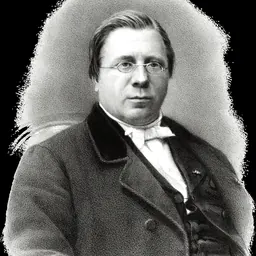

Related people
Same field, nearest in time



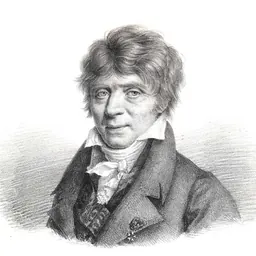
Contemporaries
People whose lives overlapped Carl Friedrich Gauss's


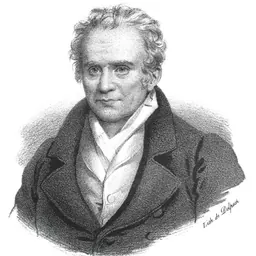
Frequently asked questions
Who was Carl Friedrich Gauss?
German mathematician and physicist (1777–1855)
When was Carl Friedrich Gauss born?
Carl Friedrich Gauss was born on 30 April 1777 in Brunswick.
When did Carl Friedrich Gauss die?
Carl Friedrich Gauss died on 23 February 1855 in Göttingen.
What was Carl Friedrich Gauss's occupation?
Carl Friedrich Gauss was a mathematician, geophysicist, astronomer, science writer, physicist and surveyor.
What was Carl Friedrich Gauss known for?
Carl Friedrich Gauss was known for List of topics named after Carl Friedrich Gauss.
What nationality was Carl Friedrich Gauss?
Carl Friedrich Gauss's recorded nationality: Confederation of the Rhine, Kingdom of Hanover.
Sources & further reading
· Wikipedia: Carl Friedrich Gauss
· DBpedia: Carl Friedrich Gauss
Cite this page
APA: Biography.guide. (2026). Carl Friedrich Gauss. https://biography.guide/carl-friedrich-gauss/
MLA: "Carl Friedrich Gauss." Biography.guide, https://biography.guide/carl-friedrich-gauss/.
Chicago: "Carl Friedrich Gauss." Biography.guide. https://biography.guide/carl-friedrich-gauss/.
Data last updated: 2026-09-21 · Spot an error? Report a correction.
Portrait: Wikimedia Commons · author & licence
Page generated 2026-09-27 05:00 UTC