
About Alessandro Volta
Lived 1745 – 1827 (aged 82). Alessandro Volta was an Italian physicist, inventor, academic, chemist and university teacher, known for Battery (electricity), Methane and Volt.
Alessandro Giuseppe Antonio Anastasio Volta (18 February 1745 – 5 March 1827) was an Italian chemist and physicist who was a pioneer of electricity and power, With this invention, Volta proved that electricity could be generated chemically and debunked the prevalent theory that electricity was generated solely by living beings. Volta's invention sparked a great amount of scientific excitement and led others to conduct similar experiments, which eventually led to the development of the field of electrochemistry. Furthermore, the emperor granted Volta substantial funding to equip the physics cabinet with instruments, purchased by Volta in England and France. At the University History Museum of the University of Pavia there are 150 of them, used by Alessandro Volta.
Volta and Galvani
Luigi Galvani, an Italian physicist, discovered something he named "animal electricity" when two different metals were connected in series with a frog's leg and to one another. Volta realised that the frog's leg served as both a conductor of electricity (what we would now call an electrolyte) and as a detector of electricity. He also understood that the frog's legs were irrelevant to the electric current, which was caused by the two differing metals. He replaced the frog's leg with brine-soaked paper and detected the flow of electricity by other means familiar to him from his previous studies. In this way, he discovered the electrochemical series, and the law that the electromotive force (emf) of a galvanic cell, consisting of a pair of metal electrodes separated by electrolyte, is the difference between their two electrode potentials (thus, two identical electrodes and a common electrolyte give zero net emf). This may be called Volta's Law of the electrochemical series.
In 1800, as the result of a professional disagreement over the galvanic response advocated by Galvani, Volta invented the voltaic pile, an early electric battery, which produced a steady electric current.
His image was depicted on the Italian Lire 10,000 note (1990–1997) along with a sketch of his voltaic pile.
Religious beliefs Volta was raised as a Catholic and for all of his life continued to maintain his belief.
Don’t just read it —
keep it.
Full-length biographies made to live with: read them, listen on the way to work, watch them tonight.
- E-book
- Audio
- Video
Instant download · yours to keep · every purchase keeps this site free
Important facts
People in Alessandro Volta's life
Named in this biography and alive at the same time
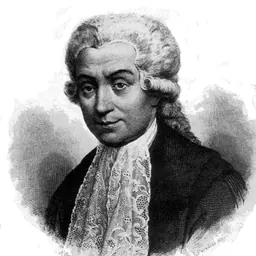
Related people
Same field, nearest in time

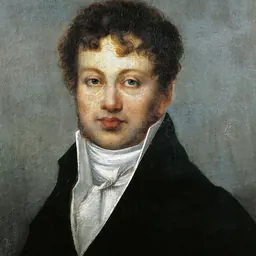

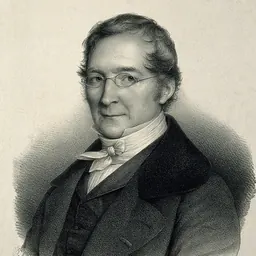


Contemporaries
People whose lives overlapped Alessandro Volta's






Frequently asked questions
Who was Alessandro Volta?
Italian chemist and physicist (1745–1827)
When was Alessandro Volta born?
Alessandro Volta was born on 18 February 1745 in Como.
When did Alessandro Volta die?
Alessandro Volta died on 5 March 1827 in Como.
What was Alessandro Volta's occupation?
Alessandro Volta was a physicist, inventor, academic, chemist and university teacher.
What was Alessandro Volta known for?
Alessandro Volta was known for Battery (electricity), Methane, Volt, Voltage and Voltmeter.
What nationality was Alessandro Volta?
Alessandro Volta was Italian.
Sources & further reading
Cite this page
APA: Biography.guide. (2026). Alessandro Volta. https://biography.guide/alessandro-volta/
MLA: "Alessandro Volta." Biography.guide, https://biography.guide/alessandro-volta/.
Chicago: "Alessandro Volta." Biography.guide. https://biography.guide/alessandro-volta/.
Data last updated: 2026-09-20 · Spot an error? Report a correction.
Page generated 2026-09-27 05:27 UTC