
About Franz Aepinus
Lived 1724 – 1802 (aged 77). Franz Aepinus was a German and Russian physicist, mathematician, academic, inventor, astronomer and philosopher.
Franz Ulrich Theodor Aepinus (13 December 172410 August 1802) was a German mathematician, scientist, and natural philosopher residing in the Russian Empire. Aepinus is best known for his researches, theoretical and experimental, in electricity and magnetism.
Early life
He was born at Rostock in the Duchy of Mecklenburg-Schwerin. He was descended from Johannes Aepinus (1499–1553), the first to adopt the Greek form (αἰπεινός) of the family name Hugk or Huck, and a leading theologian and controversialist at the time of the Protestant Reformation. He enjoyed the favor of Empress Catherine II of Russia, who appointed him tutor to her son Paul,
Works
His principal work, Tentamen Theoriae Electricitatis et Magnetismi ("An Attempt at a Theory of Electricity and Magnetism"), published at St. Petersburg in 1759, was the first systematic attempt to apply mathematical reasoning to these subjects. He also published a treatise, in 1761, De Distributione Caloris per Tellurem (On the Distribution of Heat in the Earth), and he was the author of memoirs on different subjects in astronomy, mechanics, optics and pure mathematics, contained in the journals of the learned societies of St. Petersburg and Berlin.
His discussion of the effects of parallax in the transit of a planet over the sun's disc excited great interest, having appeared (in 1764) between the dates of the two transits of Venus that took place in the 18th century. His theory resembled Newton's approach to gravity in that it relied on unexplained action at a distance; also like Newton Aepinus believed that the transmission of force required contact. These seeming contradictions reflect the modern scientific concept of approximate models of physical phenomena.
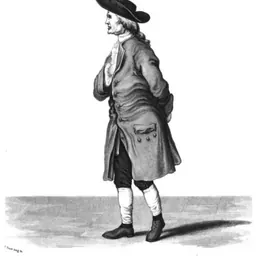
Henry Cavendish devised theories of electricity which were essentially the same, yet had been framed without any communication between these two philosophers. Aepinus published his theory about ten years before that of Cavendish. These are theories which eventually put to rest the idea of two fluids.
Don’t just read it —
keep it.
Full-length biographies made to live with: read them, listen on the way to work, watch them tonight.
- E-book
- Audio
- Video
Instant download · yours to keep · every purchase keeps this site free
Important facts
People in Franz Aepinus's life
Named in this biography and alive at the same time
Related people
Same field, nearest in time





Contemporaries
People whose lives overlapped Franz Aepinus's




Frequently asked questions
Who was Franz Aepinus?
German-Russian mathematician (1724-1802)
When was Franz Aepinus born?
Franz Aepinus was born on 13 December 1724 in Rostock.
When did Franz Aepinus die?
Franz Aepinus died on 10 August 1802 in Tartu.
What was Franz Aepinus's occupation?
Franz Aepinus was a physicist, mathematician, academic, inventor, astronomer and philosopher.
What nationality was Franz Aepinus?
Franz Aepinus was German and Russian.
Sources & further reading
Cite this page
APA: Biography.guide. (2026). Franz Aepinus. https://biography.guide/franz-aepinus/
MLA: "Franz Aepinus." Biography.guide, https://biography.guide/franz-aepinus/.
Chicago: "Franz Aepinus." Biography.guide. https://biography.guide/franz-aepinus/.
Data last updated: 2026-09-20 · Spot an error? Report a correction.
Page generated 2026-09-27 05:27 UTC