
Robert Smith
English mathematician and music theorist
About Robert Smith
Lived 1689 – 1768 (aged 78). Robert Smith was a British mathematician, musicologist, music theorist and theologian, known for Smith–Helmholtz equation.
Robert Smith (c. 16 October 1689 – 2 February 1768) was an English mathematician.
Life
Smith was probably born at Lea near Gainsborough, the son of John Smith, the rector of Gate Burton, Lincolnshire and his wife Hannah Cotes. After attending Queen Elizabeth's Grammar School, Gainsborough (now Queen Elizabeth's High School) he entered Trinity College, Cambridge, in 1708, and becoming minor fellow in 1714, major fellow in 1715 and senior fellow in 1739, was chosen Master in 1742, in succession to Richard Bentley. From 1716 to 1760 he was Plumian Professor of Astronomy, and he died in the Master's Lodge at Trinity.
In February 1719 he was elected a Fellow of the Royal Society.
Besides editing two works by his cousin, Roger Cotes, who was his predecessor in the Plumian chair, he published A Compleat System of Opticks in 1738, which gained him the sobriquet of Old Focus, and Harmonics, or the Philosophy of Musical Sounds in 1749.
Smith never married but lived with his unmarried sister Elzimar (1683–1758) in the lodge at Trinity College. Although he is often portrayed as a rather reclusive character, John Byrom's journal shows that in the 1720s and 1730s Smith could be quite sociable. Yet ill health, particularly gout, took its toll and severely inhibited his academic work and social activities. He died at the lodge on 2 February 1768, and on 8 February he was buried in Trinity College Chapel, the funeral oration being delivered by Thomas Zouch.
According to the Oxford Dictionary of National Biography, Smith helped to spread Isaac Newton's ideas in Europe and "Newton's successes in optics and mechanics dominated Smith's scientific career".
The Smith Fund In his will Smith left £3500 South Sea stock to the University of Cambridge. The net income on the fund is annually divided equally between the Smith's Prize and the stipend of the Plumian Professor.
Books
Robert Smith, Harmonics, or, The Philosophy of Musical Sounds, Printed by J. Bentham, and sold by W. Thurlbourn, 1749.
Don’t just read it —
keep it.
Full-length biographies made to live with: read them, listen on the way to work, watch them tonight.
- E-book
- Audio
- Video
Instant download · yours to keep · every purchase keeps this site free
Important facts
People in Robert Smith's life
Named in this biography and alive at the same time
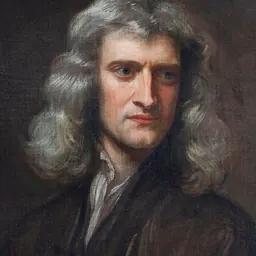
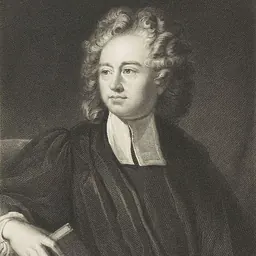


Related people
Same field, nearest in time




Contemporaries
People whose lives overlapped Robert Smith's



Frequently asked questions
Who was Robert Smith?
English mathematician and music theorist (1689-1768)
When was Robert Smith born?
Robert Smith was born on 16 October 1689 in Lea.
When did Robert Smith die?
Robert Smith died on 2 February 1768 in Cambridge.
What was Robert Smith's occupation?
Robert Smith was a mathematician, musicologist, music theorist and theologian.
What was Robert Smith known for?
Robert Smith was known for Smith–Helmholtz equation.
What nationality was Robert Smith?
Robert Smith was British.
Sources & further reading
· DBpedia: Robert Smith (mathematician)
Cite this page
APA: Biography.guide. (2026). Robert Smith. https://biography.guide/robert-smith-mathematician/
MLA: "Robert Smith." Biography.guide, https://biography.guide/robert-smith-mathematician/.
Chicago: "Robert Smith." Biography.guide. https://biography.guide/robert-smith-mathematician/.
Data last updated: 2026-09-20 · Spot an error? Report a correction.
Page generated 2026-09-27 05:31 UTC