
About Willem 's Gravesande
Lived 1688 – 1742 (aged 53). Willem 's Gravesande was a Dutch philosopher, physicist, mathematician, astronomer, university teacher and naturalist, known for Kinetic energy.
Willem Jacob 's Gravesande (26 September 1688 – 28 February 1742) was a Dutch mathematician and natural philosopher, chiefly remembered for developing experimental demonstrations of the laws of classical mechanics and the first experimental measurement of kinetic energy. As professor of mathematics, astronomy, and philosophy at Leiden University, he helped to propagate Isaac Newton's ideas in Continental Europe.
Life Portrait of Willem Jacob 's Gravesande. Etching by J. Houbraken, after a drawing by , 1725–1750.
Born in 's-Hertogenbosch, 's Gravesande studied law at Leiden University, where he defended a thesis on suicide and earned a doctorate in 1707. He then practised law in The Hague while also participating in intellectual discussions and cultivating his interest in the mathematical sciences. His Essai de perspective ("Essay on Perspective"), published in 1711, was praised by the influential Swiss mathematician Johann Bernoulli. In The Hague, 's Gravesande also helped to establish the Journal littéraire ("Literary journal"), a learned periodical first published in 1713.
In 1715, 's Gravesande visited London as part of a Dutch delegation sent to welcome the Hanoverian succession in Great Britain. In 1717 he became professor of mathematics and astronomy in Leiden. From that position, he was instrumental in introducing Newton's work to the Netherlands. He also obtained the chairs of civil and military architecture in 1730 and philosophy in 1734.
's Gravesande was married to Anna Sacrelaire in 1720. They had two sons, both of whom died in adolescence. In 1724, Peter the Great offered 's Gravesande a position in the new Imperial Saint Petersburg Academy of Sciences. In 1737 he received an offer from Frederick the Great to join the Prussian Academy of Sciences in Berlin. He declined both offers, opting to remain in Leiden.
In 1721, 's Gravesande became involved in a public controversy over whether the German inventor Johann Bessler, known as Councillor Orffyreus, had created a genuine perpetual motion machine. 's Gravesande at first argued for the feasibility of perpetual motion based on the conservation of "force" interpreted as the scalar quantity mv (mass multiplied by speed), which he believed was implied by Newtonian mechanics. However, in 1722 he published the results of a series of experiments in which brass balls were dropped from varying heights onto a soft clay surface. He found that two balls of the same size and different masses would make identical indentations when the heights they were dropped from were inversely proportional to their masses, from which he concluded that the correct expression for the "force" of a body in motion is proportional to mv2 (which is proportional to the modern concept of kinetic energy).
Even though those results invalidated his original argument for the feasibility of perpetual motion, 's Gravesande continued to defend Bessler's work, claiming that Bessler might have discovered some new "active principle" of nature that allowed his wheels to keep turning. Similar views were defended at the time by Gottfried Wilhelm Leibniz, Johann Bernoulli, and others, but the modern consensus is that Bessler was perpetrating a deliberate hoax.
's Gravesande communicated his results on the impact of falling weights to Émilie du Châtelet.{citation needed} Similar observations were published in 1718 by Giovanni Poleni. The interpretation of 's Gravesande's and Poleni's results led to a controversy with Samuel Clarke and other Newtonians that became a part of the so-called "vis viva dispute" in the history of classical mechanics.
Works Essai de perspective, 1711 Philosophiae Newtonianae Institutiones, in usus academicos, 1723 An essay on perspective, 1724 Mathematical elements of physicks, prov'd by experiments : being an introduction to Sir Isaac Newton's philosophy, 1720 Introductio ad Philosophiam, Metaphysicam et Logicam, 1736 Mathematical Elements of Natural Philosophy, Confirm'd by Experiments: or, An introduction to Sir Isaac Newton's philosophy (Volume I), 1747 (first printed in 1720) Mathematical Elements of Natural Philosophy, Confirm'd by Experiments: or, An introduction to Sir Isaac Newton's philosophy (Volume II), 1747 (first printed in 1721) Oeuvres Philosophiques et Mathématiques de Mr. G. J. 'sGravesande, ed. with memoir by J. Allamand, 1774
Don’t just read it —
keep it.
Full-length biographies made to live with: read them, listen on the way to work, watch them tonight.
- E-book
- Audio
- Video
Instant download · yours to keep · every purchase keeps this site free
Important facts
People in Willem 's Gravesande's life
Named in this biography and alive at the same time
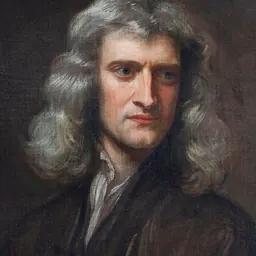

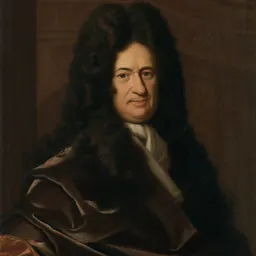

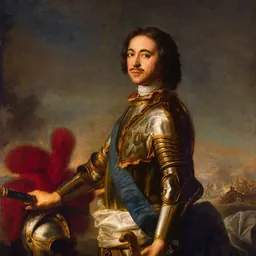
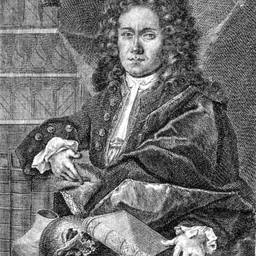
Related people
Same field, nearest in time

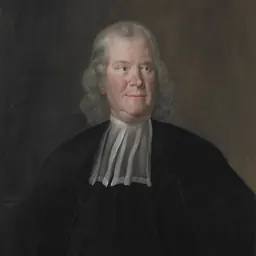


Contemporaries
People whose lives overlapped Willem 's Gravesande's


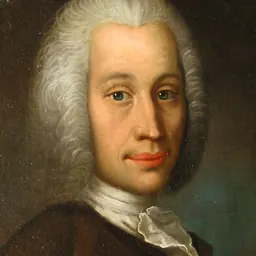
Frequently asked questions
Who was Willem 's Gravesande?
Dutch physicist
When was Willem 's Gravesande born?
Willem 's Gravesande was born on 26 September 1688 in 's-Hertogenbosch, Duchy of Brabant.
When did Willem 's Gravesande die?
Willem 's Gravesande died on 28 February 1742 in Leiden.
What was Willem 's Gravesande's occupation?
Willem 's Gravesande was a philosopher, physicist, mathematician, astronomer, university teacher and naturalist.
What was Willem 's Gravesande known for?
Willem 's Gravesande was known for Kinetic energy.
What nationality was Willem 's Gravesande?
Willem 's Gravesande was Dutch.
Sources & further reading
· Wikipedia: Willem 's Gravesande
· DBpedia: Willem 's Gravesande
Cite this page
APA: Biography.guide. (2026). Willem 's Gravesande. https://biography.guide/willem-s-gravesande/
MLA: "Willem 's Gravesande." Biography.guide, https://biography.guide/willem-s-gravesande/.
Chicago: "Willem 's Gravesande." Biography.guide. https://biography.guide/willem-s-gravesande/.
Data last updated: 2026-09-20 · Spot an error? Report a correction.
Page generated 2026-09-27 05:26 UTC