
About John Craig
Lived 1663 – 1731 (aged 67–68). John Craig was a Scottish mathematician, known for Log-likelihood ratio.
John Craig (1663 – 11 October 1731) was a Scottish mathematician and theologian.
Biography Born in Dumfries and educated at the University of Edinburgh, Craig moved to England and became a vicar in the Church of England.
A friend of Isaac Newton, he wrote several minor works about the new calculus.
He was elected Fellow of the Royal Society in 1711.
Mathematical Principles of Christian Theology He is known for his book Theologiae Christianae Principia Mathematica (Mathematical Principles of Christian Theology), published in 1698.
In the aforementioned book, Craig presents a formula that describes how the probability of a historical event depends on the number of primary witnesses, on the chain of transmission through secondary witnesses, on the elapsed time and on the spatial distance. Using this formula, Craig derived that the probability of the story of Jesus would reach 0 in the year 3150. This year he interpreted as the Second Coming of Christ because of verse 18:8 in the Gospel of Luke.
His work was poorly received and controversial at the time. Several later mathematicians complained about his imprecise use of probability and the unsupported derivation of his formula. Stephen Stigler, in his 1999 book (see references, below) gave a more favorable interpretation, pointing out that some of Craig's reasoning can be justified if his "probability" is interpreted as the log-likelihood ratio.
Logarithms Craig was involved in developing the concept of Hyperbolic logarithm and in 1710 published “Logarithmotechnica generalis” in the Proceedings of the Royal Society. By way of illustration he gives the Mercator series for the logarithm (denoted l.) without mention of radius of convergence: “Exemplar 1. Assumatur a = y, unde per Canonum generalum cujus differentials est & hujus integralis per Seriem infinitum expressa dat "
Works 1698: Logarithmic quadrature (in Latin) Philosophical Transactions of the Royal Society 1703: Specimen of determining quadrature of figures (in Latin), Philosophical Transactions of the Royal Society #284 via Biodiversity Heritage Library 1710: Method of making logarithms (in Latin), Philosophical Transactions of the Royal Society
Don’t just read it —
keep it.
Full-length biographies made to live with: read them, listen on the way to work, watch them tonight.
- E-book
- Audio
- Video
Instant download · yours to keep · every purchase keeps this site free
Important facts
People in John Craig's life
Named in this biography and alive at the same time

Related people
Same field, nearest in time
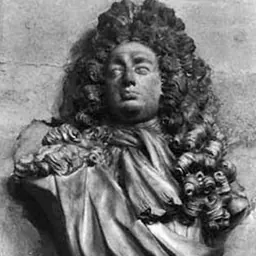
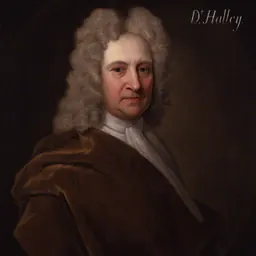

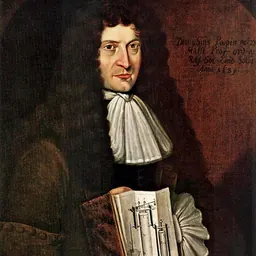
Contemporaries
People whose lives overlapped John Craig's




Frequently asked questions
Who was John Craig?
British mathematician and theologian
When was John Craig born?
John Craig was born in 1663 in Hoddom.
When did John Craig die?
John Craig died on 11 October 1731 in High Holborn.
What was John Craig's occupation?
John Craig was a mathematician.
What was John Craig known for?
John Craig was known for Log-likelihood ratio.
What nationality was John Craig?
John Craig was Scottish.
Sources & further reading
· DBpedia: John Craig (mathematician)
Cite this page
APA: Biography.guide. (2026). John Craig. https://biography.guide/john-craig-mathematician/
MLA: "John Craig." Biography.guide, https://biography.guide/john-craig-mathematician/.
Chicago: "John Craig." Biography.guide. https://biography.guide/john-craig-mathematician/.
Data last updated: 2026-09-20 · Spot an error? Report a correction.
Page generated 2026-09-27 05:32 UTC