
Giovanni Domenico Cassini
Italian/French mathematician, astronomer, engineer, and astrologer (*1625 – †1712)
About Giovanni Domenico Cassini
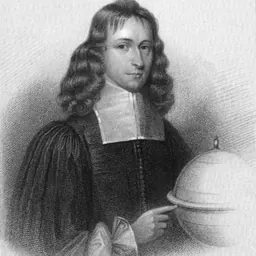
Lived 1625 – 1712 (aged 87). Giovanni Domenico Cassini was a selenographer, surveyor, mathematician, astronomer, engineer and astrologer, known for Cassini Division, Cassini identity and Cassini oval.
Giovanni Domenico Cassini (8-11 June 1625 – 14 September 1712) was an Italian-French mathematician, astronomer, astrologer and engineer. Cassini was born in Perinaldo, near Imperia, at that time in the County of Nice, part of the Savoyard state. He discovered four satellites of Saturn and noted the division of its rings, later named the Cassini Division. Cassini was also the first of his family to begin work on the project of creating a topographic map of France. In addition, he also created the first scientific map of the Moon.
The Cassini space probe, launched in 1997, was named after him and became the fourth to visit Saturn and the first to orbit it.
Life Time in Italy
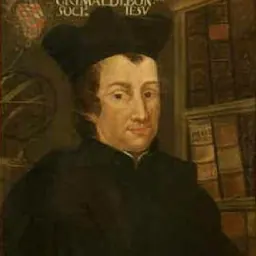
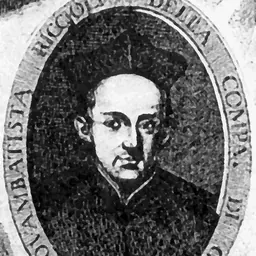
Cassini was the son of Jacopo Cassini, a Tuscan, and Giulia Crovesi. In 1648 Cassini accepted a position at the observatory at Panzano (Castelfranco Emilia), near Bologna, to work with Marquis Cornelio Malvasia, a rich amateur astronomer, initiating the first part of his career. During his time at the Panzano Observatory, Cassini was able to complete his education under the scientists Giovanni Battista Riccioli and Francesco Maria Grimaldi. In 1650 the senate of Bologna appointed him as the principal chair of astronomy at the University of Bologna.
The pinhole-projected image of the Sun on the floor at Florence Cathedral. Cassini measured a similar image over a year at San Petronio Basilica to try to prove the Earth orbited the Sun. In San Petronio, Bologna, Cassini convinced church officials to create an improved sundial meridian line at the San Petronio Basilica, moving the pinhole gnomon that projected the Sun's image up into the church's vaults 66.8 meters (219 ft) away from the meridian inscribed in the floor. The much larger image of the Sun's disk projected by the camera obscura effect allowed him to measure the change in diameter of the Sun's disk over the year as the Earth moved toward and then away from the Sun. He concluded the changes in size he measured were consistent with Johannes Kepler's 1609 heliocentric theory, where the Earth was moving around the Sun in an elliptical orbit instead of the Ptolemaic system where the Sun orbited the Earth in an eccentric orbit.
Cassini remained in Bologna working until Colbert recruited him to come to Paris to help set up the Paris Observatory. Cassini departed from Bologna on 25 February 1669. Cassini was the first to observe these four moons, which he called Sidera Lodoicea (the stars of Louis), including Iapetus, whose anomalous variations in brightness he correctly ascribed as being due to the presence of dark material on one hemisphere (now called Cassini Regio in his honour). In addition, he discovered the Cassini Division in the rings of Saturn in 1675.
Cassini initially held the Earth to be the centre of the Solar System, though later observations compelled him to accept the model of the Solar System proposed by Nicolaus Copernicus, and eventually that of Tycho Brahe. "In 1659 he presented a model of the planetary system that was in accord with the hypothesis of Nicolaus Copernicus. In 1661 he developed a method, inspired by Kepler's work, of mapping successive phases of solar eclipses; and in 1662 he published new tables of the sun, based on his observations at San Petronio." His explication of the manuscript appeared in La Loubère's book on the Kingdom of Siam in 1691.
Astrologer Attracted to the heavens in his youth, his first interest was in astrology. While young he read widely on the subject, and soon was very knowledgeable about it; this extensive knowledge of astrology led to his first appointment as an astronomer. Later in life he focused almost exclusively on astronomy and all but denounced astrology as he became increasingly involved in the Scientific Revolution.
In 1645 the Marquis Cornelio Malvasia, a senator of Bologna with a great interest in astrology, invited Cassini to Bologna and offered him a position in the Panzano Observatory, which he was constructing at that time. Most of their time was spent calculating newer, better, and more accurate ephemerides for astrological purposes using the rapidly advancing astronomical methods and tools of the day.
Engineering
In 1653, Cassini, wishing to employ the use of a meridian line, sketched a plan for a new and larger meridian line but one that would be difficult to build. His calculations were precise; the construction succeeded perfectly; and its success gave Cassini a brilliant reputation for working with engineering and structural works. or 1793. It was the first topographic map of an entire country.
Works
Cassini's works digitalized and available on the digital library of Paris Observatory
Don’t just read it —
keep it.
Full-length biographies made to live with: read them, listen on the way to work, watch them tonight.
- E-book
- Audio
- Video
Instant download · yours to keep · every purchase keeps this site free
Important facts
Family & relationships
People in Giovanni Domenico Cassini's life
Named in this biography and alive at the same time
Related people
Same field, nearest in time

Contemporaries
People whose lives overlapped Giovanni Domenico Cassini's





Frequently asked questions
Who was Giovanni Domenico Cassini?
Italian/French mathematician, astronomer, engineer, and astrologer (*1625 – †1712)
When was Giovanni Domenico Cassini born?
Giovanni Domenico Cassini was born on 8 June 1625 in Perinaldo.
When did Giovanni Domenico Cassini die?
Giovanni Domenico Cassini died on 14 September 1712 in Paris.
What was Giovanni Domenico Cassini's occupation?
Giovanni Domenico Cassini was a selenographer, surveyor, mathematician, astronomer, engineer and astrologer.
What was Giovanni Domenico Cassini known for?
Giovanni Domenico Cassini was known for Cassini Division, Cassini identity, Cassini oval and Cassini's laws.
Sources & further reading
· Wikipedia: Giovanni Domenico Cassini
· DBpedia: Giovanni Domenico Cassini
Cite this page
APA: Biography.guide. (2026). Giovanni Domenico Cassini. https://biography.guide/giovanni-domenico-cassini/
MLA: "Giovanni Domenico Cassini." Biography.guide, https://biography.guide/giovanni-domenico-cassini/.
Chicago: "Giovanni Domenico Cassini." Biography.guide. https://biography.guide/giovanni-domenico-cassini/.
Data last updated: 2026-09-20 · Spot an error? Report a correction.
Page generated 2026-09-27 05:18 UTC