
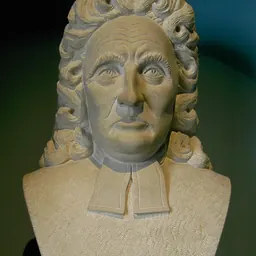
Bernard Le Bovier de Fontenelle
French writer and philosopher of the enlightenment
About Bernard Le Bovier de Fontenelle
Lived 1657 – 1757 (aged 99). Bernard Le Bovier de Fontenelle was a French philosopher, poet, writer, playwright, satirist and librettist.
Bernard Le Bovier de Fontenelle (; ; 11 February 1657 – 9 January 1757), also called Bernard Le Bouyer de Fontenelle, was a French writer and a member of three of the academies of the Institut de France, noted especially for his accessible treatment of scientific topics during the unfolding of the Age of Enlightenment.
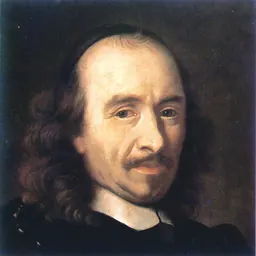
Biography Fontenelle was born in Rouen, France (then the capital of Normandy) and died in Paris at age 99. His mother was the sister of great French dramatists Pierre and Thomas Corneille. His father, François le Bovier de Fontenelle, was a lawyer who worked in the provincial court of Rouen and came from a family of lawyers from Alençon.
He trained in the law but gave up after one case, devoting his life to writing about philosophers and scientists, especially defending the Cartesian tradition. In spite of the undoubted merit and value of his writings, both to the laity and the scientific community, there is no question of his being a primary contributor to the field. He was a commentator and explicator and occasionally a passionate, though generally good-humoured, controversialist.
He was educated at the college of the Jesuits, the Lycée Pierre Corneille (although it did not adopt the name of his uncle (Pierre Corneille) until 1873, about 200 years later). At the Lycée he showed a preference for literature and distinguished himself.
According to Bernard de Fontenelle, François Blondel was a disciple of Father Marin Mersenne at the Academia Parisiensis in the French capital, until 1649. There he met "Messieurs Gassendi, Descartes, Hobbes, Roberval, and the two Pascals, father and son".
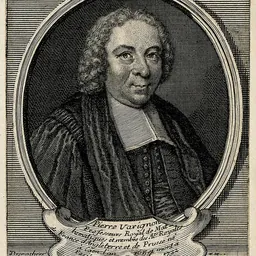
Early work He began as a poet, writing a poem in Latin at the age of 13 and more than once competed for prizes of the Académie Française, but he never won anything. He visited Paris from time to time and became friendly with the abbé de Saint-Pierre, the abbé Vertot and the mathematician Pierre Varignon. He witnessed, in 1680, the total failure of his tragedy Aspar. Fontenelle afterwards acknowledged the public verdict by burning his drama. His libretto for Pascal Collasse's Thétis et Pélée ("Thetis and Peleus"), which premiered at the Opéra de Paris in January 1689, was received with great acclaim.
His Lettres galantes du chevalier d'Her ..., published anonymously in 1685, was a collection of letters portraying worldly society of the time. It immediately made its mark. In 1686 his famous allegory of Rome and Geneva, slightly disguised as the rival princesses Mreo and Eenegu, in the Relation de l'île de Bornéo, gave proof of his daring in religious matters. Fontenelle's Nouveaux Dialogues des morts (1683) established a genuine claim to high literary rank.
Three years later, he wrote the most influential work to date on the plurality of worlds, Entretiens sur la pluralité des mondes (1686). He wrote extensively on the nature of the universe: "Behold a universe so immense that I am lost in it. I no longer know where I am. I am just nothing at all. Our world is terrifying in its insignificance."
Later work
Fontenelle had made his home in Rouen. In 1687 he moved to Paris. In 1687 he published his Histoire des oracles, a book which made a considerable stir in theological and philosophical circles. It consisted of two essays, the first of which was designed to prove that oracles were not given by the supernatural agency of demons, and the second that they did not cease with the birth of Jesus.
It excited the suspicion of the Church, and a Jesuit, by name Jean-François Baltus, published a ponderous refutation of it; but the peace-loving disposition of its author impelled him to leave his opponent unanswered. To the following year (1688) belongs his Digression sur les anciens et les modernes, in which he took the modern side in the controversy then raging; his Doutes sur le système physique des causes occasionnelles (against Nicolas Malebranche) appeared shortly afterwards.
He remained influential in his older years and when a then unknown Jean-Jacques Rousseau met him in 1742, when Fontenelle was 85, he passed on the advice he gave all young writers that came to him: "You must courageously offer your brow to laurel wreaths and your nose to blows."
A noted gourmand, he attributed his longevity to eating strawberries. At ninety-two, one observer wrote that he was as lively as a man of twenty-two.
Member of the French Academy In 1691 he was received into the French Academy in spite of the determined efforts of the partisans of the "ancients", especially Racine and Boileau, who on four previous occasions had ensured his rejection. He was thus a member both of the Academy of Inscriptions and of the Academy of Sciences. and so was the asteroid 10069 Fontenelle, which was discovered in 1989.
Don’t just read it —
keep it.
Full-length biographies made to live with: read them, listen on the way to work, watch them tonight.
- E-book
- Audio
- Video
Instant download · yours to keep · every purchase keeps this site free
Important facts
more
Bernard Le Bovier, Bernard le Bovier de FontenellePeople in Bernard Le Bovier de Fontenelle's life
Named in this biography and alive at the same time





Related people
Same field, nearest in time



Contemporaries
People whose lives overlapped Bernard Le Bovier de Fontenelle's




Frequently asked questions
Who was Bernard Le Bovier de Fontenelle?
French writer and philosopher of the enlightenment (1657–1757)
When was Bernard Le Bovier de Fontenelle born?
Bernard Le Bovier de Fontenelle was born on 11 February 1657 in Rouen.
When did Bernard Le Bovier de Fontenelle die?
Bernard Le Bovier de Fontenelle died on 9 January 1757 in Paris.
What was Bernard Le Bovier de Fontenelle's occupation?
Bernard Le Bovier de Fontenelle was a philosopher, poet, writer, playwright, satirist and librettist.
What nationality was Bernard Le Bovier de Fontenelle?
Bernard Le Bovier de Fontenelle was French.
Sources & further reading
· Wikipedia: Bernard Le Bovier de Fontenelle
· DBpedia: Bernard Le Bovier de Fontenelle
Cite this page
APA: Biography.guide. (2026). Bernard Le Bovier de Fontenelle. https://biography.guide/bernard-le-bovier-de-fontenelle/
MLA: "Bernard Le Bovier de Fontenelle." Biography.guide, https://biography.guide/bernard-le-bovier-de-fontenelle/.
Chicago: "Bernard Le Bovier de Fontenelle." Biography.guide. https://biography.guide/bernard-le-bovier-de-fontenelle/.
Data last updated: 2026-09-20 · Spot an error? Report a correction.
Page generated 2026-09-27 05:21 UTC