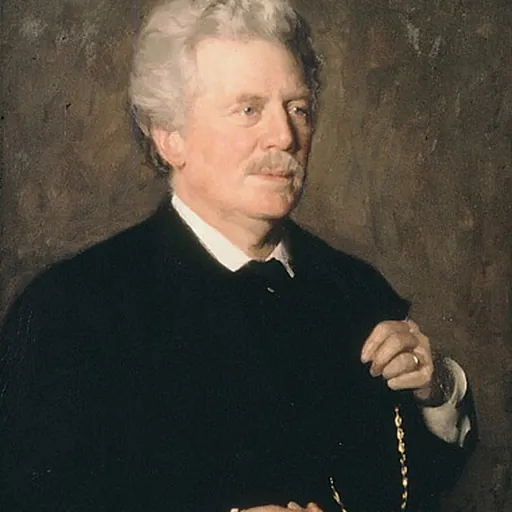
About Gustaf Retzius
Lived 1842 – 1919 (aged 76). Gustaf Retzius was a Swedish anthropologist, university teacher, journalist, botanist, scientific collector and physician, known for Area postrema, Cajal-Retzius cell and Nervous system.
Journeys to Egypt and North America Retzius traveled outside of Europe twice, both times together with his wife Anna. During these trips he was keen to buy ethnographic and archaeological collections for a planned ethnographic museum in Stockholm.
Egypt 1889–1890 In the winter of 1889–1890, they visited Egypt. Retzius published articles from the trip in Aftonbladet, which later came to be published as a book Skizzer och uppsatser: Bilder från Nilens land (Sketches and essays: Pictures from the Nile country). For two weeks departing from Cairo on Christmas Day, they traveled on the Nile. They first traveled up the river to the city of Aswan. There Retzius purchased collections in the bazaars. Soon the sellers realized that Retzius was a customer who could pay and they came to the boat and offered their goods and items directly from the beach. Retzius was looking for skulls for his anthropological studies and managed to acquire 30 "mummies" during an excursion from Aswan to some rock graves across the Nile where a "caretaker" on site sold the skulls to Retzius. Through some English officers he also managed to acquire six skulls from the Battle of Toski. On the way back down the Nile, they visited both Karnak and Luxor. In Luxor, he managed to buy a total of 125 skulls with the help of consul Ahmed Effendi Moustapha Ayyâd who sent out a person to dig up graves and bring the skulls. Once back in Cairo, Retzius had the opportunity to meet the famous Henry Morton Stanley, who just performed his failed expedition to liberate Emin Pascha. In Cairo, Retzius made further purchases of collections. Large parts of Retzius's collections are available at Medelhavsmuseet in Stockholm and at the Museum of Ethnography in Stockholm.
North America 1893
During six months beginning in June 1893, the Retzius couple traveled in North America. Just as during the trip to Egypt, an important goal was to buy collections for the future ethnographic museum, as well as to visit colleagues and their institutions. Also during this trip, Retzius reported in articles in Aftonbladet under the heading "Pictures from North America". However, there was never a book. The first visit was to Yale and the paleontologist Othniel Charles Marsh who was followed by several other university visits. They visited the World's exhibition in Chicago where they, among other things, saw ethnographic exhibitions and also several different indigenous people who performed and danced. Here they met the Danish Adrian Jacobsen and the famous Franz Boas. After the world exhibition, they visited several different places and cities, including Santa Fe. They get this opportunity to visit an "Indian settlement" outside the city. In Santa Fe there was an antique shop called Jake Gold's Free Museum (Gold's Old Curiosity Shop) where Retzius bought ethnography. For a few weeks, they visited the northwest coast and British Columbia. They came to the city of Victoria, where there were several traders for ethnography, and then traveled on the Vancouver Island. In Bella Bella, they met Adrian Jacobsen's brother Filip Jacobsen who made it possible for Anna and Gustaf to visit several different places during a 12-day trip and also to purchase ethnographic collections. A large part of the objects in the stores in Victoria had been collected by the Jacobsen brothers. Gustaf and Anna were dismayed at the methods used by the dealers to trick the indigenous people to relinquish older items that were not for sale. They were also critical of the missionaries in the area. Gustaf did not get as many skulls during this trip in comparison to the Egyptian journey, but he managed to acquire four so-called "longhead" skulls. The trip home to Sweden went via stops in several cities, including Chicago again, Baltimore and Washington. Large parts of the collections Retzius acquired during his journey can be found at the Ethnographic Museum.
Research Retzius published more than 300 scientific works in anatomy, embryology, eugenics, craniometry, zoology and botany. He gave his name to the 60 micrometer-diameter Retzius cells in the central nervous system of the leech (Hirudo medicinalis).
During his time at the Karolinska Institute, he made important contributions to anatomical descriptions of the muscles of the eardrum, the bones of the middle ear, and the Eustachian tube. Skulls taken by Retzius from cemeteries in Finland have been repatriated, and are to be reinterred as close as possible to original burial sites.
Swedish Academy Retzius was politically and socially active. Together with his wife he founded the Hierta-Retzius foundation, which is now administered by the Royal Swedish Academy of Sciences, which Retzius was a member of from 1879. The foundation has two funds, one for the promotion of biological research and the other for supporting projects of an important scientific or social nature.
In 1901 Retzius became a member of the Swedish Academy, following Adolf Erik Nordenskiöld's demise. He was also a member of the Royal Swedish Academy of Sciences. As a result, he took part in the awarding of the Nobel Prizes in Physics, Chemistry and Literature for years. However, his resignation from his chair in anatomy in 1890 meant that he could not participate directly in the choice of the Physiology or Medicine awardee; although he was an active nominator for that prize from 1901 to 1906, always including Santiago Ramón y Cajal. In addition, he could not send nominations for the other prizes.
During the decision process of the 1906 Nobel Prize in Physiology or Medicine, Retzius ardently stood up for a sole awarding to Santiago Ramón y Cajal, thus excluding Camillo Golgi. This was the same view held by Emil Holmgren in his report for the Nobel Committee. On the contrary, the evaluation by Carl Sundberg favoured Golgi over Cajal. Before the final decision, the written opinion of , who shared Holmgren's views was also taken into account. In the end, Cajal and Golgi were jointly awarded, being the first time this Prize was shared between two laureates.
Retzius himself was also a Nobel Prize nominee himself 23 times, in 11 different years from 1901 to 1916. Curiously, he was nominated by Cajal before 1906 and by Golgi after that year.
Death He died in 1919 in Stockholm. He was survived by his wife. His seat at the Swedish Academy was taken by Adolf Noreen that same year.
Botanical Reference
Don’t just read it —
keep it.
Full-length biographies made to live with: read them, listen on the way to work, watch them tonight.
- E-book
- Audio
- Video
Instant download · yours to keep · every purchase keeps this site free
Important facts
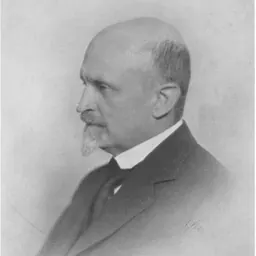
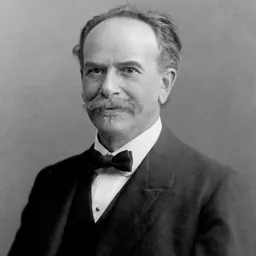
People in Gustaf Retzius's life
Named in this biography and alive at the same time






Related people
Same field, nearest in time
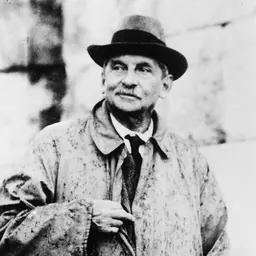


Contemporaries
People whose lives overlapped Gustaf Retzius's
Frequently asked questions
Who was Gustaf Retzius?
Swedish histologist (1842–1919)
When was Gustaf Retzius born?
Gustaf Retzius was born on 17 October 1842 in Kungsholm parish.
When did Gustaf Retzius die?
Gustaf Retzius died on 21 July 1919 in Adolf Fredriks parish.
What was Gustaf Retzius's occupation?
Gustaf Retzius was an anthropologist, university teacher, journalist, botanist, scientific collector and physician.
What was Gustaf Retzius known for?
Gustaf Retzius was known for Area postrema, Cajal-Retzius cell and Nervous system.
What nationality was Gustaf Retzius?
Gustaf Retzius was Swedish.
Sources & further reading
Cite this page
APA: Biography.guide. (2026). Gustaf Retzius. https://biography.guide/gustaf-retzius/
MLA: "Gustaf Retzius." Biography.guide, https://biography.guide/gustaf-retzius/.
Chicago: "Gustaf Retzius." Biography.guide. https://biography.guide/gustaf-retzius/.
Data last updated: 2026-09-23 · Spot an error? Report a correction.
Portrait: Wikimedia Commons · author & licence
Page generated 2026-09-27 05:05 UTC