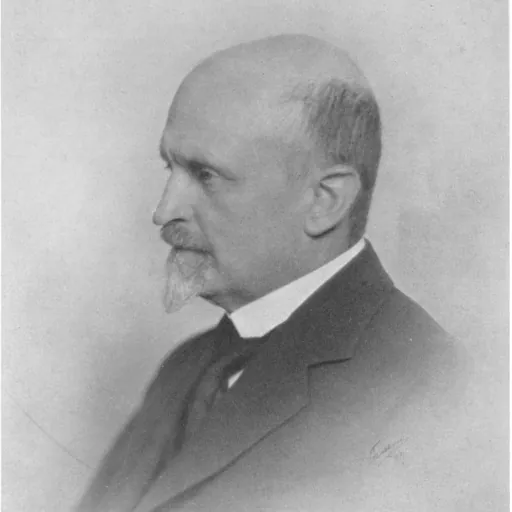
About Erik Nordenskiöld
Lived 1872 – 1933 (aged 60). Erik Nordenskiöld was a Swedish and Finnish docent and entomologist.
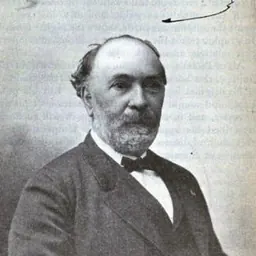
Erik Nordenskiöld (23 November 1872 – 28 April 1933) was a Finnish and Swedish aristocrat, zoologist and historian of science. He was the nephew of the explorer Adolf Erik Nordenskiöld and was best known for his work on arachnids and a pioneering work on the history of biology.
Life and work Nordenskiöld was born in the Frugård manor in Mäntsälä, Uusimaa, in a family of scholars. His grandfather had been a mineralogist and his uncle was the explorer Adolf Erik Nordenskiöld while his father was a well known agriculturist. The family library and cabinet of curiosities was considered among the richest in Finland. He studied geology and zoology at the Alexander University of Helsinki from 1890. His first work was on the origin of the earth in 1892. A member of the Societas pro Fauna et Flora Fennica, he published on the water mites of the region from 1894 to 1913. He also published a dissertation in 1898 on the morphology and evolution of the Hydrachnids. He also worked on the anatomy of the Ixodes. He travelled in 1897 to Padua to worked with the arachnologist Giovanni Canestrini and in Leipzig under Rudolf Leuckart. He also worked in Stockholm with Emil Holmgren (1906) and spent some time at the research stations in Banyuls-sur-Mer and at Nancy. After receiving a doctorate in 1899 he became a lecturer at the Imperial Alexander University in Helsinki and taught on invertebrates, parasites and histology. In 1916–1917 he began a series on the history of zoology. He had married a Swede in 1906 and in 1917 he moved to Sweden, becoming a Swedish citizen in 1926. He taught at a high school in Stockholm. He published a paper on the musculature of butterflies in 1920. His most major work on the history of biology was published in three volumes from 1920 to 1924 in Swedish as Biologins Historia. This was translated into German in 1926 and an English edition was produced in 1929. George Sarton noted it as a major advance from the work of Emanuel Radl which Sarton considered as being too subjective. Sarton wrote appreciatively on the work but noted a lack of detail on the Middle Ages, chronological errors, and a lack of a historian's outlook. He died following a surgery at the age of sixty.
Don’t just read it —
keep it.
Full-length biographies made to live with: read them, listen on the way to work, watch them tonight.
- E-book
- Audio
- Video
Instant download · yours to keep · every purchase keeps this site free
Important facts
People in Erik Nordenskiöld's life
Named in this biography and alive at the same time



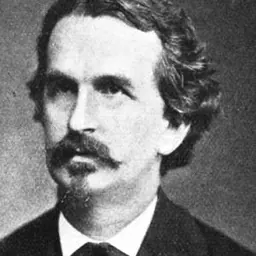
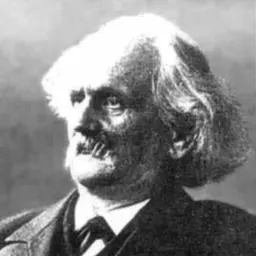
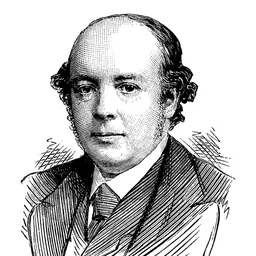
Related people
Same field, nearest in time

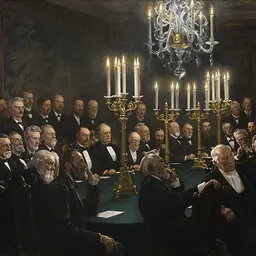

Contemporaries
People whose lives overlapped Erik Nordenskiöld's


Frequently asked questions
Who was Erik Nordenskiöld?
Swedish-Finnish entomologist (1872-1933)
When was Erik Nordenskiöld born?
Erik Nordenskiöld was born on 23 November 1872.
When did Erik Nordenskiöld die?
Erik Nordenskiöld died on 28 April 1933.
What was Erik Nordenskiöld's occupation?
Erik Nordenskiöld was a docent and entomologist.
What nationality was Erik Nordenskiöld?
Erik Nordenskiöld was Swedish and Finnish.
Sources & further reading
· Wikipedia: Erik Nordenskiöld
Cite this page
APA: Biography.guide. (2026). Erik Nordenskiöld. https://biography.guide/erik-nordenskiold/
MLA: "Erik Nordenskiöld." Biography.guide, https://biography.guide/erik-nordenskiold/.
Chicago: "Erik Nordenskiöld." Biography.guide. https://biography.guide/erik-nordenskiold/.
Data last updated: 2026-09-23 · Spot an error? Report a correction.
Portrait: Wikimedia Commons · author & licence
Page generated 2026-09-27 05:07 UTC