
About Carl Neumann
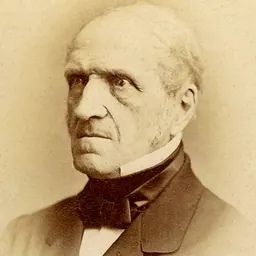
Lived 1832 – 1925 (aged 92). Carl Neumann was a German mathematician and university teacher, known for Neumann boundary condition, Neumann polynomial and Neumann series.
Carl Gottfried Neumann (also Karl; 7 May 1832 – 27 March 1925) was a German mathematical physicist and professor at several German universities. His work focused on applications of potential theory to physics and mathematics. He contributed to the mathematical formalization of electrodynamics and analytical mechanics. Neumann boundary conditions and the Neumann series are named after him.
Biography Carl Gottfried Neumann was born in Königsberg, Prussia, as one of the four children of the mineralogist, physicist and mathematician Franz Ernst Neumann (1798–1895), who was professor of mineralogy and physics at the University of Königsberg. His mother Luise Florentine Hagen (born 1800) was the sister-in-law of mathematician Friedrich Wilhelm Bessel.
Neumann's wife died in 1876 and Neumann retired from the Leipzig University in 1911. . (This is not quite correct as Maxwell theory is not Galilei invariant: Both Hertz and Neumann did not give up absolute time.) He also argued that for Newtonian mechanics to make sense there should exist an immovable object in the universe called the Body Alpha, relative to which all speeds can be measured. The problem of reference frames was solved in 1905 by Albert Einstein's special relativity.
In 1865, he wrote Vorlesungen über Riemanns Theorie der Abelschen Integrale on abelian integrals. This book popularized Bernhard Riemann’s work on multivalued functions among mathematicians.
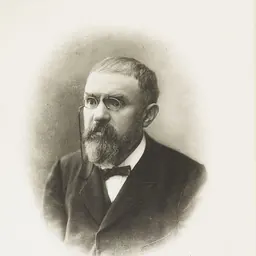
Several objects developed later in mathematics are named after his Neumann problem including the Neumann–Neumann methods and the Neumann–Poincaré operator by Henri Poincaré.
Selected works
Das Dirichlet'sche Princip in seiner Anwendung auf die Riemann'schen Flächen (B. G. Teubner, Leipzig, 1865) Vorlesungen über Riemann's Theorie der Abel'schen Integrale (B. G. Teubner, 1865)
Theorie der Bessel'schen functionen: ein analogon zur theorie der Kugelfunctionen (B. G. Teubner, 1867) Untersuchungen über das Logarithmische und Newton'sche potential (B. G. Teubner, 1877)
Über die Methode des arithmetischen Mittels (S. Hirzel, Leipzig, 1887) Allgemeine Untersuchungen über das Newton'sche Princip der Fernwirkungen, mit besonderer Rücksicht auf die elektrischen Wirkungen (B. G. Teubner, 1896) Die elektrischen Kräfte (Teubner, 1873–1898)
Don’t just read it —
keep it.
Full-length biographies made to live with: read them, listen on the way to work, watch them tonight.
- E-book
- Audio
- Video
Instant download · yours to keep · every purchase keeps this site free
Important facts
People in Carl Neumann's life
Named in this biography and alive at the same time


Related people
Same field, nearest in time



Contemporaries
People whose lives overlapped Carl Neumann's





Frequently asked questions
Who was Carl Neumann?
Prussian mathematician (1832-1925)
When was Carl Neumann born?
Carl Neumann was born on 7 May 1832 in Königsberg.
When did Carl Neumann die?
Carl Neumann died on 27 March 1925 in Leipzig.
What was Carl Neumann's occupation?
Carl Neumann was a mathematician and university teacher.
What was Carl Neumann known for?
Carl Neumann was known for Neumann boundary condition, Neumann polynomial, Neumann series and Neumann–Poincaré operator.
What nationality was Carl Neumann?
Carl Neumann was German.
Sources & further reading
Cite this page
APA: Biography.guide. (2026). Carl Neumann. https://biography.guide/carl-neumann/
MLA: "Carl Neumann." Biography.guide, https://biography.guide/carl-neumann/.
Chicago: "Carl Neumann." Biography.guide. https://biography.guide/carl-neumann/.
Data last updated: 2026-09-27 · Spot an error? Report a correction.
Page generated 2026-09-27 05:17 UTC