
About Albert Wangerin
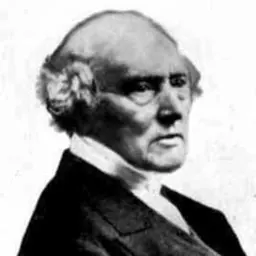
Lived 1844 – 1933 (aged 88). Albert Wangerin was a German mathematician and university teacher, known for Differential geometry, Potential theory and Spherical functions.
Friedrich Heinrich Albert Wangerin (18 November 1844 – 25 October 1933) was a German mathematician.
Early life Wangerin was born on 18 November 1844 in Greifenberg Pomerania, Prussia (now Gryfice, Poland). He studied at the gymnasium at Greifenberg and completed his final examination with an "excellent" grade in 1862.
In spring 1862, Wangerin entered the University of Halle-Wittenberg, where he studied Mathematics and Physics. He was taught by mathematicians Eduard Heine and Carl Neumann. In 1864 he moved to the University of Königsberg. He worked under the supervision of German mathematician Franz Ernst Neumann. He competed his doctorate from Königsberg University on 16 March 1866. His doctorate thesis was De annulis Newtonianis.
Academic career After he completing his doctorate, Wangerin took the examinations to become a school teacher. From 1866 to 1867, he trained at the Friedrichswerdersche Gymnasium, Berlin. From 1867 to 1876, he taught mathematics at several gymnasiums.
Later life After the retirement, Wangerin continued to live in Halle. He was active in mathematical research. He died on 25 October 1933 in Halle. He studied Wangerin functions.
Wangerin was also known for writing of textbooks, encyclopaedias and his historical writings. In 1904, he wrote Theorie der Kugelfunktionen und der verwandten Funktionen, insbesondere der Laméschen und Besselschen (Theorie spezieller, durch lineare Differentialgleichungen definierter Funktionen) on functions such as Lamé function and Bessel function for the Encyklopädie der mathematischen Wissenschaften. In 1909, he wrote an article on optics (Optik ältere Theorie) for the physics volume of the same encyclopaedia.
Wangerin also played an important role in the reviewing of mathematical papers. From 1869 to 1921, he was coeditor of Fortschritte der Mathematik.
Honors Wangerin was elected to the German Academy of Scientists Leopoldina in 1883. From 1906 to 1921, he served as President of the Academy. In 1907, he was awarded an honorary degree from Uppsala University. He received many medals, including the 1922 Cothenius medal from the German Academy of Scientists Leopoldina.
Don’t just read it —
keep it.
Full-length biographies made to live with: read them, listen on the way to work, watch them tonight.
- E-book
- Audio
- Video
Instant download · yours to keep · every purchase keeps this site free
Important facts
People in Albert Wangerin's life
Named in this biography and alive at the same time

Related people
Same field, nearest in time

Contemporaries
People whose lives overlapped Albert Wangerin's

Frequently asked questions
Who was Albert Wangerin?
German mathematician (1844–1933)
When was Albert Wangerin born?
Albert Wangerin was born on 18 November 1844 in Gryfice.
When did Albert Wangerin die?
Albert Wangerin died on 25 October 1933 in Halle (Saale).
What was Albert Wangerin's occupation?
Albert Wangerin was a mathematician and university teacher.
What was Albert Wangerin known for?
Albert Wangerin was known for Differential geometry, Potential theory and Spherical functions.
What nationality was Albert Wangerin?
Albert Wangerin was German.
Sources & further reading
· DBpedia: Friedrich Heinrich Albert Wangerin
Cite this page
APA: Biography.guide. (2026). Albert Wangerin. https://biography.guide/albert-wangerin/
MLA: "Albert Wangerin." Biography.guide, https://biography.guide/albert-wangerin/.
Chicago: "Albert Wangerin." Biography.guide. https://biography.guide/albert-wangerin/.
Data last updated: 2026-09-24 · Spot an error? Report a correction.
Page generated 2026-09-27 05:01 UTC