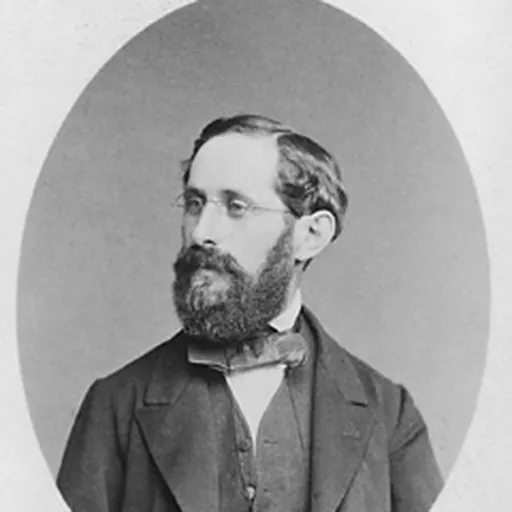
About Eduard Heine
Lived 1821 – 1881 (aged 60). Eduard Heine was a German mathematician and university teacher, known for Uniform continuity.
Heinrich Eduard Heine (16 March 1821 – 21 October 1881) was a German mathematician.
Heine became known for results on special functions and in real analysis. In particular, he authored an important treatise on spherical harmonics and Legendre functions (Handbuch der Kugelfunctionen). He also investigated basic hypergeometric series. He introduced the Mehler–Heine formula.
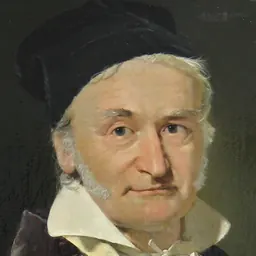
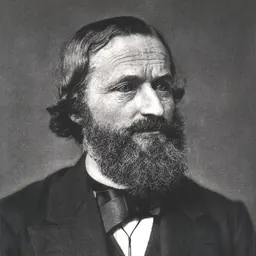
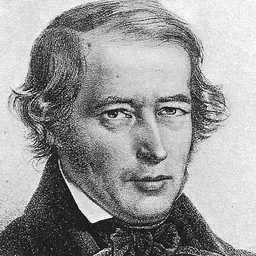
Biography Heinrich Eduard Heine was born on 16 March 1821 in Berlin, as the eighth child of banker Karl Heine and his wife Henriette Märtens. Eduard was initially home schooled, then studied at the Friedrichswerdersche Gymnasium and Köllnische Gymnasium in Berlin. In 1838, after graduating from gymnasium, he enrolled at the University of Berlin, but transferred to the University of Göttingen to attend the mathematics lectures of Carl Friedrich Gauss and Moritz Stern. In 1840 Heine returned to Berlin, where he studied mathematics under Peter Gustav Lejeune Dirichlet, while also attending classes of Jakob Steiner and Johann Franz Encke. In 1842 he was awarded a PhD by the University of Berlin for a thesis on differential equations submitted with Enno Dirksen and Martin Ohm as advisors. Heine dedicated the doctoral thesis to his professor Gustav Dirichlet. Next he went to the University of Königsberg to participate in the mathematical seminar of Carl Gustav Jacobi, while also following mathematical physics classes of Franz Ernst Neumann. In Königsberg Heine got in contact with fellow students Gustav Kirchhoff and Philipp Ludwig von Seidel.
In 1844 Heine went for a teaching position at the University of Bonn, passing his habilitation and starting as a privatdozent. He continued his research in mathematics in Bonn and, in 1848, was promoted to extraordinary professor. In 1850 he married Sophie Wolff, the daughter of a Berlin merchant; the couple had five children, four daughters and one son. In 1856 Heine moved as a full professor to the University of Halle, where he remained for the rest of his life. From 1864 to 1865, he served as a rector of the university. In 1875, the University of Göttingen offered Heine a mathematics chair but he decided to reject the offer and remain in Halle. In 1877, at the centenary of Gauss's birth, he was awarded the Gauss Medal for his research. Eduard Heine died on 21 October 1881 in Halle.
Selected works De aequationibus nonnullis differentialibus (Berlin, 1842) Handbuch der Kugelfunctionen (G. Reimer, Berlin, 1861) Handbuch der Kugelfunctionen, Theorie und Anwendungen (Volume 1) (2nd ed., G. Reimer, Berlin, 1878) Handbuch der Kugelfunctionen, Theorie und Anwendungen (Volume 2) (2nd ed., G. Reimer, Berlin, 1881)
Don’t just read it —
keep it.
Full-length biographies made to live with: read them, listen on the way to work, watch them tonight.
- E-book
- Audio
- Video
Instant download · yours to keep · every purchase keeps this site free
Important facts
People in Eduard Heine's life
Named in this biography and alive at the same time




Related people
Same field, nearest in time


Contemporaries
People whose lives overlapped Eduard Heine's



Frequently asked questions
Who was Eduard Heine?
German mathematician (1821–1881)
When was Eduard Heine born?
Eduard Heine was born on 16 March 1821 in Berlin.
When did Eduard Heine die?
Eduard Heine died on 21 October 1881 in Halle (Saale).
What was Eduard Heine's occupation?
Eduard Heine was a mathematician and university teacher.
What was Eduard Heine known for?
Eduard Heine was known for Uniform continuity.
What nationality was Eduard Heine?
Eduard Heine was German.
Sources & further reading
Cite this page
APA: Biography.guide. (2026). Eduard Heine. https://biography.guide/eduard-heine/
MLA: "Eduard Heine." Biography.guide, https://biography.guide/eduard-heine/.
Chicago: "Eduard Heine." Biography.guide. https://biography.guide/eduard-heine/.
Data last updated: 2026-09-22 · Spot an error? Report a correction.
Portrait: Wikimedia Commons · author & licence
Page generated 2026-09-27 05:03 UTC