
About Gustav Kirchhoff
Lived 1824 – 1887 (aged 63). Gustav Kirchhoff was a German physicist, chemist, engineer, mathematician and university teacher, known for Gustav Kirchhoff, Kirchhoff's circuit laws and Kirchhoff's law of thermal radiation.
Gustav Robert Kirchhoff (; 12 March 1824 – 17 October 1887) was a German physicist and mathematician who contributed to the fundamental understanding of electrical circuits, spectroscopy, and the emission of black-body radiation by heated objects. He coined the term black body in 1860.
Several different sets of concepts are named "Kirchhoff's laws" after him, which include Kirchhoff's circuit laws, Kirchhoff's law of thermal radiation, Kirchhoff's diffraction formula, and Kirchhoff's law of thermochemistry.
The Bunsen–Kirchhoff Award for spectroscopy is named after Kirchhoff and his colleague, Robert Bunsen.
Biography Gustav Robert Kirchhoff was born on 12 March 1824 in Königsberg, Prussia, the son of Friedrich Kirchhoff, a lawyer, and Johanna Henriette Wittke. His family were Lutherans in the Evangelical Church of Prussia.
Kirchhoff studied at the University of Königsberg, where he attended the mathematico-physical seminar directed by C. G. J. Jacobi, Franz Ernst Neumann, and Friedrich Julius Richelot. In 1845, Kirchhoff formulated two circuit laws, which are now ubiquitous in electrical engineering. He completed this study as a seminar exercise; it later became his doctoral thesis, supervised by Neumann.
In 1847, Kirchhoff graduated from the University of Königsberg and became a Privatdozent (unsalaried lecturer) at the University of Berlin, where he stayed until 1850 when he was offered a professorship at the University of Breslau. In 1854, he was called to the University of Heidelberg, where he collaborated with Robert Bunsen in spectroscopic work. In 1875, Kirchhoff returned to Berlin, where he remained until his death in 1887.
In 1857, Kirchhoff married Clara Richelot, the daughter of his mathematics professor Richelot; the couple had five children. In 1872, after Clara's death in 1869, he married Luise Brömmel.
Kirchhoff died on 17 October 1887 in Berlin at the age of 63. He is buried at Alter St.-Matthäus-Kirchhof in Schöneberg, Berlin (just a few meters from the graves of the Brothers Grimm).
Research alt= Black-and-white image of two middle-aged men, either one leaning with one elbow on a wooden column in the middle. Both wear long jackets, and the shorter man on the left has a beard.
In 1850, Kirchhoff's paper "Über das Gleichgewicht und die Bewegung einer elastischen Scheibe" resolved a specific technical flaw that had dogged plate theory since Germain's original work: the boundary condition problem.
In 1857, Kirchhoff calculated that an electric signal in a resistanceless wire travels along the wire at the speed of light.
In 1859, Kirchhoff proposed a law of thermal radiation, and gave a proof in 1861.
Together, Kirchhoff and Bunsen improved on Joseph von Fraunhofer's 1814 spectroscope, which Kirchhoff used to pioneer the identification of the elements in the Sun, showing in 1859 that the Sun contains sodium. Kirchhoff and Bunsen discovered caesium and rubidium in 1861.
Kirchhoff contributed greatly to the field of spectroscopy by formalizing three laws that describe the spectral composition of light emitted by incandescent objects, building substantially on the discoveries of David Alter and Anders Jonas Ångström. In 1862, he was awarded the Rumford Medal "for his researches on the fixed lines of the solar spectrum, and on the inversion of the bright lines in the spectra of artificial light".
Kirchhoff also contributed to optics, carefully solving the wave equation to provide a solid foundation for Huygens' principle (and correct it in the process).
Kirchhoff's plate theory The biharmonic plate equation is 4th-order, so mathematically we need two boundary conditions per edge to get a well-posed problem. But naive derivations gave three conditions per edge — an over-determined, inconsistent system. This made Germain's, Poisson's, and others' earlier plate theories internally inconsistent or wrong at the boundary, even though the interior equation was basically right. Kirchhoff provided the first rigorous mathematical grounding for exactly the free-edge boundary conditions that real Chladni plates have.
Kirchhoff showed, using the calculus of variations applied to the plate's strain energy, that the twisting moment along an edge is statically equivalent to a distribution of vertical shear forces (via Kelvin's earlier notion that a twisting couple can be replaced by an equivalent transverse force). It made the plate biharmonic eigenvalue problem well-posed — a solvable, unique 4th-order boundary value problem, matching the order of the governing PDE. It's essentially the origin of using energy/variational methods to derive both the governing equation and its boundary conditions together and consistently — a technique that became standard well beyond plate theory. ).
Kirchhoff's circuit laws
Kirchhoff's first law states that at any node in an electrical circuit where current can branch, the sum of the currents leaving the node is equal to the sum of the currents entering the node. The second law states that the algebraic sum of the potential drops along a closed circuit, taken in any direction of flow, is equal to zero.
Kirchhoff's three laws of spectroscopy
A solid, liquid, or dense gas excited to emit light will radiate at all wavelengths and thus produce a continuous spectrum. A low-density gas excited to emit light will do so at specific wavelengths, and this produces an emission spectrum. If light composing a continuous spectrum passes through a cool, low-density gas, the result will be an absorption spectrum.
Kirchhoff did not know about the existence of energy levels in atoms. The existence of discrete spectral lines had been known since Fraunhofer discovered them in 1814. That the lines formed a discrete mathematical pattern was described by Johann Balmer in 1885. Joseph Larmor explained the splitting of the spectral lines in a magnetic field known as the Zeeman Effect by the oscillation of electrons. These discrete spectral lines were not explained as electron transitions until the Bohr model of the atom in 1913, which helped lead to quantum mechanics.
Kirchhoff's law of thermal radiation It was Kirchhoff's law of thermal radiation in which he proposed an unknown universal law for radiation that led Max Planck to the discovery of the quantum of action leading to quantum mechanics.
Kirchhoff's law of thermochemistry
Kirchhoff showed in 1858 that, in thermochemistry, the variation of the heat of a chemical reaction is given by the difference in heat capacity between products and reactants:
.
Integration of this equation permits the evaluation of the heat of reaction at one temperature from measurements at another temperature.
Kirchhoff's theorem in graph theory Kirchhoff also worked in the mathematical field of graph theory, in which he proved Kirchhoff's matrix tree theorem.
Recognition Awards Year Organization Award Citation 1862 Royal Society Rumford Medal "For his researches on the fixed lines of the solar spectrum, and on the inversion of the bright lines in the spectra of artificial light." 1876 Leopoldina Cothenius Medal 1877 Accademia dei XL Matteucci Medal 1877 Royal Society Davy Medal "For their researches & discoveries in spectrum analysis."
Memberships Year Organization Type 1864 American Philosophical Society International Member 1884 Royal Netherlands Academy of Arts and Sciences Foreign Member
Orders Year Head of state Order 1874 Wilhelm I
Publications
Vorlesungen über mathematische Physik. 4 vols., B. G. Teubner, Leipzig 1876–1894. Vol. 1: Mechanik. 1. Auflage, B. G. Teubner, Leipzig 1876 (online). Vol. 2: Mathematische Optik. B. G. Teubner, Leipzig 1891 (Herausgegeben von Kurt Hensel, online). Vol. 3: Electricität und Magnetismus. B. G. Teubner, Leipzig 1891 (Herausgegeben von Max Planck, online). Vol. 4: Theorie der Wärme. B. G. Teubner, Leipzig 1894, Herausgegeben von Max Planck
Don’t just read it —
keep it.
Full-length biographies made to live with: read them, listen on the way to work, watch them tonight.
- E-book
- Audio
- Video
Instant download · yours to keep · every purchase keeps this site free
Important facts
People in Gustav Kirchhoff's life
Named in this biography and alive at the same time


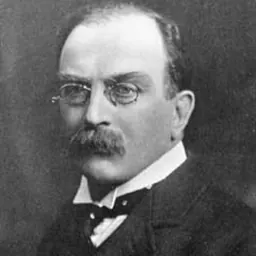
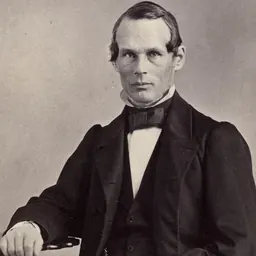


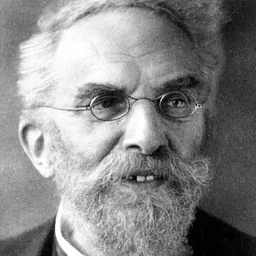
Related people
Same field, nearest in time




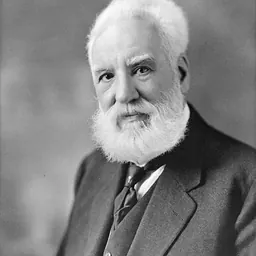
Contemporaries
People whose lives overlapped Gustav Kirchhoff's


Frequently asked questions
Who was Gustav Kirchhoff?
German physicist (1824–1887)
When was Gustav Kirchhoff born?
Gustav Kirchhoff was born on 12 March 1824 in Königsberg.
When did Gustav Kirchhoff die?
Gustav Kirchhoff died on 17 October 1887 in Berlin.
What was Gustav Kirchhoff's occupation?
Gustav Kirchhoff was a physicist, chemist, engineer, mathematician and university teacher.
What was Gustav Kirchhoff known for?
Gustav Kirchhoff was known for Gustav Kirchhoff, Kirchhoff's circuit laws and Kirchhoff's law of thermal radiation.
What nationality was Gustav Kirchhoff?
Gustav Kirchhoff was German.
Sources & further reading
Cite this page
APA: Biography.guide. (2026). Gustav Kirchhoff. https://biography.guide/gustav-kirchhoff/
MLA: "Gustav Kirchhoff." Biography.guide, https://biography.guide/gustav-kirchhoff/.
Chicago: "Gustav Kirchhoff." Biography.guide. https://biography.guide/gustav-kirchhoff/.
Data last updated: 2026-09-27 · Spot an error? Report a correction.
Page generated 2026-09-27 05:16 UTC