
Joseph von Fraunhofer
Bavarian physicist and optical lens manufacturer
About Joseph von Fraunhofer
Lived 1787 – 1826 (aged 39). Joseph von Fraunhofer was a German physicist, astronomer and chemist, known for Fraunhofer diffraction, Fraunhofer distance and Fraunhofer lines.
Joseph Ritter von Fraunhofer (; ; 6 March 1787 – 7 June 1826 ) was a German physicist and optical lens manufacturer. He made optical glass, an achromatic telescope, and objective lenses. He developed diffraction gratings and also invented the spectroscope. In 1814, he discovered and studied the dark absorption lines in the spectrum of the sun now known as Fraunhofer lines.
The German research organization Fraunhofer Society, which is Europe's biggest Society for the advancement of applied research, is named after him. Fraunhofer lines are used in astronomy to determine the composition of celestial bodies. His epitaph reads , Latin for
Early life Joseph Fraunhofer was the 11th child, born into a Roman Catholic family in Straubing, in the Electorate of Bavaria, to Franz Xaver Fraunhofer and Maria Anna Fröhlich. His father and paternal grandfather Johann Michael had been master glassmakers in Straubing. Fröhlich's family also came from a lineage of glassmakers going back to the 16th century. He was orphaned at the age of 11 and started working as an apprentice to a harsh glassmaker named Philipp Anton Weichelsberger. In 1806, Utzschneider and Georg von Reichenbach brought Fraunhofer into their Institute at Benediktbeuern, a secularised Benedictine monastery devoted to glassmaking. There he discovered how to make fine optical glass and invented precise methods for measuring optical dispersion.
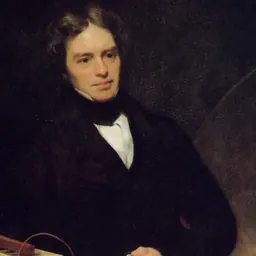
Career In 1814, Guinand left the firm, as did Reichenbach. Guinand would later become a partner with Fraunhofer in the firm, and the name was changed to Utzschneider-und-Fraunhofer. During 1818, Fraunhofer became the director of the Optical Institute. Due to the fine optical instruments developed by Fraunhofer, Bavaria overtook England as the center of the optics industry. Even the likes of Michael Faraday were unable to produce glass that could rival Fraunhofer.
His illustrious career eventually earned him an honorary doctorate from the University of Erlangen in 1822. In 1824, Fraunhofer was appointed a Knight of the Order of Merit of the Bavarian Crown by King Maximilian I, through which he was raised into personal nobility (with the title "Ritter von", i.e. knight). The same year, he was also made an honorary citizen of Munich.
Like many glassmakers of his era, he was poisoned by heavy metal vapors, resulting in his premature death. Fraunhofer died in 1826 at the age of 39. His most valuable glassmaking recipes are thought to have gone to the grave with him. In the course of his experiments, he discovered a bright fixed line which appears in the orange color of the spectrum when it is produced by the light of fire. This line enabled him afterward to determine the absolute power of refraction in different substances. Experiments to ascertain whether the solar spectrum contained the same bright line in orange as the line produced by the orange of fire light led him to the discovery of 574 dark fixed lines in the solar spectrum. Today, millions of such fixed absorption lines are now known.
Continuing to investigate, Fraunhofer detected dark lines also appearing in the spectra of several bright stars, but in slightly different arrangements. He ruled out the possibility that the lines were produced as the light passes through the Earth’s atmosphere. If that were the case they would not appear in different arrangements. He concluded that the lines originate in the nature of the stars and sun and carry information about the source of light, regardless of how far away that source is.
These dark fixed lines were later shown to be mostly atomic absorption lines, as explained by Kirchhoff and Bunsen in 1859, with the rest identified as telluric lines originating from absorption by oxygen molecules in the Earth's atmosphere. These lines are still called Fraunhofer lines in his honor; his discovery had gone far beyond the half-dozen apparent divisions in the solar spectrum that had previously been noted by Wollaston in 1802.
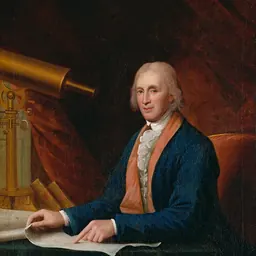
Invention of optical instruments Fraunhofer also developed a diffraction grating in 1821, after James Gregory discovered the phenomenon of diffraction grating and after the American astronomer David Rittenhouse invented the first manmade diffraction grating in 1785. Fraunhofer was the first who used a diffraction grating to obtain line spectra and the first who measured the wavelengths of spectral lines with a diffraction grating.
Ultimately, however, his primary passion was still practical optics; he once wrote that "In all my experiments I could, owing to lack of time, pay attention to only those matters which appeared to have a bearing upon practical optics".
Telescopes and optical instruments
Fraunhofer produced various optical instruments for his firm. the telescope itself being completed by Repsold of Hamburg after Fraunhofer's death.
Works
Kurzer Umriß der Lebens-Geschichte des Herrn Dr. Joseph von Fraunhofer. By Joseph von Utzschneider. Rösl, 1826.
Prismatic and diffraction spectra: memoirs. By Joseph von Fraunhofer, William Hyde Wollaston. American Book Co., 1899.
Don’t just read it —
keep it.
Full-length biographies made to live with: read them, listen on the way to work, watch them tonight.
- E-book
- Audio
- Video
Instant download · yours to keep · every purchase keeps this site free
Important facts
People in Joseph von Fraunhofer's life
Named in this biography and alive at the same time


Related people
Same field, nearest in time




Contemporaries
People whose lives overlapped Joseph von Fraunhofer's


Frequently asked questions
Who was Joseph von Fraunhofer?
Bavarian physicist and optical lens manufacturer
When was Joseph von Fraunhofer born?
Joseph von Fraunhofer was born on 6 March 1787 in Straubing.
When did Joseph von Fraunhofer die?
Joseph von Fraunhofer died on 7 June 1826 in Munich.
What was Joseph von Fraunhofer's occupation?
Joseph von Fraunhofer was a physicist, astronomer and chemist.
What was Joseph von Fraunhofer known for?
Joseph von Fraunhofer was known for Fraunhofer diffraction, Fraunhofer distance and Fraunhofer lines.
What nationality was Joseph von Fraunhofer?
Joseph von Fraunhofer was German.
Sources & further reading
· Wikipedia: Joseph von Fraunhofer
· DBpedia: Joseph von Fraunhofer
Cite this page
APA: Biography.guide. (2026). Joseph von Fraunhofer. https://biography.guide/joseph-von-fraunhofer/
MLA: "Joseph von Fraunhofer." Biography.guide, https://biography.guide/joseph-von-fraunhofer/.
Chicago: "Joseph von Fraunhofer." Biography.guide. https://biography.guide/joseph-von-fraunhofer/.
Data last updated: 2026-09-20 · Spot an error? Report a correction.
Page generated 2026-09-27 05:19 UTC