
About Carlo Matteucci
Lived 1811 – 1868 (aged 57). Carlo Matteucci was an Italian physicist, neuroscientist, politician and physiologist, known for Bioelectricity.
Carlo Matteucci (20 June 1811 – 24 June 1868) was an Italian physicist and neurophysiologist who was a pioneer in the study of bioelectricity.
Biography Carlo Matteucci was born at Forlì, in the province of Romagna, to Vincenzo Matteucci, a physician, and Chiara Folfi. He studied mathematics at the University of Bologna from 1825 to 1828, receiving his doctorate in 1829. From 1829 to 1831, he studied at the École Polytechnique in Paris, France. Upon returning to Italy, Matteucci studied at Bologna (1832), Florence, Ravenna (1837) and Pisa. He established himself as the head of the laboratory of the Hospital of Ravenna and became a professor of physics at the local college. In 1840, by recommendation of François Arago (1786–1853), his teacher at the École Polytechnique, to the Grand-Duke of Tuscany, Matteucci accepted a post of professor of physics at the University of Pisa.
Instigated by the work of Luigi Galvani (1737–1798) on bioelectricity, Matteucci began in 1830 a series of experiments which he pursued until his death in 1865. Using a sensitive galvanometer of Leopoldo Nobili, he was able to prove that injured excitable biological tissues generated direct electrical currents, and that they could be summed up by adding elements in series, like in Alessandro Volta’s (1745-1827) electric pile. Thus, Mateucci was able to develop what he called a "rheoscopic frog", by using the cut nerve of a frog's leg and its attached muscle as a kind of sensitive electricity detector. His work in bioelectricity influenced directly the research developed by Emil du Bois-Reymond (1818–1896), a student of the great German biologist Johannes Peter Müller (1801–1858) in Berlin, who tried the duplicate Matteucci's experiments and ended up discovering the nerve's action potential. In 1844, for these studies, Matteucci was awarded with the Copley medal by the Royal Society.
From 1847, he took an active part in politics, and in 1860 was chosen an Italian senator, at the same time becoming inspector-general of the Italian telegraph lines. Two years later he was appointed Minister of Education.
Personal life On 7 September 1846, Matteucci married Robinia Elizabeth Young (c. 1811–1897) at Marylebone Church in London. Robinia was the adopted daughter of Mary Ancrum Young (c. 1790–1867), widow of Rev. Robert Young, D.D., minister of the Scots Church, London Wall.
Matteucci died at Ardenza, near Livorno, on 24 June 1868.
Works
Matteucci was the author of four scientific treatises in physics: (2 vols., Pisa, 1841) (Pisa, 1844) (Pisa, 1850) , etc. (Paris, 1854). (1844)
(1857)
His numerous papers were published in the (1829–1858); and most of them also appeared at the time in the Italian scientific journals. They relate almost entirely to electrical phenomena, such as the magnetic rotation of light, the action of gas batteries, the effects of torsion on magnetism, the electric polarization of electrodes, etc., sufficiently complete accounts of which are given in Wiedemann's .
Nine memoirs, entitled Electro-Physiological Researches, were published in the Philosophical Transactions, 1845–1860. See Bianchi's (Rome, 1874).
Don’t just read it —
keep it.
Full-length biographies made to live with: read them, listen on the way to work, watch them tonight.
- E-book
- Audio
- Video
Instant download · yours to keep · every purchase keeps this site free
Important facts
People in Carlo Matteucci's life
Named in this biography and alive at the same time

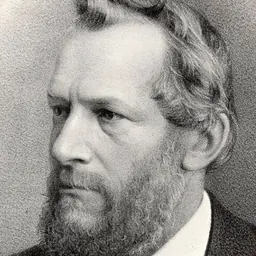


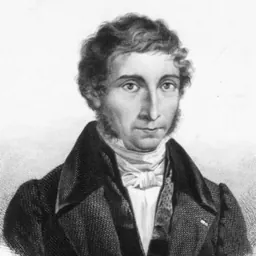
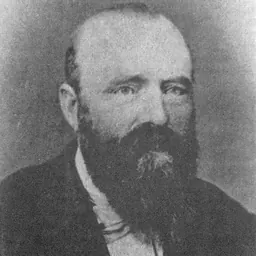
Related people
Same field, nearest in time



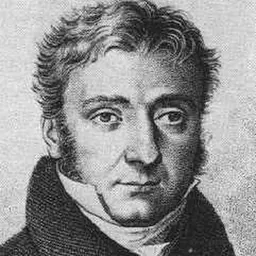
Contemporaries
People whose lives overlapped Carlo Matteucci's




Frequently asked questions
Who was Carlo Matteucci?
Italian politician and physicist (1811–1868)
When was Carlo Matteucci born?
Carlo Matteucci was born on 20 June 1811 in Forlì.
When did Carlo Matteucci die?
Carlo Matteucci died on 24 June 1868 in Livorno.
What was Carlo Matteucci's occupation?
Carlo Matteucci was a physicist, neuroscientist, politician and physiologist.
What was Carlo Matteucci known for?
Carlo Matteucci was known for Bioelectricity.
What nationality was Carlo Matteucci?
Carlo Matteucci was Italian.
Sources & further reading
Cite this page
APA: Biography.guide. (2026). Carlo Matteucci. https://biography.guide/carlo-matteucci/
MLA: "Carlo Matteucci." Biography.guide, https://biography.guide/carlo-matteucci/.
Chicago: "Carlo Matteucci." Biography.guide. https://biography.guide/carlo-matteucci/.
Data last updated: 2026-09-20 · Spot an error? Report a correction.
Page generated 2026-09-27 05:21 UTC