
François Arago
French mathematician, physicist, astronomer and politician
About François Arago
Lived 1786 – 1853 (aged 67). François Arago was a French astronomer, mathematician, physicist, politician, university teacher and biographer.
Dominique François Jean Arago , known simply as François Arago (; , ; 26 February 17862 October 1853), was a French mathematician, physicist, astronomer, freemason, supporter of the Carbonari revolutionaries, and politician.
In physics, he is known for helping establishing the wave theory of light. The Arago spot, an important experiment in optics that demonstrated this phenomenon, is named after him.
Early life and work Arago was born at Estagel, a small village of 3,000 near Perpignan, in the of Pyrénées-Orientales, France, where his father held the position of Treasurer of the Mint. His parents were François Bonaventure Arago (1754–1814) and Marie Arago (1755–1845).
Arago was the eldest of six brothers. Jean (1788–1836) emigrated to North America and became a general in the Mexican army. Jacques (1790–1854) took part in Louis de Freycinet's exploring voyage in the Uranie from 1817 to 1821, and on his return to France devoted himself to his journalism and the drama. Victor (1792–1867) was a French soldier. Joseph (1796–1860) became a soldier in the Mexican army. Étienne (1802–1892), is said to have collaborated with Honoré de Balzac in The Heiress of Birague, and from 1822 to 1847 wrote a great number of light dramatic pieces, mostly in collaboration.
Showing decided military tastes, François Arago was sent to the municipal college of Perpignan, where he began to study mathematics in preparation for the entrance examination of the . Within two years and a half he had mastered all the subjects prescribed for examination, and a great deal more, and, on going up for examination at Toulouse, he astounded his examiner by his knowledge of J.-L. Lagrange's work.
Towards the close of 1803, Arago entered the , Paris, but apparently found the professors there incapable of imparting knowledge or maintaining discipline. The artillery service was his ambition, and in 1804, through the advice and recommendation of Siméon Poisson, he received the appointment of secretary to the Paris Observatory. He now became acquainted with Pierre-Simon Laplace, and through his influence was commissioned, with Jean-Baptiste Biot, to complete the meridian arc measurements which had been begun by J. B. J. Delambre, and interrupted since the death of P. F. A. Méchain in 1804 (the meridian arc of Delambre and Méchain). Arago and Biot left Paris in 1806 and began operations along the mountains of Spain. Biot returned to Paris after they had determined the latitude of Formentera, the southernmost point to which they were to carry the survey. He was the first to perform a polarimetric observation of a comet when he discovered polarized light from the tail of the Great Comet of 1819.
The general idea of the experimental determination of the velocity of light in the manner subsequently effected by Hippolyte Fizeau and Léon Foucault was suggested by Arago in 1838, but his failing eyesight prevented his arranging the details or making the experiments.
Arago's fame as an experimenter and discoverer rests mainly on his contributions to magnetism in the co-discovery with Léon Foucault of eddy currents, and still more to optics. He showed that a magnetic needle, made to oscillate over nonferrous surfaces, such as water, glass, copper, etc., falls more rapidly in the extent of its oscillations according as it is more or less approached to the surface. This discovery, which earned him the Copley Medal of the Royal Society in 1825, was followed by another, that a rotating plate of copper tends to communicate its motion to a magnetic needle suspended over it, which he called "magnetism of rotation" but (after Faraday's explanation of 1832 ) is now known as eddy current. Arago is also fairly entitled to be regarded as having proved the long-suspected connexion between the aurora borealis and the variations of the magnetic elements. In 1828, he was elected a foreign member of the Royal Swedish Academy of Sciences.
In optics, Arago not only made important optical discoveries on his own, but is credited with stimulating the genius of Jean-Augustin Fresnel, with whose history, as well as that of Étienne-Louis Malus and Thomas Young, this part of his life is closely interwoven.
Shortly after the beginning of the 19th century the labours of at least three philosophers were shaping the doctrine of the undulatory, or wave, theory of light. Fresnel's arguments in favour of that theory found little favour with Laplace, Poisson and Biot, the champions of the emission theory; but they were ardently espoused by Humboldt and by Arago, who had been appointed by the Academy to report on the paper.
Among Arago's many contributions to the support of the undulatory hypothesis, comes the experimentum crucis which he proposed to carry out for measuring directly the velocity of light in air and in water and glass. On the emission theory the velocity should be accelerated by an increase of density in the medium; on the wave theory, it should be retarded. In 1838 he communicated to the Academy the details of his apparatus, which utilized the relaying mirrors employed by Charles Wheatstone in 1835 for measuring the velocity of the electric discharge; but owing to the great care required in the carrying out of the project, and to the interruption to his labours caused by the revolution of 1848, it was the spring of 1850 before he was ready to put his idea to the test; and then his eyesight suddenly gave way. Before his death, however, the retardation of light in denser media was demonstrated by the experiments of H. L. Fizeau and B. L. Foucault, which, with improvements in detail, were based on the plan proposed by him.
In 1834, Arago again visited Scotland, to attend the meeting of the British Association at Edinburgh. From this time till 1848 he led a life of comparative quiet – although he continued to work within the Academy and the Observatory to produce a multitude of contributions to all departments of physical science – but on the fall of Louis-Philippe he left his laboratory to join the Provisional Government (24 February 1848). He was entrusted with two important functions, that had never before been given to one person, viz. the ministry of marine and colonies (24 February 184811 May 1848) and ministry of war (5 April 184811 May 1848); in the former capacity he improved rations in the navy and abolished flogging. He also abolished political oaths of all kinds and, against an array of moneyed interests, succeeded in procuring the abolition of slavery in the French colonies.
On 10 May 1848, Arago was elected a member of the Executive Power Commission, a governing body of the French Republic. He was made President of the Executive Power Commission (11 May 1848) and served in this capacity as provisional head of state until 24 June 1848, when collective resignation of the commission was submitted to the National Constituent Assembly. At the beginning of May 1852, when the government of Louis Napoleon required an oath of allegiance from all its functionaries, Arago peremptorily refused, and sent in his resignation of his post as astronomer at the Bureau des Longitudes. This, however, the prince president declined to accept, and made "an exception in favour of a savant whose works had thrown lustre on France, and whose existence the government would regret to embitter."
Cape Gregory in Oregon was named by Captain Cook on 12 March 1778 after Saint Gregory, the saint of that day; it was renamed Cape Arago after François Arago.
Last years Arago remained a consistent republican to the end, and after the coup d'état of 1852, though suffering first from diabetes, then from Bright's disease, complicated by dropsy, he resigned his post as astronomer rather than take the oath of allegiance. Napoleon III gave directions that the old man should be in no way disturbed, and should be left free to say and do what he liked. In the summer of 1853 Arago was advised by his physicians to try the effect of his native air, and he accordingly set out to the eastern Pyrenees, but this was ineffective and he died in Paris. His grave is at the Père Lachaise Cemetery in Paris. Arago was an atheist.
Named after Arago
The study association for Applied Physics at the University of Twente was named after Arago. His name is one of the 72 names inscribed on the Eiffel Tower. The outer main-belt asteroid 1005 Arago, an inner ring of Neptune, the lunar crater Arago as well as the Martian crater Arago were also named in his honor. Two French cable ships were named after him, the François Arago of 1882 and the Arago of 1914/1931. Boulevard Arago, Paris
Honours Officer of the Order of Leopold. 1842 Prussian Pour le Mérite for Sciences and Arts.
Publications
Arago's works were published after his death under the direction J. A. Barral, in 17 vols., 8vo, 1854–1862 ; also separately his Astronomie populaire, in 4 vols.; Notices biographiques, in 3 vols.; Indices scientifiques, in 5 vols.; Voyages scientifiques, in 1 vol.; Grimoires scientifiques, in 2 vols.; Mélanges, in I vol.; and Tables analytiques et documents importants (with portrait), in 1 vol.
English translations of the following portions of Arago's works have appeared: Treatise on Comets, by C. Gold, C.B. (London, 1833); also translated W. H. Smyth and Grant (London, 1861) Euloge of James Watt, by Muirhead (London, 1839); also translated, with notes, by Brougham Popular Lectures on Astronomy, by Walter Kelly and Rev. L. Tomlinson (London, 1854); also translated by Dr W. H. Smyth and Prof. R. Grant, 2 vols. (London, 1855) Arago's Autography, translated by the Rev. Baden Powell (London, 1855, 58) Arago's Meteorological Essays, with introduction by Alexander von Humboldt, translated under the supervision of Colonel Edward Sabine (London, 1855)
Don’t just read it —
keep it.
Full-length biographies made to live with: read them, listen on the way to work, watch them tonight.
- E-book
- Audio
- Video
Instant download · yours to keep · every purchase keeps this site free
Important facts
Family & relationships
People in François Arago's life
Named in this biography and alive at the same time
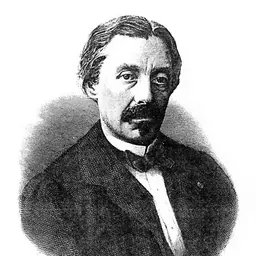
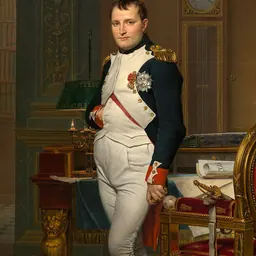






Related people
Same field, nearest in time
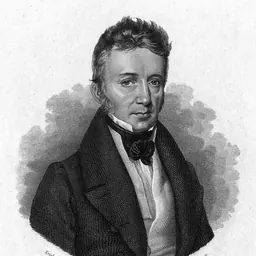
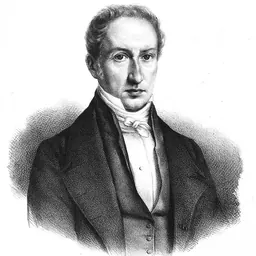
Contemporaries
People whose lives overlapped François Arago's
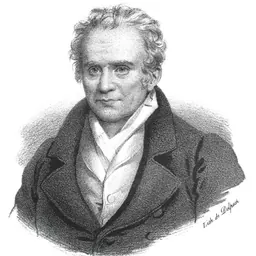

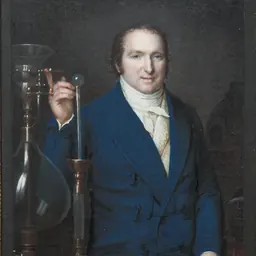
Frequently asked questions
Who was François Arago?
French mathematician, physicist, astronomer and politician (1786-1853)
When was François Arago born?
François Arago was born on 26 February 1786 in Estagel.
When did François Arago die?
François Arago died on 2 October 1853 in Paris.
What was François Arago's occupation?
François Arago was an astronomer, mathematician, physicist, politician, university teacher and biographer.
What nationality was François Arago?
François Arago was French.
Sources & further reading
Cite this page
APA: Biography.guide. (2026). François Arago. https://biography.guide/francois-arago/
MLA: "François Arago." Biography.guide, https://biography.guide/francois-arago/.
Chicago: "François Arago." Biography.guide. https://biography.guide/francois-arago/.
Data last updated: 2026-09-20 · Spot an error? Report a correction.
Page generated 2026-09-27 05:21 UTC