
About Hippolyte Fizeau
Lived 1819 – 1896 (aged 76). Hippolyte Fizeau was a Belgian physicist, astronomer, engineer, daguerreotypist and photographer, known for Astronomical interferometer, Capacitor and Doppler effect.
Armand Hippolyte Louis Fizeau (; 23 September 1819 – 18 September 1896) was a French physicist who, in 1849, measured the speed of light to within 5% accuracy. In 1851, he measured the speed of light in moving water in an experiment known as the Fizeau experiment.
Biography Fizeau was born in Paris to Louis and Beatrice Fizeau. He married into the de Jussieu botanical family. His earliest work was concerned with improvements in photographic processes. Following suggestions by François Arago, Léon Foucault and Fizeau collaborated in a series of investigations on the interference of light and heat. In 1848, he predicted the redshifting of electromagnetic waves.
In 1849, Fizeau calculated a value for the speed of light to a better precision than the previous value determined by Ole Rømer in 1676. He used a beam of light reflected from a mirror 8633 meters away. The beam passed through the gaps between the teeth of a rapidly rotating wheel with 720 teeth. The speed of the wheel was increased until, at 12.6 rotations per second, the returning light hit the next tooth and could not be seen. At 25.2 rotations per second, the light was again visible. This gives a result of , which is within 5% of the correct value (299,792,458 meters per second). (See Fizeau's measurement of the speed of light in air.) Fizeau made the first suggestion in 1864 that the "speed of a light wave be used as a length standard".
In 1850 he measured the relative speeds of light in air and water using a rotating mirror; however, Foucault independently achieved the same result seven weeks earlier.
Fizeau was involved in the discovery of the Doppler effect, which is known in French as the Doppler–Fizeau effect.
In 1853, Fizeau described the use of a capacitor (sometimes termed a "condenser") as a means to increase the efficiency of the induction coil. Later, he studied the thermal expansion of solids and applied the phenomenon of interference of light to the measurement of the dilatations of crystals. He became a member of the Académie des Sciences in 1860 and a member of the Bureau des Longitudes in 1878. He died in France at Venteuil on 18 September 1896.
The crater Fizeau on the far side of the Moon is named after him.
Don’t just read it —
keep it.
Full-length biographies made to live with: read them, listen on the way to work, watch them tonight.
- E-book
- Audio
- Video
Instant download · yours to keep · every purchase keeps this site free
Important facts
more
Optical dilatometer, RedshiftPeople in Hippolyte Fizeau's life
Named in this biography and alive at the same time

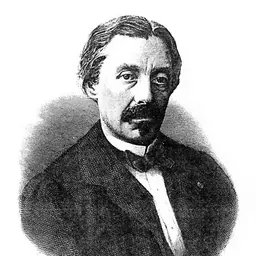
Related people
Same field, nearest in time
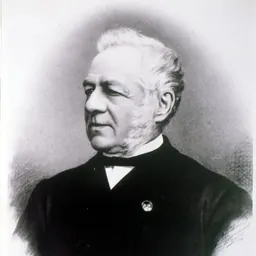




Contemporaries
People whose lives overlapped Hippolyte Fizeau's




Frequently asked questions
Who was Hippolyte Fizeau?
French physicist (1819–1896)
When was Hippolyte Fizeau born?
Hippolyte Fizeau was born on 23 September 1819 in Paris.
When did Hippolyte Fizeau die?
Hippolyte Fizeau died on 18 September 1896 in château de Venteuil, Nanteuil-le-Haudouin.
What was Hippolyte Fizeau's occupation?
Hippolyte Fizeau was a physicist, astronomer, engineer, daguerreotypist and photographer.
What was Hippolyte Fizeau known for?
Hippolyte Fizeau was known for Astronomical interferometer, Capacitor, Doppler effect, Fizeau experiment, Fizeau interferometer and Fizeau–Foucault apparatus.
What nationality was Hippolyte Fizeau?
Hippolyte Fizeau was Belgian.
Sources & further reading
Cite this page
APA: Biography.guide. (2026). Hippolyte Fizeau. https://biography.guide/hippolyte-fizeau/
MLA: "Hippolyte Fizeau." Biography.guide, https://biography.guide/hippolyte-fizeau/.
Chicago: "Hippolyte Fizeau." Biography.guide. https://biography.guide/hippolyte-fizeau/.
Data last updated: 2026-09-20 · Spot an error? Report a correction.
Page generated 2026-09-27 05:22 UTC