
About Thomas Graham
Lived 1805 – 1869 (aged 63). Thomas Graham was a British chemist, university teacher and physicist, known for Graham's Law and Kidney dialysis.
Thomas Graham FRSE, FRS (20 December 1805 – 11 September 1869) was a British chemist known for his pioneering work in dialysis and the diffusion of gases. He is regarded as one of the founders of colloid chemistry.
Life Graham was born in Glasgow, Scotland and was educated at the High School of Glasgow. Graham's father was a successful textile manufacturer, and wanted his son to enter into the Church of Scotland. Instead, defying his father's wishes, Graham became a student at the University of Glasgow in 1819. There he developed a strong interest in chemistry, studying under Professor Thomas Thomson, who was impressed and influenced by the young man. He left the university after receiving his MA in 1824.
He later studied medicine at the University of Edinburgh and then briefly taught chemistry at the Glasgow University Portland Street Medical School. In 1828 he was elected a Fellow of the Royal Society of Edinburgh, his proposer was Edward Turner. He won the Society's Keith Medal for the period 1831–33. where Graham founded the Chemical Society of London in 1841. In 1866, he was elected a foreign member of the Royal Swedish Academy of Sciences.
His final position was the Master of the Mint, where he stayed from 1855 until his death. He was the last person to hold that position: and the second regarding gas effusion. In the former case, Graham deduced that when measured repeatedly under the same conditions of pressure and temperature, the rate of diffusive mixing of a gas is inversely proportional to the square root of its density, and given the relationship between density and molar mass, also inversely proportional to the square root of its molar mass. In the same way, in the latter case, regarding effusion of a gas through a pin hole in to a vacuum, Graham deduced that the rate of effusion of a gas is inversely proportional to the square root of its molar mass. These two are sometimes referred to as a combined law (describing both phenomena).
In applied areas, Graham also made fundamental discoveries related to dialysis, a process used in research and industrial settings, as well as in modern health care. Graham's study of colloids resulted in his ability to separate colloids and crystalloids using a so-called "dialyzer", using technology that is a rudimentary forerunner of technology in modern kidney dialysis machines. These studies were foundational in the field known as colloid chemistry, and Graham is credited as one of its founders.
He also proposed the association theory which claimed that the substances such as cellulose or starch that we now know are polymers are composed from smaller molecules hold together by unknown forces. It remained the most popular explanation until Hermann Staudinger's macromolecular theory of 1920s.
Honours, activities, and recognition
Elected an Honorary Fellow of the Royal Society of Edinburgh (1828) receiving its Keith Medal for 1831–33 Fellow of the Royal Society (1836) First President of the Chemical Society of London (1841) Royal Medal of the Royal Society (1837 and 1863) Honorary doctorate (DCL) from the University of Oxford (1853) Copley Medal of the Royal Society (1862) Prix Jecker of the Paris Academy of Sciences (1862) A statue of Graham, sculpted by William Brodie in George Square in Glasgow was erected by the city in 1872 The Royal College of Science and Technology (the successor of Anderson's Institution, where Graham once worked, which ultimately became the University of Strathclyde), named its new Chemistry building the Thomas Graham Building in 1962. The headquarters of the Royal Society of Chemistry in Cambridge, England is named Thomas Graham House
Don’t just read it —
keep it.
Full-length biographies made to live with: read them, listen on the way to work, watch them tonight.
- E-book
- Audio
- Video
Instant download · yours to keep · every purchase keeps this site free
Important facts
People in Thomas Graham's life
Named in this biography and alive at the same time
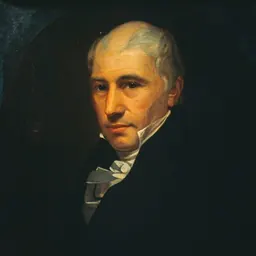


Related people
Same field, nearest in time


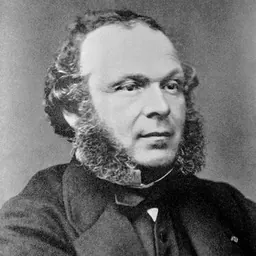

Contemporaries
People whose lives overlapped Thomas Graham's





Frequently asked questions
Who was Thomas Graham?
British chemist (1805–1869)
When was Thomas Graham born?
Thomas Graham was born on 20 December 1805 in Glasgow.
When did Thomas Graham die?
Thomas Graham died on 11 September 1869 in London.
What was Thomas Graham's occupation?
Thomas Graham was a chemist, university teacher and physicist.
What was Thomas Graham known for?
Thomas Graham was known for Graham's Law and Kidney dialysis.
What nationality was Thomas Graham?
Thomas Graham was British.
Sources & further reading
· DBpedia: Thomas Graham (chemist)
Cite this page
APA: Biography.guide. (2026). Thomas Graham. https://biography.guide/thomas-graham-chemist/
MLA: "Thomas Graham." Biography.guide, https://biography.guide/thomas-graham-chemist/.
Chicago: "Thomas Graham." Biography.guide. https://biography.guide/thomas-graham-chemist/.
Data last updated: 2026-09-25 · Spot an error? Report a correction.
Page generated 2026-09-27 05:10 UTC