
About Roderick Murchison, 1st Baronet
Lived 1792 – 1871 (aged 79). Roderick Murchison, 1st Baronet was a British and Scottish botanist, paleontologist, geologist, military personnel, entomologist and writer, known for Devonian, Permian and Silurian.
Sir Roderick Impey Murchison, 1st Baronet (19 February 1792 – 22 October 1871 ) was a Scottish geologist who served as director-general of the British Geological Survey from 1855 until his death in 1871. He is noted for investigating and describing the Silurian, Devonian and Permian systems.
Early life and work Murchison was born at Tarradale House, Muir of Ord, Ross-shire, the son of Barbara and Kenneth Murchison. His wealthy father died in 1796, when Roderick was four years old, and he was sent to Durham School three years later Murchison became fascinated by the young science of geology and joined the Geological Society of London, soon becoming one of its most active members. His colleagues there included Adam Sedgwick, William Conybeare, William Buckland, William Fitton, Charles Lyell and Charles Darwin.
Exploring with his wife, Murchison studied the geology of the south of England, devoting special attention to the rocks of the north-west of Sussex and the adjoining parts of Hampshire and Surrey, on which, aided by Fitton, he wrote his first scientific paper, read to the Geological Society of London in 1825. Turning his attention to Continental geology, he and Lyell explored the volcanic region of Auvergne, parts of southern France, northern Italy, Tyrol and Switzerland. A little later, with Sedgwick as his companion, Murchison attacked the difficult problem of the geological structure of the Alps. Their joint paper giving the results of their study is a classic in the literature of Alpine geology.
Murchison was an opponent of Charles Darwin's theory of evolution. He opposed the transmutation of species and supported successive creation.
Silurian system In 1831 he went to the England–Wales border, to attempt to discover whether the greywacke rocks underlying the Old Red Sandstone could be grouped into a definite order of succession. The result was the establishment of the Silurian system under which were grouped, for the first time, a remarkable series of formations, each replete with distinctive organic remains other than and very different from those of the other rocks of England. These researches, together with descriptions of the coalfields and overlying formations in South Wales and the English border counties, were embodied in The Silurian System (1839). The English naturalist, geologist, and palaeontologist John William Salter assisted Murchison in his work on Siluria (1854 and later editions).
The establishment of the Silurian system was followed by that of the Devonian system, an investigation in which Murchison assisted, both in the south-west of England and in the Rhineland. Soon afterwards Murchison projected an important geological campaign in Russia with the view of extending to that part of the Continent the classification he had succeeded in elaborating for the older rocks of western Europe. He was accompanied by Édouard de Verneuil (1805–1873) and Count Alexander von Keyserling (1815–1891), in conjunction with whom he produced a work on Russia and the Ural Mountains. The publication of this monograph in 1845 completes the first and most active half of Murchison's scientific career. He was elected a Foreign Honorary Member of the American Academy of Arts and Sciences in 1840. and he was president 1843–1845, 1851–1853, 1856–1859 and 1862–1871. He served on the Royal Commission on the British Museum (1847–1849).
Murchison also announced the Permian system to geology in 1841, based on explorations in Perm Krai undertaken with Édouard de Verneuil.
Murchison was responsible for establishing much of the international prestige of British geology, and he viewed the spread of his stratigraphic systems on maps around the world "as a scientific form of imperial expansion". He frequently described geological excursions (such those he made abroad) as "invasions" or "conquests" and enjoyed being dubbed the "King of Siluria". According to the scholar Robert A. Stafford, "Murchinson's tendencies towards militarism, imperialism, and megalomania ran through his career and finally found full expression his simultaneous leadership of the Royal Geographical Society and the British Geological Survey."
Scotland
The chief geological investigation of the last decade of his life was devoted to the Highlands of Scotland, where he wrongly believed he had succeeded in showing that the vast masses of crystalline schists, previously supposed to be part of what used to be termed the Primitive formations, were really not older than the Silurian period, since underneath them lay beds of limestone and quartzite containing Lower Silurian (Cambrian) fossils. This started off what became known as the Highlands Controversy. James Nicol recognised the fallacy in Murchison's theory and propounded his own ideas; in the 1880s these were superseded by the correct theory of Charles Lapworth, which was corroborated by Benjamin Peach and John Horne. Their subsequent research showed that the infraposition of the fossiliferous rocks is not their original place, but had been brought about by a gigantic system of dislocations, whereby successive masses of the oldest gneisses, have been exhumed from below and thrust over the younger formations.
In 1855 Murchison was appointed director-general of the British Geological Survey and director of the Royal School of Mines and the Museum of Practical Geology in Jermyn Street, London, in succession to Sir Henry De la Beche, who had been the first to hold these offices. Official routine now occupied much of his time, but he found opportunity for the Highland researches just alluded to, and also for preparing successive editions of his work Siluria (1854, ed. 5, 1872), which was meant to present the main features of the original Silurian System together with a digest of subsequent discoveries, particularly of those that showed the extension of the Silurian classification into other countries.
Later life
In 1845, whilst visiting Carclew in Cornwall, he met several Cornish miners who were going to Australia. Believing that there might be gold there, he asked them to send back likely samples. They did this, and thus Murchison knew of the existence of gold in Australia before Edward Hargraves' discovery.
In 1863 he was made a KCB, and three years later he was created a baronet. The learned societies of his own country bestowed their highest rewards upon him: the Royal Society gave him the Copley Medal, the Geological Society its Wollaston medal, and the Royal Society of Edinburgh its Brisbane Medal. There was hardly a foreign scientific society of note without his name among its honorary members. The French Academy of Sciences awarded him the prix Cuvier, and elected him one of its eight foreign members in succession to Michael Faraday. In 1855 he was elected a foreign member of the Royal Swedish Academy of Sciences and in 1871 awarded the Founders' Medal of the Royal Geographical Society.
Don’t just read it —
keep it.
Full-length biographies made to live with: read them, listen on the way to work, watch them tonight.
- E-book
- Audio
- Video
Instant download · yours to keep · every purchase keeps this site free
Important facts
more
Roderick I. MurchisonFamily & relationships
People in Roderick Murchison, 1st Baronet's life
Named in this biography and alive at the same time




Related people
Same field, nearest in time
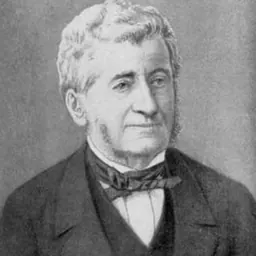

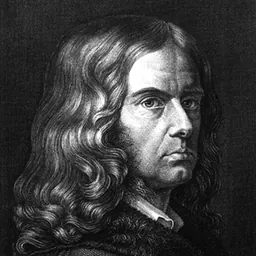
Contemporaries
People whose lives overlapped Roderick Murchison, 1st Baronet's

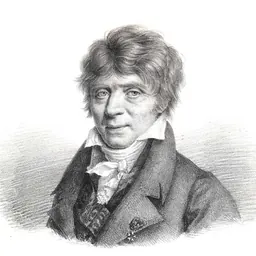


Frequently asked questions
Who was Roderick Murchison, 1st Baronet?
British geologist (1792-1871)
When was Roderick Murchison, 1st Baronet born?
Roderick Murchison, 1st Baronet was born on 19 February 1792 in Ross and Cromarty.
When did Roderick Murchison, 1st Baronet die?
Roderick Murchison, 1st Baronet died on 22 October 1871 in London.
What was Roderick Murchison, 1st Baronet's occupation?
Roderick Murchison, 1st Baronet was a botanist, paleontologist, geologist, military personnel, entomologist and writer.
What was Roderick Murchison, 1st Baronet known for?
Roderick Murchison, 1st Baronet was known for Devonian, Permian and Silurian.
What nationality was Roderick Murchison, 1st Baronet?
Roderick Murchison, 1st Baronet was British and Scottish.
Sources & further reading
· Wikipedia: Roderick Murchison, 1st Baronet
Cite this page
APA: Biography.guide. (2026). Roderick Murchison, 1st Baronet. https://biography.guide/roderick-murchison-1st-baronet/
MLA: "Roderick Murchison, 1st Baronet." Biography.guide, https://biography.guide/roderick-murchison-1st-baronet/.
Chicago: "Roderick Murchison, 1st Baronet." Biography.guide. https://biography.guide/roderick-murchison-1st-baronet/.
Data last updated: 2026-09-26 · Spot an error? Report a correction.
Page generated 2026-09-27 05:13 UTC