
About Nikolai Ivanovich Lobachevsky
Lived 1792 – 1856 (aged 63). Nikolai Ivanovich Lobachevsky was a Russian mathematician and university teacher, known for Lobachevskian geometry.
Biography Nikolai Lobachevsky was born either in or near the city of Nizhny Novgorod in the Russian Empire (now in Nizhny Novgorod Oblast, Russia) in 1792 to parents of Russian and Polish origin – Ivan Maksimovich Lobachevsky and Praskovia Alexandrovna Lobachevskaya. He was one of three children. When he was seven, his father, a clerk in a land-surveying office, died, and Nikolai moved with his mother to Kazan. Nikolai Lobachevsky attended Kazan Gymnasium from 1802, graduating in 1807, and then received a scholarship to Kazan University,
Career Lobachevsky's main achievement is the development (independently from János Bolyai) of a non-Euclidean geometry,
Lobachevsky's magnum opus Geometriya was completed in 1823, but was not published in its exact original form until 1909, long after he had died. Lobachevsky was also the author of New Foundations of Geometry (1835–1838). He also wrote Geometrical Investigations on the Theory of Parallels (1840) and Pangeometry (1855).
Another of Lobachevsky's achievements was developing a method for the approximation of the roots of algebraic equations. This method is now known as the Dandelin–Gräffe method, named after two other mathematicians who discovered it independently. In Russia, it is called the Lobachevsky method. Lobachevsky gave the definition of a function as a correspondence between two sets of real numbers (Peter Gustav Lejeune Dirichlet gave the same definition independently soon after Lobachevsky).
Impact E. T. Bell wrote about Lobachevsky's influence on the following development of mathematics in his 1937 book Men of Mathematics: The boldness of his challenge and its successful outcome have inspired mathematicians and scientists in general to challenge other "axioms" or accepted "truths", for example the "law" of causality which, for centuries, have seemed as necessary to straight thinking as Euclid's postulate appeared until Lobachevsky discarded it. The full impact of the Lobachevskian method of challenging axioms has probably yet to be felt. It is no exaggeration to call Lobachevsky the Copernicus of Geometry, for geometry is only a part of the vaster domain which he renovated; it might even be just to designate him as a Copernicus of all thought. Russian 1 rouble coin commemorating the 200th anniversary of Lobachevsky's birth, 1992.
Honors 1858 Lobachevskij, an asteroid discovered in 1972, was named in his honour. The lunar crater Lobachevsky was named in his honor. Lobachevsky Prize, a mathematics award by the Kazan State University. The Lobachevsky University was named in his honor. A street in Ploiesti, Romania was named in his honor.
In popular culture
Lobachevsky is the subject of songwriter/mathematician Tom Lehrer's humorous song "Lobachevsky" from his 1953 Songs by Tom Lehrer album. In the song, Lehrer portrays a Russian mathematician who sings about how Lobachevsky influenced him: "And who made me a big success / and brought me wealth and fame? / Nikolai Ivanovich Lobachevsky is his name." Lobachevsky's secret to mathematical success is given as "Plagiarize!", as long as one is always careful to "call it, please, research". According to Lehrer, the song is "not intended as a slur on [Lobachevsky's] character" and the name was chosen "solely for prosodic reasons". The song was based on Danny Kaye and Sylvia Fine's monologue on Stanislavsky and the secret of success in the acting profession.
In Poul Anderson's 1969 fantasy novella "Operation Changeling" – which was later expanded into the novel Operation Chaos (1971) – a group of sorcerers navigate a non-Euclidean universe with the assistance of the ghosts of Lobachevsky and Bolyai.
Roger Zelazny's science fiction novel Doorways in the Sand contains a poem dedicated to Lobachevsky.
In the sitcom 3rd Rock from the Sun, "Dick and the Single Girl" (season 2 episode 24) originally aired on May 11 1997, Sonja Umdahl (Christine Baranski), a forgotten colleague who is transferring to teach at another university, gives as the reason behind her departure that Columbia is the only holder of Nikolai Lobachevsky's manuscripts.
Works Kagan V. F. (ed.): N. I. Lobachevsky – Complete Collected Works, Vol. I–IV (Russian), Moscow–Leningrad (GITTL), (1946–51). Vol. I: Geometrical Researches on the Theory of Parallels (1840); On the Origin of Geometry (1829–30). Vol. II: New Principles of Geometry with Complete Theory of Parallels (1835–38). Vol. III: Imaginary Geometry (1835); Application of imaginary geometry to certain integrals (1836); Pangeometry (1856). Vol. IV: Works on Other Subjects.
English translations Geometrical Researches on the Theory of Parallels. G. B. Halsted (tr.). 1891. Reprinted in Roberto Bonola: Non-Euclidean Geometry: A Critical and Historical Study of its Development. 1912. Dover reprint 1955. Also in: Seth Braver Lobachevski illuminated, MAA 2011. Pangeometry. Excerpts translated by Henry P. Manning: in D. E. Smith A Source Book in Mathematics. McGraw Hill 1929. Dover reprint, pp. 360–374. New Principles of Geometry with Complete Theory of Parallels . G. B. Halsted (tr.). 1897. Nikolai I. Lobachevsky, Pangeometry, translator and editor: A. Papadopoulos, Heritage of European Mathematics Series, Vol. 4, European Mathematical Society. 2010, 310 p.
Don’t just read it —
keep it.
Full-length biographies made to live with: read them, listen on the way to work, watch them tonight.
- E-book
- Audio
- Video
Instant download · yours to keep · every purchase keeps this site free
Important facts
People in Nikolai Ivanovich Lobachevsky's life
Named in this biography and alive at the same time
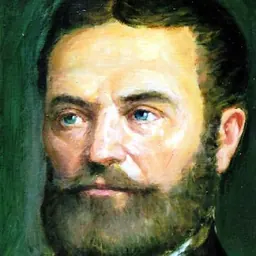
Related people
Same field, nearest in time





Contemporaries
People whose lives overlapped Nikolai Ivanovich Lobachevsky's
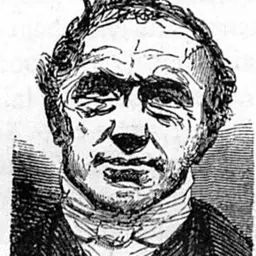
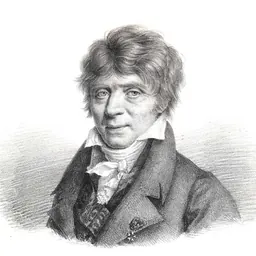


Frequently asked questions
Who was Nikolai Ivanovich Lobachevsky?
Russian mathematician (1792–1856)
When was Nikolai Ivanovich Lobachevsky born?
Nikolai Ivanovich Lobachevsky was born on 20 November 1792 in Nizhny Novgorod.
When did Nikolai Ivanovich Lobachevsky die?
Nikolai Ivanovich Lobachevsky died on 12 February 1856 in Kazan.
What was Nikolai Ivanovich Lobachevsky's occupation?
Nikolai Ivanovich Lobachevsky was a mathematician and university teacher.
What was Nikolai Ivanovich Lobachevsky known for?
Nikolai Ivanovich Lobachevsky was known for Lobachevskian geometry.
What nationality was Nikolai Ivanovich Lobachevsky?
Nikolai Ivanovich Lobachevsky was Russian.
Sources & further reading
· Wikipedia: Nikolai Ivanovich Lobachevsky
· DBpedia: Nikolai Lobachevsky
Cite this page
APA: Biography.guide. (2026). Nikolai Ivanovich Lobachevsky. https://biography.guide/nikolai-ivanovich-lobachevsky/
MLA: "Nikolai Ivanovich Lobachevsky." Biography.guide, https://biography.guide/nikolai-ivanovich-lobachevsky/.
Chicago: "Nikolai Ivanovich Lobachevsky." Biography.guide. https://biography.guide/nikolai-ivanovich-lobachevsky/.
Data last updated: 2026-09-20 · Spot an error? Report a correction.
Page generated 2026-09-27 05:17 UTC