
About John William Strutt
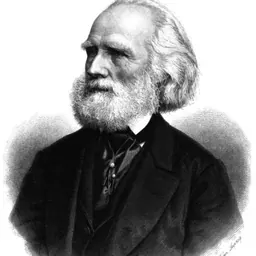
Lived 1842 – 1919 (aged 76). John William Strutt was a British physicist, politician, university teacher, mathematician and chemist, known for Acoustic streaming, Acoustics and Anti-reflective coating.
Biography John William Strutt was born on 12 November 1842 at Langford Grove, Maypole Road in Maldon, England, the son of John James Strutt, 2nd Baron Rayleigh, and Clara Elizabeth La Touche. In his early years, he suffered from frailty and poor health.
Strutt attended Eton College and Harrow School (each for only a short period), before entering Trinity College, Cambridge, in 1861, where he studied mathematics. In 1865, he received his B.A. (Senior Wrangler and Smith's Prizeman), and was elected a Fellow of Trinity College the following year. He obtained an M.A. in 1868.
In 1871, Strutt resigned from his fellowship to marry Evelyn Balfour, the daughter of James Maitland Balfour, with whom he had three sons. In 1873, on the death of his father, he inherited the Barony of Rayleigh.
In 1879, Rayleigh was appointed Cavendish Professor of Physics at the University of Cambridge. In 1883, he first described dynamic soaring by seabirds in Nature. The following year, he resigned as Cavendish Professor to continue his experimental work at Terling Place. In 1904, Rayleigh and Ramsay were awarded the Nobel Prizes in Physics and Chemistry, respectively; both for research related to the discovery of argon.
Around 1900, Rayleigh developed the duplex (combination of two) theory of human sound localisation using two binaural cues, interaural phase difference (IPD) and interaural level difference (ILD) (based on analysis of a spherical head with no external pinnae). The theory posits that we use two primary cues for sound lateralisation, using the difference in the phases of sinusoidal components of the sound and the difference in amplitude (level) between the two ears.
Caricature of Lord Rayleigh in the London magazine Vanity Fair, 1899.
Rayleigh received the degree of Doctor mathematicae (honoris causa) from the Royal Frederick University on 6 September 1902, when they celebrated the centennial of the birth of mathematician Niels Abel.
From 1905 to 1908, Rayleigh served as President of the Royal Society. From time to time, he participated in the House of Lords; however, he spoke up only if politics attempted to become involved in science.
In 1919, Rayleigh served as President of the Society for Psychical Research. As an advocate that simplicity and theory be part of the scientific method, he argued for the principle of similitude.
Rayleigh died on 30 June 1919 in Witham at the age of 76, His son Robert, a physicist, succeeded him as Baron Rayleigh.
Religious views Rayleigh was an Anglican. Though he did not write about the relationship between science and religion, he retained a personal interest in spiritual matters. When his scientific papers were to be published in a collection by the Cambridge University Press, Strutt wanted to include a quotation from the Bible, but he was discouraged from doing so, as he later reported:
Still, he had his wish and the quotation was printed in the five-volume collection of scientific papers. In a letter to a family member, he wrote about his rejection of materialism and spoke of Jesus Christ as a moral teacher:
Rayleigh held an interest in parapsychology and was an early member of the Society for Psychical Research (SPR). He was not convinced of spiritualism but remained open to the possibility of supernatural phenomena. Rayleigh was the president of the SPR in 1919. He gave a presidential address in the year of his death but did not come to any definite conclusions.
Recognition Memberships Year Organisation Type 1873 Royal Society Fellow 1886 American Philosophical Society International Member
Awards Year Organisation Award Citation 1882 Royal Society Royal Medal "For his various papers in mathematical and experimental physics." 1890 London Mathematical Society De Morgan Medal — 1894 Accademia dei XL Matteucci Medal — 1895 Royal Society of Chemistry Faraday Lectureship Prize — 1899 Royal Society Copley Medal "In recognition of his contributions to physical science." 1904 Royal Swedish Academy of Sciences Nobel Prize in Physics "For his investigations of the densities of the most important gases and for his discovery of argon in connection with these studies." 1913 Franklin Institute Elliott Cresson Medal "For extended researches in physical science." 1914 Royal Society Rumford Medal "On the ground of his investigations in thermodynamics and on radiation."
Orders Year Head of state Order 1902 Edward VII Order of Merit 1903 Wilhelm II
Commemoration A lunar crater, as well as a Martian crater, are named in his honour. The asteroid 22740 Rayleigh was named after him on 1 June 2007. The rayl, a unit of specific acoustic impedance, is also named for him.
Sir William Ramsay, his co-worker in the investigation to discover argon, described Rayleigh as "the greatest man alive" while speaking to Lady Ramsay during his last illness.
H. M. Hyndman said of Rayleigh that "no man ever showed less consciousness of great genius". are now recognized as early classical contributions to the field of tribology. For these contributions, he was named as one of the 23 "Men of Tribology" by Duncan Dowson.
There is a memorial to him by Derwent Wood in St Andrew's Chapel at Westminster Abbey.
The National Physical Laboratory (NPL) awards annualy the Rayleigh Award for "the authors of the most outstanding NPL's paper published in the previous calendar year."
Publications
The Theory of Sound vol. I (London : Macmillan, 1877, 1894) (alternative link: Bibliothèque Nationale de France OR (Cambridge: University Press, reissued 2011, ) The Theory of Sound vol.II (London : Macmillan, 1878, 1896) (alternative link: Bibliothèque Nationale de France) OR (Cambridge: University Press, reissued 2011, ) Scientific papers (Vol. 1: 1869–1881) (Cambridge : University Press, 1899–1920, reissued by the publisher 2011, ) Scientific papers (Vol. 2: 1881–1887) (Cambridge : University Press, 1899–1920, reissued by the publisher 2011, ) Scientific papers (Vol. 3: 1887–1892) (Cambridge : University Press, 1899–1920, reissued by the publisher 2011, ) Scientific papers (Vol. 4: 1892–1901) (Cambridge : University Press, 1899–1920, reissued by the publisher 2011, ) Scientific papers (Vol. 5: 1902–1910) (Cambridge : University Press, 1899–1920, reissued by the publisher 2011, ) Scientific papers (Vol. 6: 1911–1919) (Cambridge : University Press, 1899–1920, reissued by the publisher 2011, )
Don’t just read it —
keep it.
Full-length biographies made to live with: read them, listen on the way to work, watch them tonight.
- E-book
- Audio
- Video
Instant download · yours to keep · every purchase keeps this site free
Important facts
more
Bessel function, Combustion instability, Drag equation, Dynamic soaring, Electrospray, End correction, Experiments of Rayleigh and Brace, Interaural time difference, Optical theorem, Particle-size distribution, Perturbation theory (quantum mechanics), Photonic crystal, Plateau–Rayleigh instability, Potential flow around a circular cylinder, Principle of similitude, Rayleigh Still, Rayleigh criterion, Rayleigh dissipation function, Rayleigh distance, Rayleigh distribution, Rayleigh fading, Rayleigh flow, Rayleigh fractionation, Rayleigh interferometer, Rayleigh law, Rayleigh number, Rayleigh problem, Rayleigh quotient, Rayleigh scattering, Rayleigh test, Rayleigh theorem for eigenvalues, Rayleigh wave, Rayleigh's energy theorem, Rayleigh's equation (fluid dynamics), Rayleigh's method of dimensional analysis, Rayleigh–Bénard convection, Rayleigh–Faber–Krahn inequality, Rayleigh–Gans approximation, Rayleigh–Jeans catastrophe, Rayleigh–Jeans law, Rayleigh–Lorentz pendulum, Rayleigh–Plesset equation, Rayleigh–Ritz method, Rayleigh–Taylor instability, Reciprocity (electromagnetism), Self-oscillation, Taylor–Couette flow, Waveguide, Whispering-gallery wavePeople in John William Strutt's life
Named in this biography and alive at the same time

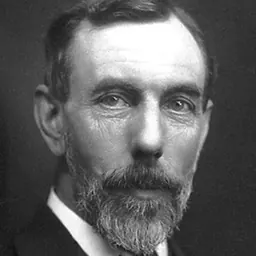


Related people
Same field, nearest in time


Contemporaries
People whose lives overlapped John William Strutt's

Frequently asked questions
Who was John William Strutt?
English physicist (1842–1919)
When was John William Strutt born?
John William Strutt was born on 12 November 1842 in Maldon, Langford Grove.
When did John William Strutt die?
John William Strutt died on 30 June 1919 in Witham, Terling Place.
What was John William Strutt's occupation?
John William Strutt was a physicist, politician, university teacher, mathematician and chemist.
What was John William Strutt known for?
John William Strutt was known for Acoustic streaming, Acoustics, Anti-reflective coating, Argon, Beatty sequence and Bending.
What nationality was John William Strutt?
John William Strutt was British.
Sources & further reading
· Wikipedia: John William Strutt
· DBpedia: John William Strutt, 3rd Baron Rayleigh
Cite this page
APA: Biography.guide. (2026). John William Strutt. https://biography.guide/john-william-strutt/
MLA: "John William Strutt." Biography.guide, https://biography.guide/john-william-strutt/.
Chicago: "John William Strutt." Biography.guide. https://biography.guide/john-william-strutt/.
Data last updated: 2026-09-26 · Spot an error? Report a correction.
Page generated 2026-09-27 05:15 UTC