
Émile Lemoine
French mathematician and civil engineer
About Émile Lemoine
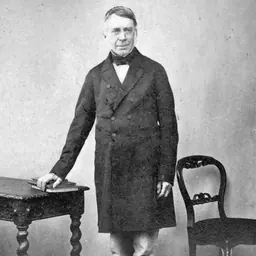
Lived 1840 – 1912 (aged 72). Émile Lemoine was a French mathematician, civil engineer, university teacher, violinist and engineer, known for Lemoine point.
Émile Michel Hyacinthe Lemoine (; 22 November 1840 – 21 February 1912) was a French civil engineer and a mathematician, a geometer in particular. He was educated at a variety of institutions, including the Prytanée National Militaire and, most notably, the École Polytechnique. Lemoine taught as a private tutor for a short period after his graduation from the latter school.
Lemoine is best known for his proof of the existence of the Lemoine point (or the symmedian point) of a triangle. Other mathematical work includes a system he called Géométrographie and a method which related algebraic expressions to geometric objects. He has been called a co-founder of modern triangle geometry, as many of its characteristics are present in his work.
For most of his life, Lemoine was a professor of mathematics at the École Polytechnique. In later years, he worked as a civil engineer in Paris, and he also took an amateur's interest in music. During his tenure at the École Polytechnique and as a civil engineer, Lemoine published several papers on mathematics, most of which are included in a fourteen-page section in Nathan Altshiller Court's College Geometry. Additionally, he founded a mathematical journal titled, L'Intermédiaire des Mathématiciens.
Biography
Early years (1840–1869) Lemoine was born in Quimper, Finistère, on 22 November 1840, the son of a retired military captain who had participated in the campaigns of the First French Empire occurring after 1807. As a child, he attended the military Prytanée of La Flèche on a scholarship granted because his father had helped found the school. During this early period, he published a journal article in Nouvelles annales de mathématiques, discussing properties of the triangle.
Lemoine was accepted into the École Polytechnique in Paris at the age of twenty, the same year as his father's death. As a student there, Lemoine, a presumed trumpet player, helped to found an influential chamber music society called La Trompette, for which Camille Saint-Saëns composed several pieces, including the Septet for trumpet, string quintet and piano. After graduation in 1866, he considered a career in law, but was discouraged by the fact that his advocacy for republican ideology and liberal religious views clashed with the ideals of the incumbent government, the Second French Empire.
Middle years (1870–1887)
In 1870, a laryngeal disease forced him to discontinue his teaching. He took a brief vacation in Grenoble and, when he returned to Paris, he published some of his remaining mathematical research. He also participated and founded several scientific societies and journals, such as the Société Mathématique de France, the Journal de Physique, and the Société de Physique, all in 1871. Most of the other results discussed in the paper pertained to various concyclic points that could be constructed from the Lemoine point.
Later years (1888–1912) During his tenure as a civil engineer, Lemoine wrote a treatise concerning compass and straightedge constructions entitled, La Géométrographie ou l'art des constructions géométriques, which he considered his greatest work, despite the fact that it was not well-received critically. The original title was De la mesure de la simplicité dans les sciences mathématiques, and the original idea for the text would have discussed the concepts Lemoine devised as concerning the entirety of mathematics. Time constraints, however, limited the scope of the paper. He presented this paper at a meeting of the Association Française in Oran, Algeria in 1888. The paper, however, did not garner much enthusiasm or interest among the mathematicians gathered there. Lemoine published several other papers on his construction system that same year, including Sur la mesure de la simplicité dans les constructions géométriques in the Comptes rendus of the Académie française. He published additional papers on the subject in Mathesis (1888), Journal des mathématiques élémentaires (1889), Nouvelles annales de mathématiques (1892), and the self-published La Géométrographie ou l'art des constructions géométriques, which was presented at the meeting of the Association Française in Pau (1892), and again at Besançon (1893) and Caen (1894). The American Mathematical Monthly, in which much of Lemoine's work is published, declared that "To none of these [geometers] more than Émile-Michel-Hyacinthe Lemoine is due the honor of starting this movement [of modern triangle geometry] ..." which he held for several years.
Lemoine point and circle The Lemoine point; L. The black lines are medians, the dotted lines are angle bisectors and the red lines are the symmedians (the reflections of the black lines in the dotted lines). In his 1874 paper, entitled Note sur les propriétés du centre des médianes antiparallèles dans un triangle, Lemoine proved the concurrency of the symmedians of a triangle; the reflections of the medians of the triangle over the angle bisectors. Other results in the paper included the idea that the symmedian from a vertex of the triangle divides the opposite side into segments whose ratio is equal to the ratio of the squares of the other two sides.
Lemoine also proved that if lines are drawn through the Lemoine point parallel to the sides of the triangle, then the six points of intersection of the lines and the sides of the triangle are concyclic, or that they lie on a circle. This circle is now known as the first Lemoine circle, or simply the Lemoine circle.
Construction system Lemoine's system of constructions, the Géométrographie, attempted to create a methodological system by which constructions could be judged. This system enabled a more direct process for simplifying existing constructions. In his description, he listed five main operations: placing a compass's end on a given point, placing it on a given line, drawing a circle with the compass placed upon the aforementioned point or line, placing a straightedge on a given line, and extending the line with the straightedge.
The "simplicity" of a construction could be measured by the number of its operations. In his paper, he discussed as an example the Apollonius problem originally posed by Apollonius of Perga during the Hellenistic period; the method of constructing a circle tangent to three given circles. The problem had already been solved by Joseph Diaz Gergonne in 1816 with a construction of simplicity 400, but Lemoine's presented solution had simplicity 154. Simpler solutions such as those by Frederick Soddy in 1936 and by David Eppstein in 2001 are now known to exist.
Lemoine's conjecture and extensions In 1894, Lemoine stated what is now known as Lemoine's conjecture: Every odd number which is strictly greater than three can be expressed in the form 2p + q where p and q are prime. In 1985, John Kiltinen and Peter Young conjectured an extension of the conjecture which they called the "refined Lemoine conjecture". They published the conjecture in a journal of the Mathematical Association of America: "For any odd number m which is at least 9, there are odd prime numbers p, q, r and s and positive integers j and k such that m = 2p + q, 2 + pq = 2j + r and 2q + p = 2k + s. [...] the study has directed our attention to more subtle aspects of the additive theory of prime numbers. Our conjecture reflects this, dealing with interactions of sums involving primes whereas Goldbach's conjecture and Lemoine's conjecture deal with such sums only individually. This conjecture and the open questions about numbers at levels two and three are of interest in their own right because of the issues they raise within this fascinating and often baffling additive realm of the prime numbers."
Role in modern triangle geometry Lemoine has been described by Nathan Altshiller Court as a co-founder (along with Henri Brocard and Joseph Neuberg) of modern triangle geometry, a term used by William Gallatly, among others.
Lemoine's work defined many of the noted traits of this movement. His Géométrographie and relation of equations to tetrahedrons and triangles, as well as his study of concurrencies and concyclities, contributed to the modern triangle geometry of the time. The definition of points of the triangle such as the Lemoine point was also a staple of the geometry, and other modern triangle geometers such as Brocard and Gaston Tarry wrote about similar points.
List of selected works Sur quelques propriétés d'un point remarquable du triangle (1873) Note sur les propriétés du centre des médianes antiparallèles dans un triangle (1874) Sur la mesure de la simplicité dans les tracés géométriques (1889) Sur les transformations systématiques des formules relatives au triangle (1891) Étude sur une nouvelle transformation continue (1891) La Géométrographie ou l'art des constructions géométriques (1892) Une règle d'analogies dans le triangle et la spécification de certaines analogies à une transformation dite transformation continue (1893) Applications au tétraèdre de la transformation continue (1894)
Don’t just read it —
keep it.
Full-length biographies made to live with: read them, listen on the way to work, watch them tonight.
- E-book
- Audio
- Video
Instant download · yours to keep · every purchase keeps this site free
Important facts
People in Émile Lemoine's life
Named in this biography and alive at the same time




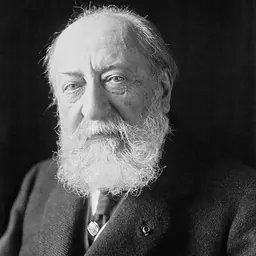

Related people
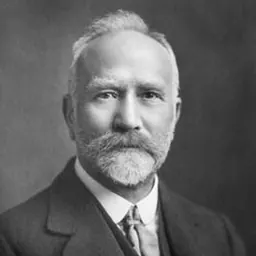
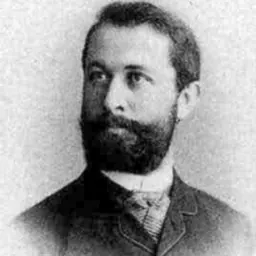
Same field, nearest in time


Contemporaries
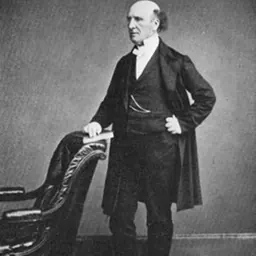
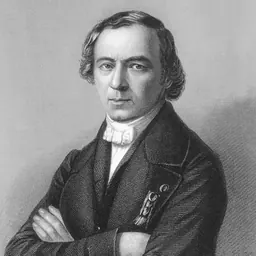
People whose lives overlapped Émile Lemoine's
Frequently asked questions
Who was Émile Lemoine?
French mathematician and civil engineer (1840–1912)
When was Émile Lemoine born?
Émile Lemoine was born on 22 November 1840 in Quimper.
When did Émile Lemoine die?
Émile Lemoine died on 21 December 1912 in Paris.
What was Émile Lemoine's occupation?
Émile Lemoine was a mathematician, civil engineer, university teacher, violinist and engineer.
What was Émile Lemoine known for?
Émile Lemoine was known for Lemoine point.
What nationality was Émile Lemoine?
Émile Lemoine was French.
Sources & further reading
Cite this page
APA: Biography.guide. (2026). Émile Lemoine. https://biography.guide/emile-lemoine/
MLA: "Émile Lemoine." Biography.guide, https://biography.guide/emile-lemoine/.
Chicago: "Émile Lemoine." Biography.guide. https://biography.guide/emile-lemoine/.
Data last updated: 2026-09-26 · Spot an error? Report a correction.
Page generated 2026-09-27 05:14 UTC