
About Clark L. Hull
Lived 1884 – 1952 (aged 67). Clark L. Hull was an American psychologist and university teacher.
Clark Leonard Hull (May 24, 1884 – May 10, 1952) was an American psychologist who sought to explain learning and motivation by scientific laws of behavior. Hull is known for his debates with Edward C. Tolman. He is also known for his work in drive theory.
Hull spent the mature part of his career at Yale University, where he was recruited by the president and former psychologist, James Rowland Angell. He performed research demonstrating that his theories could predict behavior. His most significant works were the Mathematico-Deductive Theory of Rote Learning (1940), and Principles of Behavior (1943), which established his analysis of animal learning and conditioning as the dominant learning theory of its time. Hull's model is expressed in biological terms: Organisms suffer deprivation; deprivation creates needs; needs activate drives; drives activate behavior; behavior is goal directed; achieving the goal has survival value.
He is perhaps best known for the "goal gradient" effect or hypothesis, wherein organisms spend disproportionate amounts of effort in the final stages of attainment of the object of drives. Due to the lack of popularity of behaviorism in modern contexts it is little referenced today or bracketed as obsolete (though more recent cognitive psychology research has found renewed support for goal-gradient like effects in effortful cognitive tasks ). Nonetheless, a Review of General Psychology survey, published in 2002, ranked Hull as the 21st most cited psychologist of the 20th century.
Early life Hull was born in a log house in Akron, New York on May 24, 1884. He was born to a powerful father who was known to have a violent temper. His intent was to qualify for a mining engineering program at another institution. In both his drive theory and hypnosis research, Hull made sure that his experiments were under strict control. Also, in his work he emphasized quantitative data so everything could be analyzed more precisely, and less open to interpretation than previous studies on the topics.
Hypnosis Hull is often credited with having begun the modern study of hypnosis. He became interested in the field while taking over a pre-medical course on psychology from Jastrow. After successfully putting a disturbed student into a trance with a so-called "hypnotic crystal", he began to research the phenomenon and its medical applications. Hull's studies demonstrated emphatically once and for all that hypnosis is not related to sleep ("hypnosis is not sleep, … it has no special relationship to sleep, and the whole concept of sleep when applied to hypnosis obscures the situation"). His research even goes as far as to say that hypnosis is the opposite of sleep, because he found that hypnosis gave responses linked to alertness rather than lethargy. In Hull's research, some of his subjects even felt that hypnotism made their sensitivity and alertness better. In fact, many of Hull's subjects in hypnotic states did believe that their senses had increased. They genuinely thought their senses were better, but this was never proven to be a significant result. The main question of Hull's study was to examine the veracity of the apparently extravagant claims of hypnotists, especially regarding extraordinary improvements of cognition or the senses by hypnosis.
Hull's research indicated that hypnotic states and waking states are the same, besides a few simple differences. One of these differences is that subjects in hypnotic states respond to suggestions more readily than those in a waking state. The only other notable difference is that Hull believed that those in hypnotic states were better able to remember events that had happened far in the subject's past. He also was impacted by Edward Thorndike, as he adapted his theory to include and agree with Thorndike's law of effect. he developed the following formula:
SER = SHR × D × V × K
Where: SER is excitatory potential (likelihood that the organism would produce response r to stimulus s), SHR is the habit strength (derived from previous conditioning trials), D is drive strength (determined by, e.g., the hours of deprivation of food, water, etc.), V is stimulus intensity dynamism (some stimuli will have greater influences than others, such as the lighting of a situation), and K is incentive (how appealing the result of the action is).
A variety of other factors were gradually added to the formula to account for results not included by this simple function. Eventually the formula became:
SER = V x D x K x J x SHR - IR - SIR - SOR - SIR
such that IR is reactive inhibition (inhibition caused by continual performance of a behavior that dissipates over time), SIR is conditioned inhibition (inhibition caused by continual performance of a behavior that does not dissipate over time). Later in life when Hull was in poor health, he had the help of his research assistants and volunteers to conduct his experiments. He also relied on people to keep him up to date on current discussions on current psychological experiments and theories that he was unable to attend and participate in.
Hull was one of the most frequently cited psychologists during the 1940s and 1950s. Miller and Dollard collaborated and developed a social learning theory that was successfully applied to psychotherapy and understanding. Their book, Social Learning and Imitation, listed the four fundamentals necessary for instrumental learning. These were drive, cue, response and reward and were based on Hull's drive reduction theory of learning. They used a similar construct to Hull's theory, however, they proposed that any strong stimulus could have motivating or drive properties without essentially being tied to the need of that particular organism. Their book, Personality and Psychotherapy (1950) is considered to be a very important book for it combined Hullian learning theory with psychoanalysis and helped to lay the foundation of cognitive behavioral therapy.
Kenneth Spence was one of the most well-known of Hull's graduate students. He developed and extended Hull's neo-behaviorist theory into what came to be called the Hull-Spence theory of conditioning, learning, and motivation. This theory states that people learn stimulus-response associations when a stimulus and response occur together, and reinforcement motivates the person to engage in the behavior and increases the occurrence of the learned behavior. Spence contributed to the study of incentive motivation and developing mathematical formulation and equations to describe learning acquisition. Spence attributed improvement in performance to motivational factors rather than the habit factors of Hull's theory. He believed that reinforcement was not always necessary for learning to occur and that people can learn through latent learning. He also developed a discrimination learning theory. His discrimination theory suggests that there are gradients of excitatory and inhibitory potential that are generated around the values of the stimulus that are either reinforced or not.
Janet Taylor Spence began her research while working as a graduate student with Kenneth Spence at the University of Iowa. Kenneth became her husband in 1960. Her research was on anxiety and was an extension of the Hull-Spence hypothesis. She studied anxiety as a dispositional trait, or "drive", which is the component of Hull's motivational theory. She predicted that people with higher anxiety levels would show higher levels of eyelid conditioning than those with lower levels of anxiety. Spence then developed her own instrument to measure her hypothesis, the Taylor Manifest Anxiety Scale. Her later research focused primarily on elaborating Hull's drive theory.
Awards and recognition Hull has been honored by a number of scientific societies. Hull was president of the American Psychological Association from 1935 to 1936. Hull was elected into the American Academy of Arts and Sciences in 1935 and also to the National Academy of Arts and Sciences in 1936. Hull received the Warren Medal during 1945 from the Society of Experimental Psychologists.
Legacy Hull's ideas were so appealing in part because of his professional background in engineering. He was very good with maths and numbers, and incorporated his numerical knowledge into the field of psychology. He followed the acceptable understanding of psychology at that time, and was influenced by the work and the conclusions of the pioneers of Behaviorism (Edward Thorndike, John B. Watson, and Ivan Pavlov).
However, Hull was able to add his own twist to understanding reinforcement and learning in a way that had never been done before by putting everything in numbers and equations. Hull was also influenced by Isaac Newton's work . Hull contributed to the motivation domain of psychology. He had quantified the Drive concept in an equation to prove that habit strength is a function of reinforcement.
Edward C. Tolman was a contemporary of Hull whose theory of learning was proved to be more logical and less complicated than Hull's work. Tolman showed that behavior is goal directed and not controlled by random drives and reinforcement. Tolman used maze experiments with rats to show that rats can learn without reinforcement and are better understood as directed by goals and driven by cognitive expectancies. This finding provided a serious challenge to much of Hull's learning theory.
Don’t just read it —
keep it.
Full-length biographies made to live with: read them, listen on the way to work, watch them tonight.
- E-book
- Audio
- Video
Instant download · yours to keep · every purchase keeps this site free
Important facts
People in Clark L. Hull's life
Named in this biography and alive at the same time
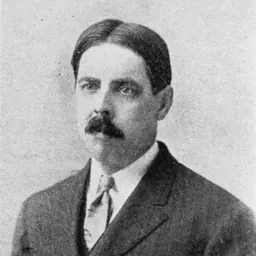


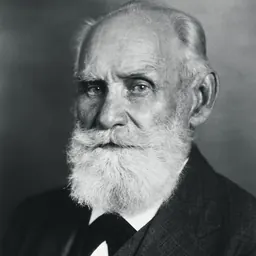
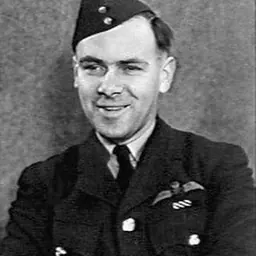

Related people
Same field, nearest in time


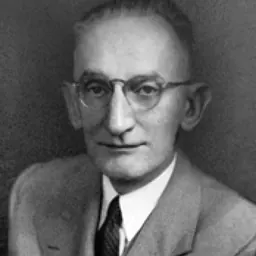
Contemporaries
People whose lives overlapped Clark L. Hull's

Frequently asked questions
Who was Clark L. Hull?
American psychologist (1884–1952)
When was Clark L. Hull born?
Clark L. Hull was born on 24 May 1884 in New York.
When did Clark L. Hull die?
Clark L. Hull died on 10 May 1952 in New Haven.
What was Clark L. Hull's occupation?
Clark L. Hull was a psychologist and university teacher.
What nationality was Clark L. Hull?
Clark L. Hull was American.
Sources & further reading
Cite this page
APA: Biography.guide. (2026). Clark L. Hull. https://biography.guide/clark-l-hull/
MLA: "Clark L. Hull." Biography.guide, https://biography.guide/clark-l-hull/.
Chicago: "Clark L. Hull." Biography.guide. https://biography.guide/clark-l-hull/.
Data last updated: 2026-09-20 · Spot an error? Report a correction.
Page generated 2026-09-27 05:33 UTC