
About Gardner Murphy
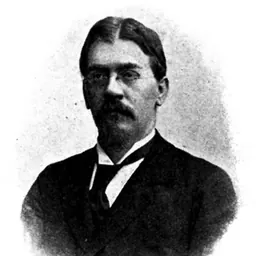
Lived 1895 – 1979 (aged 83). Gardner Murphy was an American psychologist and university teacher.
Gardner Murphy (July 8, 1895 – March 18, 1979) was an American psychologist who specialized in social and personality psychology and parapsychology. His career highlights include serving as president of the American Psychological Association and the British Society for Psychical Research.
Biography
Family life and education Murphy was born on July 8, 1895, in Chillicothe, Ohio, US. He was the son of Edgar Gardner Murphy, an Episcopal minister and activist. He later married Lois Barclay and had two children, Al and Margaret.
Murphy was recognized for being generous and kind, such as by offering assistance or loans if a student or colleague was in trouble. Murphy was especially interested in Freud's perspective of the self, including regression and needs. Murphy authored several texts in psychology, including, Historical Introduction to Modern Psychology (1928; 1949), Personality (1947), and Human Potentialities (1958). He was a contributor to personality, social and clinical psychology and an early exponent of humanistic psychology. During these years, Murphy continued his association with psychical research, including sitting on the council of the American Society for Psychical Research, and serving as chair of its research committee; serving as an editor of the Journal of Parapsychology (1939–1941), speaking at professional symposium on psychical research; writing reports, reviews, and critical articles in general scientific, psychological, as well as parapsychological journals.
Contributions to psychology
Social psychology Murphy proposed the biosocial personality theory, in which personality is understood as both biological and social in nature. At the center of the theory is the term "canalization." Murphy used "canalization" to indicate that human needs may be impacted or changed by what, when and how they are satisfied. Other parts of the book discuss his biosocial theory canalization and autism. Autism, as Murphy depicts it, is actions designed by the satisfaction of needs while placing special emphasis on the self. Instead he proposed three distinct human natures. First, because of the theory of evolution, human nature is in a constant state of flux, and therefore, always changing. With that in mind, Murphy suggested three principles when researching human potential. Firstly, the environment plays a role in the individuals' ideas of gaining experience. Second potentialities are created through new experiences of the self rather than through cultural experience. In other words, the idea of winning and losing. Individualism only allows the person to view what is in their direct view, not the big picture.
Later within his career he served as a consultant to the Indian Government researching solutions to the Hindu-Muslim conflict. Murphy believed that perception fulfills multiple roles beyond relaying the sensory information to the brain. It was a way of fulfilling needs as well. Edwin Boring described it as "an exceptionally good book". The 1949 revised edition received a mixed review by Alphonse Chapanis in The Quarterly Review of Biology who wrote the book did not present a balanced synopsis of research but recommended it as a "useful addition to the psychologist's library". However, Ralph H. Turner wrote Murphy maintained an "exceptional order of objectivity through most of his presentation" and described it as "a very useful text".
Murphy's introductory psychological textbook An Introduction to Psychology (1951) received positive reviews. Alastair Heron described it as a "textbook for the interested and not-too-sophisticated reader who hopes to become more interested without becoming at the same time more sophisticated."
In his book Challenge of Psychical Research (1961), Murphy documented research into clairvoyance, precognition, psychokinesis, and telepathy. John L. Kennedy wrote there was inadequate information about the role of the experimenter during psychical research experiments. Ralph W. Gerard gave the book a positive review but stated the results from the experiments may be explainable by alternative factors such as misinterpretation or unintended cues without recourse to the paranormal.
Psychologist L. Börje Löfgren heavily criticized the Challenge of Psychical Research stating that Murphy hardly ever considered the "possibility that spontaneous occurrences might actually be memory falsifications (conscious or unconscious), simple lies, or similar phenomena." He concluded his review by suggesting the book is "especially apt to do much damage and seduce people into believing in things for which there is extremely scant evidence."
Publications Books Experimental social psychology; an interpretation of research upon the socialization of the individual (1931) A Briefer General Psychology (1935) Personality: A Biosocial Approach to Origins and Structure (1947) Historical Introduction to Modern Psychology (1929, revised edition 1949) An Introduction to Psychology (1951) In the Minds of Men: The Study of Human Behavior and Social Tensions in India (1953) Human Potentialities (1958) Challenge of Psychical Research: A Primer of Parapsychology (1961) Asian Psychology (1968) Encounter with Reality: New Forms for an Old Quest (with Herbert E. Spohn) (1968) Psychological Thought from Pythagoras to Freud: An Informal Introduction (1968) Western Psychology: From the Greek to William James (with Lois B. Murphy) (1969) William James on Psychical Research (1973) Humanistic Psychology (1989) There is More Beyond: Selected Papers of Gardner Murphy (1989)
Papers
Don’t just read it —
keep it.
Full-length biographies made to live with: read them, listen on the way to work, watch them tonight.
- E-book
- Audio
- Video
Instant download · yours to keep · every purchase keeps this site free
Important facts
People in Gardner Murphy's life
Named in this biography and alive at the same time



Related people
Same field, nearest in time



Contemporaries
People whose lives overlapped Gardner Murphy's
Frequently asked questions
Who was Gardner Murphy?
American psychologist (1895–1979)
When was Gardner Murphy born?
Gardner Murphy was born on 8 July 1895 in Chillicothe.
When did Gardner Murphy die?
Gardner Murphy died on 18 March 1979 in Washington, D.C..
What was Gardner Murphy's occupation?
Gardner Murphy was a psychologist and university teacher.
What nationality was Gardner Murphy?
Gardner Murphy was American.
Sources & further reading
Cite this page
APA: Biography.guide. (2026). Gardner Murphy. https://biography.guide/gardner-murphy/
MLA: "Gardner Murphy." Biography.guide, https://biography.guide/gardner-murphy/.
Chicago: "Gardner Murphy." Biography.guide. https://biography.guide/gardner-murphy/.
Data last updated: 2026-09-25 · Spot an error? Report a correction.
Page generated 2026-09-27 05:13 UTC