
About Charles Émile Picard
Lived 1856 – 1941 (aged 85). Charles Émile Picard was a French mathematician and university teacher, known for Painlevé transcendents, Picard functor and Picard group.
Charles Émile Picard (; 24 July 1856 – 11 December 1941) was a French mathematician. He was elected the fifteenth member to occupy seat 1 of the Académie française in 1924.
Life
He was born in Paris on 24 July 1856 and educated there at the Lycée Henri-IV. He then studied mathematics at the École Normale Supérieure.
Picard's mathematical papers, textbooks, and many popular writings exhibit an extraordinary range of interests, as well as an impressive mastery of the mathematics of his time. Picard's little theorem states that every nonconstant entire function takes every value in the complex plane, with perhaps one exception. Picard's great theorem states that an analytic function with an essential singularity takes every value infinitely often, with perhaps one exception, in any neighborhood of the singularity. He made important contributions in the theory of differential equations, including work on Picard–Vessiot theory, Painlevé transcendents and his introduction of a kind of symmetry group for a linear differential equation. He also introduced the Picard group in the theory of algebraic surfaces, which describes the classes of algebraic curves on the surface modulo linear equivalence. In connection with his work on function theory, he was one of the first mathematicians to use the emerging ideas of algebraic topology. In addition to his theoretical work, Picard made contributions to applied mathematics, including the theories of telegraphy and elasticity. His collected papers run to four volumes.
Louis Couturat studied integral calculus with Picard in 1891–1892, taking detailed notes of the lectures. These notes were preserved and now are available in three cahiers from Internet Archive.
Like his contemporary, Henri Poincaré, Picard was much concerned with the training of mathematics, physics, and engineering students. He wrote a classic textbook on analysis and one of the first textbooks on the theory of relativity. Picard's popular writings include biographies of many leading French mathematicians, including his father in law, Charles Hermite.
Picard was an International Honorary Member of the American Academy of Arts and Sciences, an International Member of the United States National Academy of Sciences, and an International Member of the American Philosophical Society.
Family In 1881 he married Marie, the daughter of Charles Hermite.
Society Charles Émile Picard was one of the founder members in 1930 of the Society of Friends of André-Marie Ampère which was created to develop the first science museum in France, the Ampère Museum close to Lyon.
Works 1891–96: 1905: 1906 : (with Georges Simart) Theorie des Fonctions Algebrique de deux Variables Independente volume 2, via Internet Archive 1922: 1922: 1931: 1978–81:
Don’t just read it —
keep it.
Full-length biographies made to live with: read them, listen on the way to work, watch them tonight.
- E-book
- Audio
- Video
Instant download · yours to keep · every purchase keeps this site free
Important facts
more
Picard theorem, Picard variety, Picard–Fuchs equation, Picard–Lefschetz formula, Picard–Lindelöf theorem, Picard–Vessiot theoryPeople in Charles Émile Picard's life
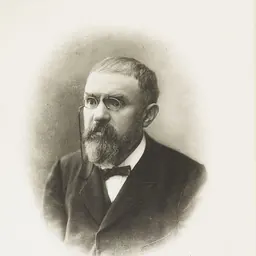
Named in this biography and alive at the same time


Related people
Same field, nearest in time
Contemporaries
People whose lives overlapped Charles Émile Picard's




Frequently asked questions
Who was Charles Émile Picard?
French mathematician (1856-1941)
When was Charles Émile Picard born?
Charles Émile Picard was born on 24 July 1856 in Paris.
When did Charles Émile Picard die?
Charles Émile Picard died on 11 December 1941 in Paris.
What was Charles Émile Picard's occupation?
Charles Émile Picard was a mathematician and university teacher.
What was Charles Émile Picard known for?
Charles Émile Picard was known for Painlevé transcendents, Picard functor, Picard group, Picard horn, Picard modular group and Picard modular surface.
What nationality was Charles Émile Picard?
Charles Émile Picard was French.
Sources & further reading
· Wikipedia: Charles Émile Picard
Cite this page
APA: Biography.guide. (2026). Charles Émile Picard. https://biography.guide/charles-emile-picard/
MLA: "Charles Émile Picard." Biography.guide, https://biography.guide/charles-emile-picard/.
Chicago: "Charles Émile Picard." Biography.guide. https://biography.guide/charles-emile-picard/.
Data last updated: 2026-09-20 · Spot an error? Report a correction.
Page generated 2026-09-27 05:32 UTC