
About Charles Hermite
Lived 1822 – 1901 (aged 78). Charles Hermite was a French mathematician, university teacher, senior lecturer and professeur des universités, known for E (mathematical constant), Hermite polynomials and Hermitian adjoint.
Charles Hermite (; 24 December 1822 – 14 January 1901) was a French mathematician who studied analysis, number theory, and algebra. One of his most remarkable achievements was the proof of the transcendence of the number e.
Life Hermite was born in Dieuze, Moselle, on 24 December 1822, with a deformity in his right foot that would impair his gait throughout his life. He was the sixth of seven children of Ferdinand Hermite and his wife, Madeleine née Lallemand. Ferdinand worked in the drapery business of Madeleine's family while also pursuing a career as an artist. The drapery business relocated to Nancy in 1828, and so did the family.
Hermite obtained his secondary education at Collège de Nancy and then, in Paris, at Collège Henri IV and at the Lycée Louis-le-Grand. on the same date as Charles Friedel, also of the Sorbonne.
On his last days Hermite suffered from a bout of asthma, a weak appetite, and poor sleep. He died in Paris on 14 January 1901, aged 78. and, with encouragement from Joseph Liouville, corresponded with Carl Gustav Jacob Jacobi on these topics. The notion of Hermitian matrices was later extended for infinitely variables and became an important topic in the study of differential and integral equations thanks to the vision of David Hilbert.
In 1864, Hermite presented a new class of special functions, Hermite polynomials, in the context of expansions in terms of continuous functions over unbounded intervals. Hermite functions, which are the product of Hermite polynomials and a Gaussian function, find application in quantum mechanics, wherein they arise as solutions to the Schrödinger equation for the quantum harmonic oscillator. based on prior work by Joseph Liouville. In the same year, Hermite proved that and therefore are irrational. However, he did not address the transcendence of , believing the question to be beyond his powers.
Later in his life, Hermite turned his attention to the calculus, in particular, the theory of linear differential equations, and found solutions to Lamé's equation. 1908, 1912 and 1917; PDF copy from UMDL. "Œuvres de Charles Hermite", reissued by Cambridge University Press, 2009.
Don’t just read it —
keep it.
Full-length biographies made to live with: read them, listen on the way to work, watch them tonight.
- E-book
- Audio
- Video
Instant download · yours to keep · every purchase keeps this site free
Important facts
more
Hermitian metric, Hermitian operator, Hermitian transpose, Hermitian waveletPeople in Charles Hermite's life
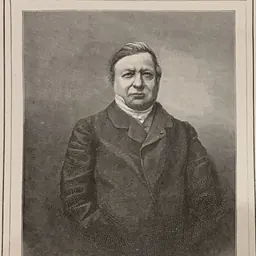
Named in this biography and alive at the same time


Related people
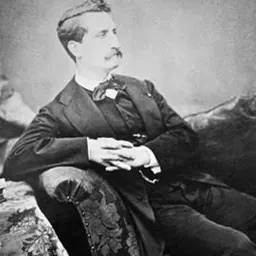
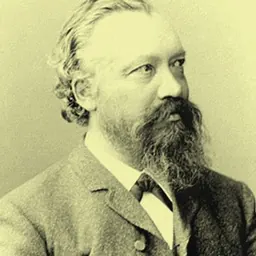
Same field, nearest in time


Contemporaries
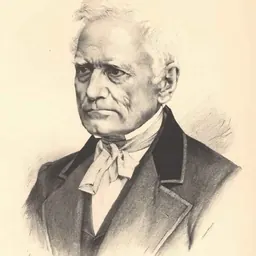
People whose lives overlapped Charles Hermite's


Frequently asked questions
Who was Charles Hermite?
French mathematician (1822-1901)
When was Charles Hermite born?
Charles Hermite was born on 24 December 1822 in Dieuze.
When did Charles Hermite die?
Charles Hermite died on 14 January 1901 in Paris.
What was Charles Hermite's occupation?
Charles Hermite was a mathematician, university teacher, senior lecturer and professeur des universités.
What was Charles Hermite known for?
Charles Hermite was known for E (mathematical constant), Hermite polynomials, Hermitian adjoint, Hermitian form, Hermitian function and Hermitian matrix.
What nationality was Charles Hermite?
Charles Hermite was French.
Sources & further reading
Cite this page
APA: Biography.guide. (2026). Charles Hermite. https://biography.guide/charles-hermite/
MLA: "Charles Hermite." Biography.guide, https://biography.guide/charles-hermite/.
Chicago: "Charles Hermite." Biography.guide. https://biography.guide/charles-hermite/.
Data last updated: 2026-09-20 · Spot an error? Report a correction.
Page generated 2026-09-27 05:27 UTC