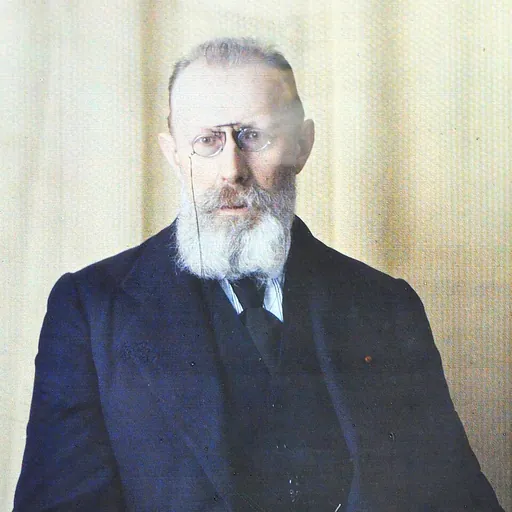
About Paul Appell
Lived 1855 – 1930 (aged 75). Paul Appell was a French mathematician and university teacher, known for Appell polynomials, Appell sequence and Appell series.
M. P. Appell is the same person: it stands for Monsieur Paul Appell. Paul Émile Appell (27 September 1855 in Strasbourg – 24 October 1930 in Paris) was a French mathematician and Rector of the University of Paris. Appell polynomials and Appell's equations of motion are named after him, as is rue Paul Appell in the 14th arrondissement of Paris and the minor planet 988 Appella.
Life Paul Appell entered the École Normale Supérieure in 1873. He was elected to the French Academy of Sciences in 1892.
In 1895, he became a Professor at the École Centrale Paris. Between 1903 and 1920 he was Dean of the Faculty of Science of the University of Paris, then Rector of the University of Paris from 1920 to 1925.
Appell was the President of the Société astronomique de France (SAF), the French astronomical society, from 1919 to 1921.
His daughter Marguerite Appell (1883–1969), who married the mathematician Émile Borel, is known as a novelist under her pen-name Camille Marbo.
Appell was an atheist. He was awarded Order of the White Eagle. and was also elected to honorary membership of the Manchester Literary and Philosophical Society.
Work He worked first on projective geometry in the line of Chasles, then on algebraic functions, differential equations, and complex analysis. Appell was the editor of the collected works of Henri Poincaré. Jules Drach was co-editor of the first volume.
Appell series He introduced a set of four hypergeometric series F1, F2, F3, F4 of two variables, now called Appell series, that generalize Gauss's hypergeometric series.
He established the set of partial differential equations of which these functions are solutions, and found formulas and expressions of these series in terms of hypergeometric series of one variable. In 1926, with Professor Joseph-Marie Kampé de Fériet, he authored a treatise on generalized hypergeometric series.
Mechanics In mechanics, he proposed an alternative formulation of analytical mechanics known as Appell's equation of motion.
He discovered a physical interpretation of the imaginary period of the doubly periodic function whose restriction to real arguments describes the motion of an ideal pendulum.
Publications Traité de mécanique rationnelle, 4 Vols. (Gauthier-Villars, 1893–1896) Traité de mécanique rationnelle Tome I Traité de mécanique rationnelle Tome II Traité de mécanique rationnelle Tome III Traité de mécanique rationnelle Tome IV Fasc. 1 Traité de mécanique rationnelle Tome IV Fasc. 2 Traité de mécanique rationnelle Tome V Les mouvements de roulement en dynamique with Jacques Hadamard (C. Hérissey, Évreux, 1899) Éléments de la théorie des vecteurs et de la géométrie analytique (Payot, 1921) Éléments d'analyse mathématique à l'usage des ingénieurs et des physiciens : cours professé à l'École centrale des arts et manufactures (Gauthier-Villars, 1921) Principes de la théorie des fonctions elliptiques et applications with E. Lacour (Gauthier-Villars, 1897) Le problème géométrique des déblais et remblais (Gauthier-Villars, 1928) , autobiographic (Payot, 1923) Théorie des fonctions algébriques et de leurs intégrales with Édouard Goursat. Fonctions hypergéométriques et hypersphériques with Joseph-Marie Kampé de Fériet (Gauthier-Villars, 1926) See catalogue of the French National Library for a more detailed list
Don’t just read it —
keep it.
Full-length biographies made to live with: read them, listen on the way to work, watch them tonight.
- E-book
- Audio
- Video
Instant download · yours to keep · every purchase keeps this site free
Important facts
more
Mock modular formPeople in Paul Appell's life
Named in this biography and alive at the same time
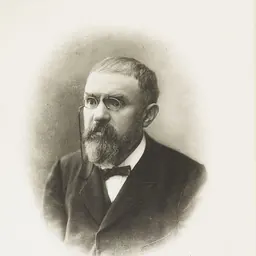


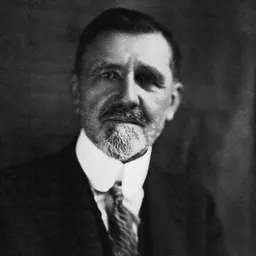

Related people
Same field, nearest in time

Contemporaries
People whose lives overlapped Paul Appell's

Frequently asked questions
Who was Paul Appell?
French mathematician (1855-1930)
When was Paul Appell born?
Paul Appell was born on 27 September 1855 in Strasbourg.
When did Paul Appell die?
Paul Appell died on 24 October 1930 in 6th arrondissement of Paris.
What was Paul Appell's occupation?
Paul Appell was a mathematician and university teacher.
What was Paul Appell known for?
Paul Appell was known for Appell polynomials, Appell sequence, Appell series, Appell's equation of motion, Appell–Humbert theorem and Kerr–Newman metric.
What nationality was Paul Appell?
Paul Appell was French.
Sources & further reading
Cite this page
APA: Biography.guide. (2026). Paul Appell. https://biography.guide/paul-appell/
MLA: "Paul Appell." Biography.guide, https://biography.guide/paul-appell/.
Chicago: "Paul Appell." Biography.guide. https://biography.guide/paul-appell/.
Data last updated: 2026-09-24 · Spot an error? Report a correction.
Portrait: Wikimedia Commons · author & licence
Page generated 2026-09-27 05:08 UTC