
About Edwin Boring
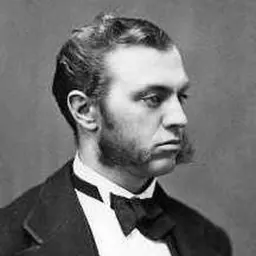
Lived 1886 – 1968 (aged 81). Edwin Boring was an American psychologist and university teacher.
Edwin Garrigues (Garry) Boring (October 23, 1886 – July 1, 1968) was an American experimental psychologist, Professor of Psychology at Clark University and at Harvard University, who later became one of the first historians of psychology. A Review of General Psychology survey, published in 2002, ranked Boring as the 93rd most cited psychologist of the 20th century, tied with John Dewey, Amos Tversky, and Wilhelm Wundt.
Early life Boring was born on October 23, 1886, in Philadelphia, Pennsylvania and grew up in a Quaker family interested in science. His elder sister was the zoologist Alice Middleton Boring. In 1904, Boring attended Cornell University, where he studied electrical engineering. He earned a ME degree in electrical engineering in 1908 and then took a job at Bethlehem Steel in Bethlehem, Pennsylvania. Boring returned to Cornell for an AM in physics, but he was instead drawn to the world of psychology by I. Madison Bentley's animal psychology course. It was that remark that stuck with him and guided him toward psychology when he arrived at Cornell for the second time. Such allegations had no evidence of support, and while Boring waited for his reappointment to Clark, he received another offer from Harvard as an associate professor and an offer from Stanford University for a full professorship with a higher salary. Boring's mission was finally complete. Boring was made the first chair of the Department of Psychology, but 2 years later, he resigned the position to Gordon W. Allport. He was also a member of the American Academy of Arts and Sciences and the United States National Academy of Sciences.
In 1945, Robert M. Yerkes asked Boring to join his Survey and Planning Committee, designed to bring psychologists together to discuss issues regarding the war and the role psychologists could play during wartime to help provide services to the country. During its formation, the Division 26 members made a gesture to honor Boring for his tremendous contribution as a historian of psychology. Boring declined to run for president and was made "honorary president" (p. 308) of the Division as an acknowledgment of his work. His remains were interred at Mount Auburn Cemetery in Cambridge, Massachusetts.
Work Although Boring conducted a lot of research during his career, most of it resulted in minor contributions to psychology. The vast majority of his research centered around sensory and perceptual phenomena. However, most of his time was spent teaching, doing administrative work, writing, editing, or guiding the research of his graduate students. Later in his career Boring became interested in the perceptual ambiguity of figure-ground phenomena. He discussed cartoonist W. E. Hill's "My Wife and My Mother-in-Law" in a 1930 journal article, explaining that this illustration was an accurate representation of the phenomena because the two different images are interpenetrating one another with no formal dividing line. He contrasted this image to Edgar Rubin's Rubin vase figure, where he felt that there is an obvious dividing line between the human profiles and goblets.
Tonal brightness research One graduate student with whom Boring developed a student-professor relationship similar to the one Boring had had with Titchener was Stanley Smith Stevens. The question that Stevens and Boring researched was concerning the bright and dull tones that could be produced with a siren when the holes were appropriately spaced, hypothesizing that brightness varies with both the intensity and the frequency of the pitch. Boring and fellow researcher A. H. Holway hypothesized that the Moon appears larger on the horizon because the eyes view it directly at a leveled position, while the Moon overhead appears smaller because the eyes must look up. Boring later resigned from Harvard University in 1949 and in that same year published the second edition of A History of Experimental Psychology where he brought the text up to date on advancements in the field of psychology. Boring describes the standard procedure men undergo to achieve prestige in their career: a man must receive a PhD, conduct meaningful research that gets published, and undertake administrative work.
Boring had such a profound impact on psychology that Robert Yerkes even dubbed him "Mr. Psychology" (p. 445).
Selected publications A History of Experimental Psychology (1929) The Physical Dimensions of Consciousness (1933) Sensation and Perception in the History of Experimental Psychology (1942) Introduction to Psychology (1938) Sensation and perception in the history of experimental psychology. New York: Appleton-Century-Crofts. (1942) Psychology for the Fighting Man (1943) Psychology for the Armed Services (1945) Foundations of Psychology (1948, with Herbert Langfeld and Harry Weld) A History of Experimental Psychology (1950) (2nd ed.). Englewood Cliffs, NJ: Prentice-Hall. Psychologist at Large: an Autobiography and Selected Essays (1961) History, Psychology, and Science: Selected Papers (1963) A Source Book in the History of Psychology (1965, as editor, with Richard J. Herrnstein) History of Psychology in Autobiography (vols I-IV, 1930–1952)
Don’t just read it —
keep it.
Full-length biographies made to live with: read them, listen on the way to work, watch them tonight.
- E-book
- Audio
- Video
Instant download · yours to keep · every purchase keeps this site free
Important facts
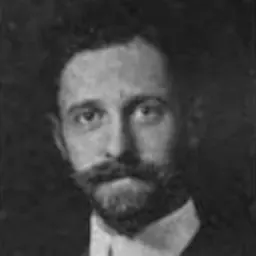
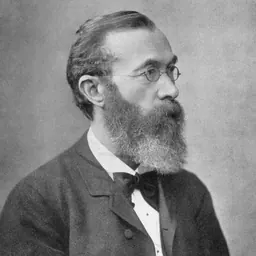
People in Edwin Boring's life
Named in this biography and alive at the same time






Related people
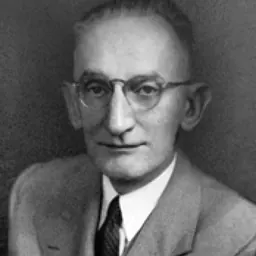
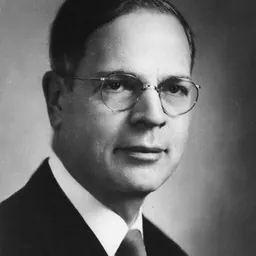
Same field, nearest in time



Contemporaries
People whose lives overlapped Edwin Boring's




Frequently asked questions
Who was Edwin Boring?
American psychologist (1886–1968)
When was Edwin Boring born?
Edwin Boring was born on 23 October 1886 in Philadelphia.
When did Edwin Boring die?
Edwin Boring died on 1 July 1968 in Cambridge.
What was Edwin Boring's occupation?
Edwin Boring was a psychologist and university teacher.
What nationality was Edwin Boring?
Edwin Boring was American.
Sources & further reading
Cite this page
APA: Biography.guide. (2026). Edwin Boring. https://biography.guide/edwin-boring/
MLA: "Edwin Boring." Biography.guide, https://biography.guide/edwin-boring/.
Chicago: "Edwin Boring." Biography.guide. https://biography.guide/edwin-boring/.
Data last updated: 2026-09-20 · Spot an error? Report a correction.
Page generated 2026-09-27 05:30 UTC