
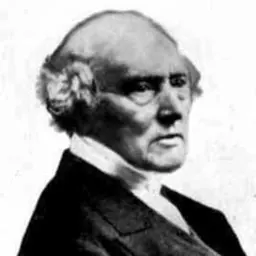
Gabriel Lippmann
Luxembourgish physicist nationalized French
About Gabriel Lippmann
Lived 1845 – 1921 (aged 75). Gabriel Lippmann was a French and Luxembourgish physicist, inventor, photographer and professor, known for Electrowetting, Integral imaging and Lippmann electrometer.
Biography Gabriel Lippmann was born on 16 August 1845 to Jewish parents in Hollerich, Luxembourg, where his father managed a glove-making business. In 1848, the family moved to Paris, where Lippmann was initially tutored by his mother, before entering the Lycée Napoléon (now the Lycée Henri-IV) in 1858. He was said to have been a rather inattentive but thoughtful pupil with a special interest in mathematics. In 1868, he was admitted to the École normale supérieure, where he failed the examination, which would have enabled him to enter the teaching profession, preferring instead to study physics.
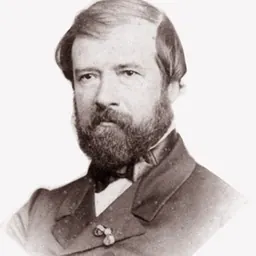
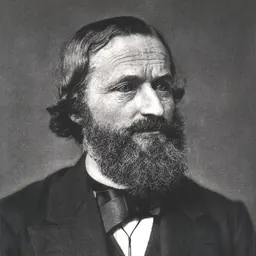
In 1873, the French government sent Lippmann on a scientific mission to Germany to study methods of teaching science. He worked with Wilhelm Kühne and Gustav Kirchhoff at the University of Heidelberg, receiving a doctorate with distinction in 1874. The following year, he made a brief visit to Hermann von Helmholtz at the University of Berlin, before returning to Paris. On 24 July 1875, he submitted his doctoral thesis on electrocapillarity to the University of Paris.
In 1878, Lippmann joined the Faculty of Science at the University of Paris. In 1883, he became Professor of Mathematical Physics, and in 1886 was appointed Professor of Experimental Physics. The same year, he succeeded Jules Jamin as Director of the Research Laboratory, which was subsequently transferred to the University.
In 1888, Lippmann married the daughter of the novelist Victor Cherbuliez.
Inventions and theories
Capillary electrometer
One of Lippmann's early discoveries was the relationship between electrical and capillary phenomena, which allowed him to develop a sensitive capillary electrometer—subsequently known as the Lippmann electrometer—which was used in the first ECG machine. In a paper delivered to the Philosophical Society of Glasgow on 17 January 1883, John Gray McKendrick described the apparatus as follows:
Lippmann's electrometer consists of a tube of ordinary glass, 1 metre long and 7 millimetres in diameter, open at both ends, and kept in the vertical position by a stout support. The lower end is drawn into a capillary point, until the diameter of the capillary is 0.005 of a millimetre. The tube is filled with mercury, and the capillary point is immersed in dilute sulfuric acid (1 to 6 of water in volume), and in the bottom of the vessel containing the acid there is a little more mercury. A platinum wire is put into connection with the mercury in each tube, and, finally, arrangements are made by which the capillary point can be seen with a microscope magnifying 250 diameters. Such an instrument is very sensitive; and Lippmann states that it is possible to determine a difference of potential so small as that of one 10,080th of a Daniell. It is thus a very delicate means of observing and (as it can be graduated by a compensation-method) of measuring minute electromotive forces.
Piezoelectricity In 1881, Lippmann predicted the converse piezoelectric effect.
Colour photography
A colour photograph made by Lippmann in the 1890s. It contains no pigments or dyes of any kind.
Above all, Lippmann is best remembered as the inventor of a method for reproducing colours by photography, based on the interference phenomenon, which earned him the Nobel Prize in Physics in 1908. By April 1892, he reported that he had succeeded in producing colour images of a stained glass window, a group of flags, a bowl of oranges topped by a red poppy and a multicoloured parrot. He presented his theory of colour photography using the interference method in two papers to the Academy, one in 1894, the other in 1906.
In practice, the Lippmann process is not easy to use. Extremely fine-grained high-resolution photographic emulsions are inherently much less light-sensitive than ordinary emulsions, so long exposure times are required. With a lens of large aperture and a very brightly sunlit subject, a camera exposure of less than one minute is sometimes possible, but exposures measured in minutes are typical. Pure spectral colours reproduced brilliantly, but the ill-defined broad bands of wavelengths reflected by real-world objects can be a problem. The process does not produce colour prints on paper and it proved impossible to make a good duplicate of a Lippmann colour photograph by rephotographing it, so each image is unique. A very shallow-angled prism was usually cemented to the front of the finished plate to deflect unwanted surface reflections, and this made plates of any substantial size impractical. The size of his early photographs are 4 cm by 4 cm, increased later to 6.5 cm by 9 cm. This principle of using numerous lenses or imaging apertures to record what was later termed a light field underlies the evolving technology of light field cameras and microscopes.
When Lippmann presented the theoretical foundations of his "integral photography" in March 1908, it was impossible to accompany them with concrete results. At the time, the materials necessary for producing a lenticular screen with the proper optical qualities were lacking. In the 1920s, promising trials were made by Eugène Estanave, using glass Stanhope lenses, and by Louis Lumière, using celluloid. Lippmann's integral photography was the foundation of research on 3D and animated lenticular imagery and also on color lenticular processes.
Measurement of time In 1895, Lippmann evolved a method of eliminating the personal equation in measurements of time, using photographic registration, and he studied the eradication of irregularities of pendulum clocks, devising a method of comparing the times of oscillation of two pendulums of nearly equal period.
Recognition
Chivalric titles Year Head of state Title 1881 Jules Grévy Knight of the Legion of Honour 1894 Sadi Carnot Officer of the Legion of Honour 1896 Royal Society Foreign Member
Awards Year Organisation Award Citation 1897 Royal Photographic Society Progress Medal — 1908 Royal Swedish Academy of Sciences Nobel Prize in Physics "For his method of reproducing colours photographically based on the phenomenon of interference."
Don’t just read it —
keep it.
Full-length biographies made to live with: read them, listen on the way to work, watch them tonight.
- E-book
- Audio
- Video
Instant download · yours to keep · every purchase keeps this site free
Important facts
People in Gabriel Lippmann's life
Named in this biography and alive at the same time



Related people
Same field, nearest in time




Contemporaries
People whose lives overlapped Gabriel Lippmann's


Frequently asked questions
Who was Gabriel Lippmann?
Luxembourgish physicist nationalized French (1845-1921)
When was Gabriel Lippmann born?
Gabriel Lippmann was born on 16 August 1845 in Bonnevoie.
When did Gabriel Lippmann die?
Gabriel Lippmann died on 13 July 1921 in Atlantic Ocean.
What was Gabriel Lippmann's occupation?
Gabriel Lippmann was a physicist, inventor, photographer and professor.
What was Gabriel Lippmann known for?
Gabriel Lippmann was known for Electrowetting, Integral imaging, Lippmann electrometer, Lippmann plate and Piezoelectricity.
What nationality was Gabriel Lippmann?
Gabriel Lippmann was French and Luxembourgish.
Sources & further reading
Cite this page
APA: Biography.guide. (2026). Gabriel Lippmann. https://biography.guide/gabriel-lippmann/
MLA: "Gabriel Lippmann." Biography.guide, https://biography.guide/gabriel-lippmann/.
Chicago: "Gabriel Lippmann." Biography.guide. https://biography.guide/gabriel-lippmann/.
Data last updated: 2026-09-20 · Spot an error? Report a correction.
Page generated 2026-09-27 05:23 UTC