
About Kurt Koffka
Lived 1886 – 1941 (aged 55). Kurt Koffka was an American psychologist and university teacher.
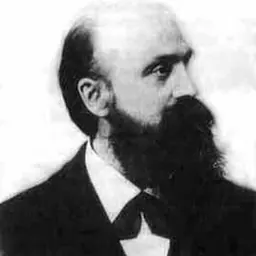
Kurt Koffka (; March 12, 1886 – November 22, 1941) was a German psychologist and professor. He was born and educated in Berlin, Germany; he died in Northampton, Massachusetts, from coronary thrombosis. He was influenced by his maternal uncle, a biologist, to pursue science. He worked alongside Max Wertheimer and Wolfgang Köhler to develop Gestalt psychology. and "The Principles of Gestalt Psychology" which elaborated on his research.
Personal life Kurt Koffka, born March 18, 1886, in Berlin, Germany, was raised by Luis Levy and Emil Koffka. His mother listed herself as Protestant despite having Jewish heritage. He remarried Mira until their second divorce in 1928 when he remarried Elisabeth to whom he remained married until his death. However, his condition did not hamper his work ethic as his lecturing and scientific projects occupied his time until he died. This work culminated in Koffka's first publication in 1908 called "Untersuchungen an einem protanomalen System" [Studies on a protanomalous system]. In 1910, Koffka became an assistant to Friedrich Schumann at the Psychological Institute in Frankfurt on Main to study the perception of motion, alongside Max Wertheimer and Wolfgang Köhler. The University of Giessen assigned Koffka the Privatdozent title in 1911 and the ausserordentlicher while working with August Messer. Once this book was completed, Koffka's previous self-limitations were eased as he allowed himself to delve into areas he previously felt were inappropriate for his specialty.
Gestalt psychology Koffka gained his initial interest in Gestalt psychology after participating in Wertheimer's phi phenomenon study. In 1910, Kurt Koffka worked alongside Max Wertheimer and Wolfgang Köhler at the Psychological Institute in Frankfurt. Some of the most commonly used principles were proximity, similarity, and continuation. Gestalt principle of proximity discussed that visual elements close to one another will be perceived as a whole. Gestalt principle of similarity establishes that people tend to categorize objects that share the same traits into a group.
Perceiving sensory experiences as a combination of individual parts does not align with the actual experience of perception. The school of Gestalt suggests that human sensory experience be viewed as a whole since wholes are more meaningful than the sum of their parts. At the time, many subjects such as culture, ecology, evolution, emotion, psychology, knowledge, physiology had been treated as their own independent fields with no connection to one another. Kurt Koffka attempted to make a multidisciplinary theory of art known as the Aesthetic of Gestalt.
Publications
"Perception: An Introduction to the Gestalt-theorie" (1922) In 1922, Kurt Koffka published an article called "Perception: An Introduction to the Gestalt-Theorie" in the Psychological Bulletin to introduce Gestalt psychology to the American academics. Sensation puts forward the idea of the "bundle-hypothesis" which means that the world is made up of elements that come together to create stimuli in our world. This means that someone can see and understand their actions one way and another person could see the same actions and understand them completely differently. Psychologists need to be mindful to view an individual's behaviour from the other individual's behavioural environment rather than their own.
Don’t just read it —
keep it.
Full-length biographies made to live with: read them, listen on the way to work, watch them tonight.
- E-book
- Audio
- Video
Instant download · yours to keep · every purchase keeps this site free
Important facts
People in Kurt Koffka's life
Named in this biography and alive at the same time



Related people
Same field, nearest in time


Contemporaries
People whose lives overlapped Kurt Koffka's

Frequently asked questions
Who was Kurt Koffka?
German psychologist (1886–1941)
When was Kurt Koffka born?
Kurt Koffka was born on 18 March 1886 in Berlin.
When did Kurt Koffka die?
Kurt Koffka died on 22 November 1941 in Northampton.
What was Kurt Koffka's occupation?
Kurt Koffka was a psychologist and university teacher.
What nationality was Kurt Koffka?
Kurt Koffka was American.
Sources & further reading
Cite this page
APA: Biography.guide. (2026). Kurt Koffka. https://biography.guide/kurt-koffka/
MLA: "Kurt Koffka." Biography.guide, https://biography.guide/kurt-koffka/.
Chicago: "Kurt Koffka." Biography.guide. https://biography.guide/kurt-koffka/.
Data last updated: 2026-09-20 · Spot an error? Report a correction.
Page generated 2026-09-27 05:18 UTC