
About Carl Stumpf
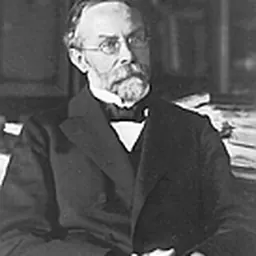
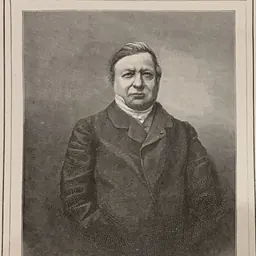
Lived 1848 – 1936 (aged 88). Carl Stumpf was a German philosopher, psychologist, musicologist, music theorist, ethnomusicologist and university teacher.
Carl Stumpf (; 21 April 1848 – 25 December 1936) was a German philosopher, psychologist and musicologist. He is noted for founding the Berlin School of experimental psychology.
He studied with Franz Brentano at the University of Würzburg before receiving his doctorate at the University of Göttingen in 1868. He also tutored the modernist literature writer Robert Musil at the University of Berlin, and worked with Hermann Lotze, who is famous for his work in perception, at Göttingen. Stumpf is known for his work on the psychology of tones. He had an important influence on his students Wolfgang Köhler and Kurt Koffka who were instrumental in the founding of Gestalt psychology as well as Kurt Lewin, who was also a part of the Gestalt group and was key in the establishment of experimental social psychology in America.
Stumpf is considered one of the pioneers of comparative musicology and ethnomusicology, as documented in his study of the origins of human musical cognition The Origins of Music (1911). He held positions in the philosophy departments at the Universities of Göttingen, Würzburg, Prague, Munich and Halle, before obtaining a professorship at the University of Berlin.
Early life Carl Stumpf was born in Wiesentheid, Franconia, in the Kingdom of Bavaria, to a prominent family. His father was the country court physician, and his immediate family included scientists and academicians, like his grandfather, who studied eighteenth-century French literature and the philosophers Kant and Schelling. Stumpf showed precocious musical talent as a child, learning the violin by the age of 7.
Education Stumpf was sickly as a child so his early education was conducted at home with his grandfather as his tutor. He spent one semester studying aesthetics and one studying law. Then, in his third semester, he met Franz Brentano, who taught Stumpf to think logically and empirically. Brentano's lectures were also attended by Anton Marty, Carl van Endert, Ernst Commer, Ludwig Schütz, and Hermann Schell. Brentano also encouraged Stumpf to take courses on the natural sciences because he considered both the substance and methods of science important to philosophy. There he was awarded a doctorate in 1868.
In 1869, he entered a seminary, intending to be a Catholic priest. However, he disagreed with the dogma of the papal infallibility so he returned to the University of Göttingen for his doctorate. He argued that the status of space is Teilvorstellung or a "partial presentation", one that must be experienced as part of a broader presentation.
Sensational phenomena In 1903 and 1904, Stumpf was involved in two well-publicized debunking episodes related to sensational phenomena. First, an engineer from Prague claimed to have invented a machine that could change photographs of sound waves into sound. Stumpf, after attending a demonstration, wrote an article challenging its legitimacy, causing it to never be heard about again. However, the case of Clever Hans, an apparently brilliant horse owned by Wilhelm von Osten, was even more sensational.
Later years The majority of Stumpf's later work did not include sensational or interesting research, like that of Clever Hans. With the outbreak of World War I, many students left the Institute of Experimental Psychology to fight in the war. Furthermore, the war between Germany and the allied nations disrupted many professional relationships he had with other psychologists. Stumpf retired from the University of Berlin in 1921 and was succeeded as director of the psychological institute by his former student, Wolfgang Köhler.
Works in translation Stumpf, C.: The Origins of Music, ed. and trans. David Trippett. Oxford University Press, 2012. Stumpf, C.: Tone Psychology: Volume I, ed. and trans. Robin D. Rollinger. Routledge, 2019.
Don’t just read it —
keep it.
Full-length biographies made to live with: read them, listen on the way to work, watch them tonight.
- E-book
- Audio
- Video
Instant download · yours to keep · every purchase keeps this site free
Important facts
People in Carl Stumpf's life
Named in this biography and alive at the same time





Related people
Same field, nearest in time


Contemporaries
People whose lives overlapped Carl Stumpf's



Frequently asked questions
Who was Carl Stumpf?
German philosopher (1848–1936)
When was Carl Stumpf born?
Carl Stumpf was born on 21 April 1848 in Wiesentheid.
When did Carl Stumpf die?
Carl Stumpf died on 25 December 1936 in Berlin.
What was Carl Stumpf's occupation?
Carl Stumpf was a philosopher, psychologist, musicologist, music theorist, ethnomusicologist and university teacher.
What nationality was Carl Stumpf?
Carl Stumpf was German.
Sources & further reading
Cite this page
APA: Biography.guide. (2026). Carl Stumpf. https://biography.guide/carl-stumpf/
MLA: "Carl Stumpf." Biography.guide, https://biography.guide/carl-stumpf/.
Chicago: "Carl Stumpf." Biography.guide. https://biography.guide/carl-stumpf/.
Data last updated: 2026-09-20 · Spot an error? Report a correction.
Page generated 2026-09-27 05:31 UTC