
About Hermann Lotze
Lived 1817 – 1881 (aged 64). Hermann Lotze was a philosopher, anthropologist, university teacher, logician, physician and psychologist.
Biography Lotze was born in Bautzen, in the Kingdom of Saxony, the son of a physician. He was educated at the grammar school of Zittau; he had an enduring love of the classical authors, publishing a translation of Sophocles' Antigone into Latin verse in his middle life.
He attended the University of Leipzig as a student of philosophy and natural sciences, but entered officially as a student of medicine when he was seventeen. Lotze's early studies were mostly governed by two distinct interests: the first was scientific, based upon mathematical and physical studies under the guidance of E. H. Weber, Alfred Wilhelm Volkmann, and Gustav Fechner. to the historiography of philosophy. He was attracted both by science and by the German idealism of Johann Gottlieb Fichte, Friedrich Wilhelm Joseph Schelling and Georg Wilhelm Friedrich Hegel.
Lotze's first work was his dissertation De futurae biologiae principibus philosophicis, with which he earned in July 1838 the degree of doctor of medicine. In 1840, he earned the degree of doctor of philosophy with his dissertation De summis continuorum. He laid the foundation of his philosophical system in his Metaphysik (Leipzig, 1841) and his Logik (1843), short books published while still a junior lecturer at Leipzig University, whence he moved to Göttingen, succeeding Johann Friedrich Herbart in the chair of philosophy.
His two early books remained unnoticed by the reading public. He first became known to a larger circle through a series of works which aimed at establishing the study of both the physical and mental phenomena of the human organism. He applied the same general principles which had been adopted in the investigation of inorganic phenomena. These later works considered the human organism in its normal and diseased states. They included his Allgemeine Pathologie und Therapie als mechanische Naturwissenschaften (1842, 2nd ed., 1848), the articles "Lebenskraft" (1843) and "Seele und Seelenleben" (1846) in Rudolf Wagner's Handwörterbuch der Physiologie, his Allgemeine Physiologie des Körperlichen Lebens (1851), and his Medizinische Psychologie oder Physiologie der Seele (1852).
When Lotze published these works, medical science was still under the influence of Schelling's philosophy of nature. The mechanical laws, to which external things were subject, were conceived as being valid only in the inorganic world. Mechanism was the unalterable connexion of every phenomenon a with other phenomena b, c, d, either as following or preceding it; mechanism was the inexorable form into which the events of this world are cast, and by which they are connected. The object of those writings was to establish the all-pervading rule of mechanism. But the mechanical view of nature is not identical with the materialistic. In the last of the above-mentioned works the question is discussed at great length how we have to consider mind, and the relation between mind and body; the answer is we have to consider mind as an immaterial principle, its action, however, on the body and vice versa as purely mechanical, indicated by the fixed laws of a psycho-physical mechanism.
These doctrines of Lotze, though pronounced with the distinct and reiterated reservation that they did not contain a solution of the philosophical question regarding the nature of mechanism, were nevertheless by many considered to be the last word of the philosopher, a decisive rejection of the reveries of Schelling and the idealistic theories of Hegel. Published as they were during the years when the modern school of German materialism was at its height, these works of Lotze were enrolled in the opposing camp of empirical philosophy.
The misinterpretations which he had suffered induced Lotze to publish a small polemical pamphlet (Streitschriften, 1857), in which he corrected two mistakes. His opposition to Hegel's formalism had induced some to associate him with the materialistic school, others to count him among the followers of Herbart. Lotze denied that he belonged to the school of Herbart. However, he admitted that the monadology of Leibniz could be considered the forerunner of Herbart's teachings and also of his own views.
Philosophical work
Lotze worked in a post-revolutionary time of transition between the idealistic and rationalist legacies of Leibniz, Kant and Hegel and the new materialism and scientific interpretation of reality.
He believed that everywhere in the wide realm of observation we find three distinct regions: the region of facts, the region of laws and the region of standards of value. These three regions are separate only in our thoughts, not in reality. Full understanding comes through conviction that the world of facts is the field in which those higher standards of moral and aesthetic value are being realized through the medium of laws. Such a union is, for him, only intelligible through the idea of a personal Deity, who in the creation and preservation of a world has voluntarily chosen certain forms and laws, through the natural operation of which the ends of His work are gained.
Lotze proposed a view called teleological idealism , whose central principle is the principle of teleomechanism , the idea that, in logic, metaphysics and science, mechanism is compatible with teleology.
Lotze's historical position is of much interest. Though he disclaims being a follower of Herbart, his formal definition of philosophy and his conception of the object of metaphysics are similar to those of Herbart, who defines philosophy as an attempt to remodel the notions given by experience. In this endeavor he forms with Herbart an opposition to the philosophies of Johann Gottlieb Fichte, Friedrich Wilhelm Joseph Schelling, and Georg Wilhelm Friedrich Hegel which aimed at objective and absolute knowledge, and also to the criticism of Kant, which aimed at determining the validity of all human knowledge.
What, however, with the idealists was an object of thought alone, the absolute, for Lotze cannot be defined in rigorous philosophical language; the aspirations of the human heart, the contents of our feelings and desires, the aims of art and the tenets of religious faith must be grasped in order to fill the empty idea of the absolute with meaning. These manifestations of the divine spirit again cannot be traced and understood by reducing (as Hegel did) the growth of the human mind in the individual, in society and in history to the monotonous rhythm of a speculative schematism. The essence and worth which is in them reveals itself only to the student of detail, for reality is larger and wider than philosophy. The problem, "how the one can be many", is only solved for us in the numberless examples in life and experience which surround us, for which we must retain a lifelong interest and which constitute the true field of all useful human work.
This conviction of the emptiness of terms and abstract notions, and of the fullness of individual life, led Lotze to combine in his writings the two courses into which German philosophical thought had been moving since the death of its great founder, Leibniz. We may define these courses by the terms esoteric and exoteric. The former was the academic quest to systematize everything and reduce all our knowledge to an intelligible principle. This attempt missed the deeper meaning of Leibniz's philosophy. The latter was the unsystematized philosophy of general culture which we find in the work of the great writers of the classical period, Lessing, Winckelmann, Goethe, Schiller and Herder. All of these expressed in some degree their indebtedness to Leibniz. Lotze can be said to have brought philosophy out of the lecture-room into the market-place of life. By understanding and combining the strengths of each approach, he became the true successor of Leibniz.
The age in which Lotze lived and wrote in Germany did not appreciate the position he took up. Frequently misunderstood, yet rarely criticized, he was nevertheless greatly admired, listened to by devoted hearers and read by an increasing circle. But this circle never attained to the unity of a philosophical school.
Works Works in Latin and German De futurae biologiae principiis philosophicis (1838). Reprinted in Kleine Schriften, 1885. Vol. 1, pp. 1–25 De summis continuorum (1840). Gedichte (1840). Metaphysik (1841). Google (Oxford) Allgemeine Pathologie und Therapie als mechanische Naturwissenschaften (1842). 2nd ed., 1848. Google (Harvard) Logik (1843). Google (NYPL) 2nd ed., 1880. Ueber den Begriff der Schönheit (1845). Reprint, 1847. Google (Oxford) Allgemeine Physiologie des körperlichen Lebens (1851). Google (Harvard) Medicinische Psychologie oder Physiologie der Seele (1852). Google (Oxford) Google (UMich) Mikrokosmus: Ideen zur Naturgeschichte und Geschichte der Menschheit (1856–64). 2nd ed., 1868–72. 4th ed., 1884–88. Volume 1, 1856. Google (Oxford) Google (UMich) Volume 2, 1858. Google (Oxford) Google (UMich) Google (NYPL) Volume 3, 1864. Google (Oxford) Google (NYPL) Streitschriften (1857). Google (Harvard) Geschichte der Aesthetik in Deutschland (1868). Google (Oxford) System der Philosophie. Part 1. Logik: Drei Bücher (1874). Google (Oxford) Google (UMich) Google (UWisc). 2nd ed., 1880. Part 2. Metaphysik: Drei Bücher (1879). 2nd ed., 1884. Geschichte der deutschen Philosophie seit Kant (1882). 2nd ed., 1894. Google (UWisc) Grundzüge der Psychologie (1881). Google (Harvard) 2nd ed., 1882. Google (Oxford) Grundzüge der Naturphilosophie (1882). Google (Oxford) Grundzüge der praktischen Philosophie (1882). 2nd ed., 1884. Google (UCal) Grundzüge der Religionsphilosophie (1883). 2nd ed., 1884. Google (Oxford) Grundzüge der Logik und Encyclopädie der Philosophie (1883). 2nd ed., 1885. Google (UCal) Grundzüge der Metaphysik (1883). Google (Oxford) Grundzüge der Aesthetik (1884). Kleine Schriften (1885–91). Volume 1, 1885. Google (Oxford) Google (Stanford) Google (UWisc) Volume 2, 1886. Google (Harvard) Volume 3, 1891. Google (UWisc)
Translations in English Lotze's outlines of philosophy Part 1. Outlines of Metaphysic (1884). IA (UCal) IA (UVictoria) 1886. Google (UMich) Part 2. Outlines of the Philosophy of Religion (1885). Google (UWisc) Reprint, 1886. IA (OISE) 1895. IA (St. Michael's) 1901. Google (UWisc) Part 3. Outlines of Practical Philosophy (1885). Google (UCal) Part 4. Outlines of Psychology (1886). Google (UMich) IA (UToronto) Part 5. Outlines of Aesthetics (1886). Google (UMich) IA (UToronto) Part 6. Outlines of Logic (1887). Google (UMich) IA (UToronto) 1892. Google (Harvard)
Lotze's system of philosophy Part 1. Logic: In Three Books (1884). Google (Oxford) IA (State Central) IA (UToronto). 2nd ed., 1888. Volume 1. IA (St. Basil's) IA (UIllinois) IA (Osmania) Google (Stanford) 2nd ed., 1888. Volume 2. IA (St. Basil's) IA (UIllinois). Part 2. Metaphysic: In Three Books (1884). Google (Oxford) IA (State Central) IA (UToronto) 2nd ed., 1887. Volume 1. IA (Osmania) Google (Harvard) 2nd ed., 1887. Volume 2. IA (Osmania)
Other works Microcosmus: An Essay Concerning Man and His Relation to the World (1885). Volume 1. IA (Union) 2nd ed., 1887. IA (UCal) IA (KCPL) 3rd ed., 1888. Google (Harvard) IA (St. Michael's) Volume 2. IA (Union) 2nd ed., 1887. IA (UCal) 3rd ed., 1888.Google (Harvard) IA (St. Michael's)
Don’t just read it —
keep it.
Full-length biographies made to live with: read them, listen on the way to work, watch them tonight.
- E-book
- Audio
- Video
Instant download · yours to keep · every purchase keeps this site free
Important facts
People in Hermann Lotze's life
Named in this biography and alive at the same time



Related people
Same field, nearest in time
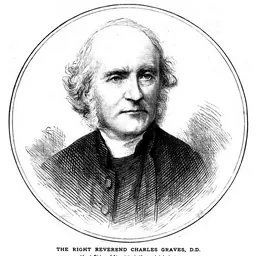




Contemporaries
People whose lives overlapped Hermann Lotze's




Frequently asked questions
Who was Hermann Lotze?
German philosopher (1817-1881)
When was Hermann Lotze born?
Hermann Lotze was born on 21 May 1817 in Bautzen.
When did Hermann Lotze die?
Hermann Lotze died on 1 July 1881 in Hol Municipality.
What was Hermann Lotze's occupation?
Hermann Lotze was a philosopher, anthropologist, university teacher, logician, physician and psychologist.
What nationality was Hermann Lotze?
Hermann Lotze's recorded nationality: Kingdom of Saxony.
Sources & further reading
Cite this page
APA: Biography.guide. (2026). Hermann Lotze. https://biography.guide/hermann-lotze/
MLA: "Hermann Lotze." Biography.guide, https://biography.guide/hermann-lotze/.
Chicago: "Hermann Lotze." Biography.guide. https://biography.guide/hermann-lotze/.
Data last updated: 2026-09-20 · Spot an error? Report a correction.
Page generated 2026-09-27 05:30 UTC