
About Johann Friedrich
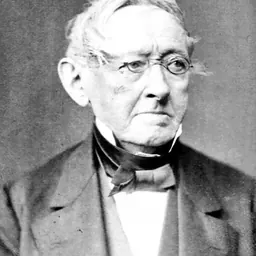
Lived 1836 – 1917 (aged 81). Johann Friedrich was a German writer, historian, catholic theologian and theologian.
Johann Friedrich (5 May 1836, Poxdorf, Germany – 19 August 1917, Munich, Germany) was a German theologian. He was prominent as a leader of the Old Catholics.
Biography He was born at Poxdorf in Upper Franconia, and was educated at Bamberg and at the Ludwig-Maximilians-Universität München. He was ordained a Catholic priest in 1859. In 1865, he was appointed extraordinary professor of theology. In 1867, he was appointed to the Academy of Sciences. He was a pupil of Ignaz von Döllinger.
In 1869, he went to the Vatican Council as secretary to Cardinal Hohenlohe, and took an active part in opposing the dogma of papal infallibility, notably by supplying the opposition bishops with historical and theological material. He left Rome before the council closed. "No German ecclesiastic of his age appears to have won for himself so unusual a repute as a theologian and to have held so important a position, as the trusted counsellor of the leading German cardinal at the Vatican Council. The path was fairly open before him to the highest advancement in the Church of Rome, yet he deliberately sacrificed all such hopes and placed himself in the van of a hard and doubtful struggle" (The Guardian, 1872, p. 1004).
A sentence of excommunication was passed on Friedrich in April 1871, but he refused to acknowledge it and was upheld by the Bavarian government. He continued to perform ecclesiastical functions and maintained his academic position, becoming an ordinary professor in 1872. In 1874, he inaugurated the Old Catholic theological faculty at the University of Bern and lectured there for a year. In Bavaria, in 1882, the Minister of Public Worship, yielding to ultramontane pressure, transferred him from his chair in theology to the philosophical faculty as professor of history. By this time he had to some extent withdrawn from the advanced position which he at first occupied in organizing the Old Catholic Church, for he was not in agreement with its abolition of enforced celibacy. He died in Munich.
Works Friedrich was a prolific writer; among his chief works are: , 1862 ("Wessel Gansfort; a portrait of church history in the 15th century") , 1862 ("The teachings of John Hus") , 2 volumes, 1867–69 ("German church history") , 1871 ("Journal of the Vatican Council") , 1871 , 1876 ("Contribution to church history of the 18th century") , 1876 ("The mechanism of the Vatican religion") , 2 volumes, 1877–86 ("History of the Vatican Council") , 1892 ("The papacy") , 1894 ("On Johann Adam Möhler") , 3 volumes, 1899–1901 ("Ignaz von Dollinger; his life on the basis of his literary estate")
Don’t just read it —
keep it.
Full-length biographies made to live with: read them, listen on the way to work, watch them tonight.
- E-book
- Audio
- Video
Instant download · yours to keep · every purchase keeps this site free
Important facts
People in Johann Friedrich's life
Named in this biography and alive at the same time



Related people
Same field, nearest in time

Contemporaries
People whose lives overlapped Johann Friedrich's



Frequently asked questions
Who was Johann Friedrich?
German theologian (1836–1917)
When was Johann Friedrich born?
Johann Friedrich was born on 5 May 1836 in Poxdorf.
When did Johann Friedrich die?
Johann Friedrich died on 19 August 1917 in Munich.
What was Johann Friedrich's occupation?
Johann Friedrich was a writer, historian, catholic theologian and theologian.
What nationality was Johann Friedrich?
Johann Friedrich was German.
Sources & further reading
· DBpedia: Johann Friedrich (theologian)
Cite this page
APA: Biography.guide. (2026). Johann Friedrich. https://biography.guide/johann-friedrich/
MLA: "Johann Friedrich." Biography.guide, https://biography.guide/johann-friedrich/.
Chicago: "Johann Friedrich." Biography.guide. https://biography.guide/johann-friedrich/.
Data last updated: 2026-09-20 · Spot an error? Report a correction.
Page generated 2026-09-27 05:31 UTC