
About Gustav Fechner
Lived 1801 – 1887 (aged 86). Gustav Fechner was a German physicist, psychologist, statistician, university teacher, philosopher and translator, known for Weber–Fechner law.
Gustav Theodor Fechner (; ; 19 April 1801 – 18 November 1887) was a German physicist, philosopher, and experimental psychologist. A pioneer in experimental psychology and founder of psychophysics (techniques for measuring the mind), he inspired many 20th-century scientists and philosophers. He is also credited with demonstrating the non-linear relationship between psychological sensation and the physical intensity of a stimulus via the formula: , which became known as the Weber–Fechner law.
Early life and scientific career Fechner was born at Groß Särchen, near Muskau, in Lower Lusatia, where his father, a maternal uncle, and his paternal grandfather were pastors. His mother, Johanna Dorothea Fechner (b. 1774), née Fischer, also came from a religious family. Some biographers consider, that despite these religious influences, Fechner became an atheist in later life, while others say that Fechner had his own religious system of belief, a synthesis of Christianity and paganism.
Fechner's father, Samuel Traugott Fischer Fechner (1765-1806) was free-thinking in many ways, such as having his children vaccinated, teaching them Latin, and being a passionate grower of fruit. Fechner had an elder brother, Eduard Clemens Fechner (1799-1861) and three younger sisters: Emilie, Clementine, and Mathilde. Fechner and his brother were then raised for a few years by his maternal uncle, a pastor, before being reunited with his mother and sisters in Dresden. He earned his PhD from Leipzig in 1823.
In 1834, he was appointed professor of physics at Leipzig. In 1839, he injured his eyes in the research on afterimages by gazing at the Sun through colored glasses, while studying the phenomena of color and vision, and after much suffering, resigned from his position. Subsequently, whilst in recovery, he turned to the study of the mind and its relations with the body, giving public lectures on the subjects dealt with in his books. Whilst lying in bed, Fechner had an insight into the relationship between mental sensations and material sensations. This insight proved to be significant in the development of psychology, as there was now a quantitative relationship between the mental and physical worlds.
Contributions
Fechner published chemical and physical papers, and translated chemical works by Jean-Baptiste Biot and Louis Jacques Thénard from French. He also wrote several poems and humorous pieces, such as the Vergleichende Anatomie der Engel (1825), written under the pseudonym of "Dr. Mises." He later explored experimental aesthetics and attempted to determine the shapes and dimensions of aesthetically pleasing objects, using as a database the sizes of paintings.
Synesthesia In 1871, Fechner reported the first empirical survey of coloured letter photisms among 73 synesthetes. His work was followed in the 1880s by that of Francis Galton.
Corpus callosum split One of Fechner's speculations about consciousness dealt with brain. During his time, it was known that the brain is bilaterally symmetrical and that there is a deep division between the two halves that are linked by a connecting band of fibers called the corpus callosum. Fechner speculated that if the corpus callosum were split, two separate streams of consciousness would result - the mind would become two. While Fechner believed that his theory would never be tested, during the mid-twentieth century, Roger Sperry and Michael Gazzaniga worked on epileptic patients with sectioned corpus callosum and found evidence that Fechner's idea was correct.
Golden section hypothesis Fechner constructed ten rectangles with different ratios of width to length and asked numerous observers to choose the "best" and "worst" rectangle shape. He was concerned with the visual appeal of rectangles with different proportions. Participants were explicitly instructed to disregard any associations that they have with the rectangles, e.g. with objects of similar ratios. The rectangles chosen as "best" by the largest number of participants and as "worst" by the fewest participants had a ratio of 0.62 (21:34). This ratio is known as the "golden section" (or golden ratio) and referred to the ratio of a rectangle's width to length that is most appealing to the eye. Carl Stumpf was a participant in this study.
However, there has been some ongoing dispute on the experiment itself, as the fact that Fechner deliberately discarded results of the study ill-fitting to his needs became known, with many mathematicians, including Mario Livio, refuting the result of the experiment.
The two-piece normal distribution In his posthumously published Kollektivmasslehre (1897), Fechner introduced the Zweiseitige Gauss'sche Gesetz or two-piece normal distribution, to accommodate the asymmetries he had observed in empirical frequency distributions in many fields. The distribution has been independently rediscovered by several authors working in different fields.
Fechner's paradox
In 1861, Fechner reported that if he looked at a light with a darkened piece of glass over one eye then closed that eye, the light appeared to become brighter, even though less light was coming into his eyes. This phenomenon has come to be called Fechner's paradox . It has been the subject of numerous research papers, including in the 2000s. It occurs because the perceived brightness of the light with both eyes open is similar to the average brightness of each light viewed with one eye. William James also admired his work: in 1904, he wrote an admiring introduction to the English translation of Fechner's Büchlein vom Leben nach dem Tode (Little Book of Life After Death).
The composer Gustav Mahler read Fechner as a student, and he identified with Fechner when writing his Second Symphony, his Third, and Das Lied von der Erde.
Furthermore, he influenced Sigmund Freud, who refers to Fechner when introducing the concept of psychic locality in his The Interpretation of Dreams that he illustrates with the microscope-metaphor.
Fechner's world concept was highly animistic. He felt the thrill of life everywhere, in plants, earth, stars, the total universe. Fechner was a panpsychist; he viewed the entire universe as being inwardly alive and consciously animated, instead of being dead “stuff” as accepted by most of his contemporary colleagues, who had become devotees to what was becoming known as material science. Yet he based his panpsychism on a well thought out description of consciousness as waves. He believed that human beings stand midway between the souls of plants and the souls of stars, who are angels. God, the soul of the universe, must be conceived as having an existence analogous to human beings. Natural laws are just the modes of the unfolding of God's perfection. In his last work Fechner, aged but full of hope, contrasts this joyous "daylight view" of the world with the dead, dreary "night view" of materialism. Fechner's work in aesthetics is also important. He conducted experiments to show that certain abstract forms and proportions are naturally pleasing to our senses, and gave some new illustrations of the working of aesthetic association.
Fechner's position in reference to predecessors and contemporaries is not very sharply defined. He was remotely a disciple of Schelling,
Fechner Day In 1985 the International Society for Psychophysics called its annual conference Fechner Day. The conference is now scheduled to include 22 October to allow psychophysicists to celebrate the anniversary of Fechner's waking up on that day in 1850 with a new approach into how to study the mind. Fechner Day runs annually with the 2021 Fechner Day being the 37th. It is organized annually, by a different academic host each year. During the pandemic resulting from COVID-19, Fechner Day was held online in 2020 and 2021.
Family and later life Little is known of Fechner's later years, nor of the circumstances, cause, and manner of his death.
Fechner was the brother of painter Eduard Clemens Fechner and of Clementine Wieck Fechner, who was the stepmother of Clara Wieck when Clementine became her father Friedrich Wieck's second wife.
Works
Praemissae ad theoriam organismi generalem ("Advances in the general theory of organisms") (1823). (Dr. Mises) Stapelia mixta (1824). Internet Archive (Harvard) Resultate der bis jetzt unternommenen Pflanzenanalysen ("Results of plant analyses undertaken to date") (1829). Internet Archive (Stanford) Maassbestimmungen über die galvanische Kette (1831). (Dr. Mises) Schutzmittel für die Cholera ("Protective equipment for cholera") (1832). Google (Harvard) — Google (UWisc) Repertorium der Experimentalphysik (1832). 3 volumes. Volume 1. Internet Archive (NYPL) — Internet Archive (Oxford) Volume 2. Internet Archive (NYPL) — Internet Archive (Oxford) Volume 3. Internet Archive (NYPL) — Internet Archive (Oxford) (ed.) Das Hauslexicon. Vollständiges Handbuch praktischer Lebenskenntnisse für alle Stände (1834–38). 8 volumes. Das Büchlein vom Leben nach dem Tode (1836). 6th ed., 1906. Internet Archive (Harvard) — Internet Archive (NYPL) On Life After Death (1882). Google (Oxford) — IA (UToronto) 2nd ed., 1906. Internet Archive (UMich) 3rd ed., 1914. IA (UIllinois) The Little Book of Life After Death (1904). IA (UToronto) 1905, Internet Archive (UCal) — IA (Ucal) — IA (UToronto) (Dr. Mises) Gedichte (1841). Internet Archive (Oxford) Ueber das höchste Gut ("Concerning the Highest Good") (1846). Internet Archive (Stanford) (Dr. Mises) Nanna oder über das Seelenleben der Pflanzen (1848). 2nd ed., 1899. 3rd ed., 1903. Internet Archive (UMich) 4th ed., 1908. Internet Archive (Harvard) Zend-Avesta oder über die Dinge des Himmels und des Jenseits (1851). 3 volumes. 3rd ed., 1906. Google (Harvard) Ueber die physikalische und philosophische Atomenlehre (1855). 2nd ed., 1864. Internet Archive (Stanford) Professor Schleiden und der Mond (1856). Google (UMich) Elemente der Psychophysik (1860). 2 volumes. Volume 1. Google (ULausanne) Volume 2. Internet Archive (NYPL) Ueber die Seelenfrage ("Concerning the Soul") (1861). Internet Archive (NYPL) — Internet Archive (UCal) — Internet Archive (UMich) 2nd ed., 1907. Google (Harvard) Die drei Motive und Gründe des Glaubens ("The three motives and reasons of faith") (1863). Google (Harvard) — Internet Archive (NYPL) Einige Ideen zur Schöpfungs- und Entwickelungsgeschichte der Organismen (1873). Internet Archive (UMich) (Dr. Mises) Kleine Schriften (1875). Internet Archive (UMich) Erinnerungen an die letzen Tage der Odlehre und ihres Urhebers (1876). Google (Harvard) Vorschule der Aesthetik (1876). 2 Volumes. Internet Archive (Harvard) In Sachen der Psychophysik (1877). Internet Archive (Stanford) Die Tagesansicht gegenüber der Nachtansicht (1879). Google (Oxford) 2nd ed., 1904. Internet Archive (Stanford) Revision der Hauptpuncte der Psychophysik (1882). Internet Archive (Harvard) Kollektivmasslehre (1897). Internet Archive (NYPL)
Don’t just read it —
keep it.
Full-length biographies made to live with: read them, listen on the way to work, watch them tonight.
- E-book
- Audio
- Video
Instant download · yours to keep · every purchase keeps this site free
Important facts
People in Gustav Fechner's life
Named in this biography and alive at the same time


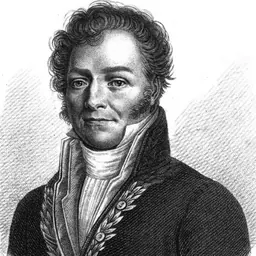




Related people
Same field, nearest in time


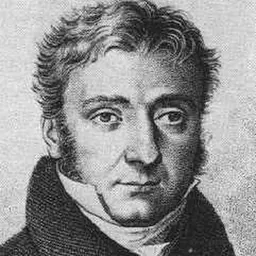
Contemporaries
People whose lives overlapped Gustav Fechner's





Frequently asked questions
Who was Gustav Fechner?
German scientist (1801-1887)
When was Gustav Fechner born?
Gustav Fechner was born on 19 April 1801 in Żarki Wielkie.
When did Gustav Fechner die?
Gustav Fechner died on 18 November 1887 in Leipzig.
What was Gustav Fechner's occupation?
Gustav Fechner was a physicist, psychologist, statistician, university teacher, philosopher and translator.
What was Gustav Fechner known for?
Gustav Fechner was known for Weber–Fechner law.
What nationality was Gustav Fechner?
Gustav Fechner was German.
Sources & further reading
Cite this page
APA: Biography.guide. (2026). Gustav Fechner. https://biography.guide/gustav-fechner/
MLA: "Gustav Fechner." Biography.guide, https://biography.guide/gustav-fechner/.
Chicago: "Gustav Fechner." Biography.guide. https://biography.guide/gustav-fechner/.
Data last updated: 2026-09-20 · Spot an error? Report a correction.
Page generated 2026-09-27 05:19 UTC