
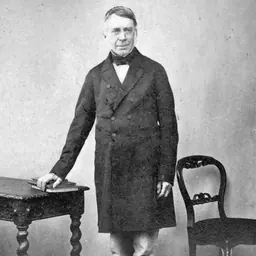
Franz Brentano
German philosopher and psychologist as well as refounder of the theory of intentionality
About Franz Brentano
Lived 1838 – 1917 (aged 79). Franz Brentano was a German philosopher, psychologist and university teacher.
Work
Intentionality
Brentano is best known for his reintroduction of the concept of intentionality—a concept derived from scholastic philosophy—to contemporary philosophy in his lectures and in his work Psychologie vom empirischen Standpunkt (Psychology from an Empirical Standpoint). While often simplistically summarised as "aboutness" or the relationship between mental acts and the external world, Brentano defined it as the main characteristic of mental phenomena, by which they could be distinguished from physical phenomena. Every mental phenomenon, every psychological act has content, is directed at an object (the intentional object). Every belief, desire etc. has an object that they are about: the believed, the desired. Brentano used the expression "intentional inexistence" to indicate the status of the objects of thought in the mind. The property of being intentional, of having an intentional object, was the key feature to distinguish psychological phenomena and physical phenomena, because, as Brentano defined it, physical phenomena lacked the ability to generate original intentionality, and could only facilitate an intentional relationship in a second-hand manner, which he labeled derived intentionality.
Brentano introduced a distinction between genetic psychology (genetische Psychologie) and descriptive psychology (beschreibende or deskriptive Psychologie): in his terminology, genetic psychology is the study of psychological phenomena from a third-person point of view, which involves the use of empirical experiments, thereby satisfying the scientific standards we nowadays expect of an empirical science. cognitive science,
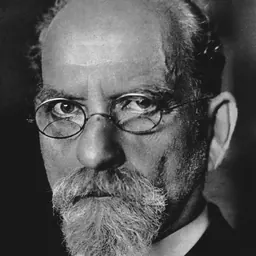
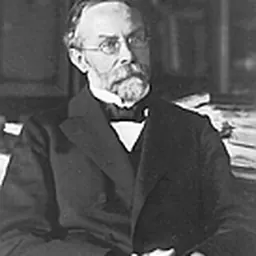
Theory of perception He is also well known for claiming that Wahrnehmung ist Falschnehmung ('perception is misconception') that is to say perception is erroneous. In fact he maintained that external, sensory perception could not tell us anything about the de facto existence of the perceived world, which could simply be illusion. However, we can be absolutely sure of our internal perception. When I hear a tone, I cannot be completely sure that there is a tone in the real world, but I am absolutely certain that I do hear. This awareness, of the fact that I hear, is called internal perception. External perception, sensory perception, can only yield hypotheses about the perceived world, but not truth. Hence he and many of his pupils (in particular Carl Stumpf and Edmund Husserl) thought that the natural sciences could only yield hypotheses and never universal, absolute truths as in pure logic or mathematics.
However, in a reprinting of his Psychologie vom Empirischen Standpunkte (Psychology from an Empirical Standpoint), he recanted this previous view. He attempted to do so without reworking the previous arguments within that work but it has been said that he was wholly unsuccessful. The new view states that when we hear a sound, we hear something from the external world; there are no physical phenomena of internal perception.
Theory of judgment
Brentano has a theory of judgment which is different from what is currently the predominant (Fregean) view. At the centre of Brentano's theory of judgment lies the idea that a judgment depends on having a presentation, but this presentation does not have to be predicated. Even stronger: Brentano thought that predication is not even necessary for judgment, because there are judgments without a predicational content. Another fundamental aspect of his theory is that judgments are always existential. This so-called existential claim implies that someone who is judging that S is P will be judging that some S that is P exists. (Note that Brentano denied the idea that all judgments are of the form: S is P [and all other kinds of judgment which combine presentations]. Brentano argued that there are also judgments arising from a single presentation, e.g. the planet Mars exists” has only one presentation.) In Brentano's own symbols, a judgment is always of the form: ‘+A’ (A exists) or ‘–A’ (A does not exist).
Combined with the third fundamental claim of Brentano, the idea that all judgments are either positive (judging that A exists) or negative (judging that A does not exist), we have a complete picture of Brentano's theory of judgment. So, imagine that you doubt whether giraffes exist. At that point you have a presentation of giraffes in your mind. When you judge that giraffes do not exist, then you are judging that the presentation you have does not present something that exists. You do not have to utter that in words or otherwise predicate that judgment. The whole judgment takes place in the denial (or approval) of the existence of the presentation you have.
The problem of Brentano's theory of judgment is not the idea that all judgments are existential judgments (though it is sometimes a very complex enterprise to transform an ordinary judgment into an existential one), the real problem is that Brentano made no distinction between object and presentation. A presentation exists as an object in your mind. So you cannot really judge that A does not exist, because if you do so you also judge that the presentation is not there (which is impossible, according to Brentano's idea that all judgments have the object which is judged as presentation). Kazimierz Twardowski acknowledged this problem and solved it by denying that the object is equal to the presentation. This is actually only a change within Brentano's theory of perception, but has a welcome consequence for the theory of judgment, viz. that you can have a presentation (which exists) but at the same time judge that the object does not exist.
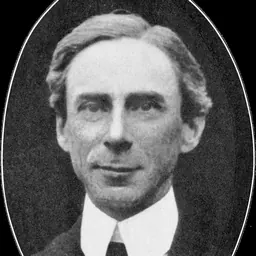
Legacy The young Martin Heidegger was very much inspired by Brentano's early work On the Several Senses of Being in Aristotle. Brentano's focus on conscious (or phenomenal) intentionality was inherited by Carl Stumpf's Berlin School of experimental psychology, Anton Marty's Prague School of linguistics, Alexius Meinong's Graz School of experimental psychology, Kazimierz Twardowski's Lwów School of philosophy, and Edmund Husserl's phenomenology. Brentano's work also influenced George Stout, the teacher of G. E. Moore and Bertrand Russell at the University of Cambridge.
Don’t just read it —
keep it.
Full-length biographies made to live with: read them, listen on the way to work, watch them tonight.
- E-book
- Audio
- Video
Instant download · yours to keep · every purchase keeps this site free
Important facts
People in Franz Brentano's life
Named in this biography and alive at the same time



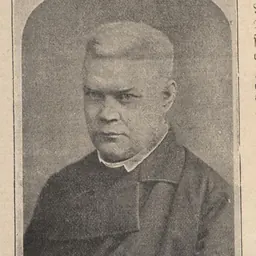
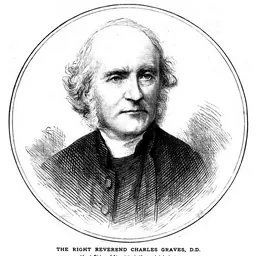
Related people
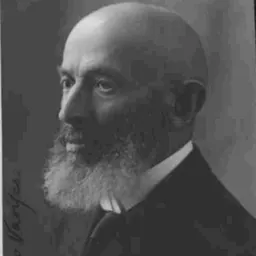
Same field, nearest in time


Contemporaries
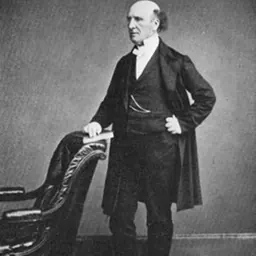
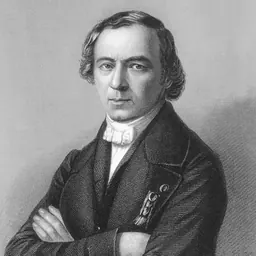
People whose lives overlapped Franz Brentano's

Frequently asked questions
Who was Franz Brentano?
German philosopher and psychologist as well as refounder of the theory of intentionality (1838–1917)
When was Franz Brentano born?
Franz Brentano was born on 16 January 1838 in Boppard.
When did Franz Brentano die?
Franz Brentano died on 17 March 1917 in Zurich.
What was Franz Brentano's occupation?
Franz Brentano was a philosopher, psychologist and university teacher.
What nationality was Franz Brentano?
Franz Brentano was German.
Sources & further reading
Cite this page
APA: Biography.guide. (2026). Franz Brentano. https://biography.guide/franz-brentano/
MLA: "Franz Brentano." Biography.guide, https://biography.guide/franz-brentano/.
Chicago: "Franz Brentano." Biography.guide. https://biography.guide/franz-brentano/.
Data last updated: 2026-09-20 · Spot an error? Report a correction.
Page generated 2026-09-27 05:21 UTC