
About Harold Urey
Lived 1893 – 1981 (aged 87). Harold Urey was an American astronomer, chemist, physical chemist, physicist, university teacher and writer.
Harold Clayton Urey ( ; April 29, 1893 – January 5, 1981) was an American physical chemist who conducted pioneering work on isotopes. He earned the 1934 Nobel Prize in Chemistry "for his discovery of heavy hydrogen."
Born in Walkerton, Indiana, Urey studied thermodynamics under Gilbert N. Lewis at the University of California, Berkeley. After he received his PhD in 1923, he was awarded a fellowship by the American-Scandinavian Foundation to study at the Niels Bohr Institute in Copenhagen. He was a research associate at Johns Hopkins University from 1924 to 1929, before becoming an associate professor of chemistry at Columbia University. In 1931, he began work with the separation of isotopes that resulted in the discovery of deuterium.
During World War II, Urey turned his knowledge of isotope separation to the problem of uranium enrichment. He headed the group located at Columbia University that developed isotope separation using gaseous diffusion. The method was successfully developed, becoming the sole method used in the early post-war period. After the war, Urey became professor of chemistry at the Institute for Nuclear Studies, and later Ryerson professor of chemistry at the University of Chicago.
Urey speculated the early terrestrial atmosphere was composed of ammonia, methane, and hydrogen. One of his Chicago graduate students was Stanley L. Miller, who showed in the Miller–Urey experiment that if such a mixture were exposed to electric sparks and water, it can interact to produce amino acids, commonly considered the building blocks of life. Work with isotopes of oxygen led to pioneering the new field of paleoclimatic research. In 1958, he accepted a post as a professor at large at the new University of California, San Diego (UCSD), where he helped create the science faculty. He was one of the founding members of UCSD's school of chemistry created in 1960. He became increasingly interested in space science, and when Apollo 11 returned Moon rock samples from the Moon, Urey examined them at the Lunar Receiving Laboratory. Lunar astronaut Harrison Schmitt said Urey approached him as a volunteer for a one-way mission to the Moon, stating "I will go, and I don't care if I don't come back."
Early life Harold Clayton Urey was born on April 29, 1893, in Walkerton, Indiana, the son of Samuel Clayton Urey, a school teacher and a minister in the Church of the Brethren, and his wife, Cora Rebecca née Reinoehl. Of mostly German ancestry, the family name had English origins. He had a younger brother, Clarence, and a younger sister, Martha. The family moved to Glendora, California after Samuel became seriously ill with tuberculosis, hoping the climate would improve his health. When it became clear he would die, the family moved back to Indiana to live with Cora's widowed mother. Samuel died when Harold was six years old.
An academic career required a doctorate, so in 1921 Urey enrolled in a PhD program at the University of California, Berkeley, where he studied thermodynamics under Gilbert N. Lewis. His initial attempt at a thesis was on the ionization of cesium vapor. He ran into difficulties, and Meghnad Saha published a better paper on the same subject. Urey then wrote his thesis on the ionization states of an ideal gas, which was subsequently published in the Astrophysical Journal. After he received his PhD in 1923, Urey was awarded a fellowship by the American-Scandinavian Foundation to study at the Niels Bohr Institute in Copenhagen, where he met Werner Heisenberg, Hans Kramers, Wolfgang Pauli, Georg von Hevesy, and John Slater. At the conclusion of his stay, he traveled to Germany, where he met Albert Einstein and James Franck.
On returning to the United States, Urey received an offer of a National Research Council fellowship to Harvard University, and also received an offer to be a research associate at Johns Hopkins University. He chose the latter. Before taking up the job, he traveled to Seattle, Washington to visit his mother. On the way, he stopped by Everett, Washington, where he knew Dr. Kate Daum, a colleague from the University of Montana. Dr. Daum introduced Urey to her sister Frieda. Urey and Frieda soon became engaged. They were married at her father's house in Lawrence, Kansas in 1926. The couple had four children: Gertrude Bessie (Elizabeth), born in 1927; Frieda Rebecca, born in 1929; Mary Alice, born in 1934; and John Clayton Urey, born in 1939.
At Johns Hopkins, Urey and Arthur Ruark wrote Atoms, Quanta and Molecules (1930), one of the first English texts on quantum mechanics and its applications to atomic and molecular systems. In 1929, Urey became an associate professor of chemistry at Columbia University, where his colleagues included Rudolph Schoenheimer, David Rittenberg, and T. I. Taylor.
Deuterium In the 1920s, William Giauque and Herrick L. Johnston discovered the stable isotopes of oxygen. Isotopes were not well understood at the time; James Chadwick would not discover the neutron until 1932. Two systems were used for classifying them based on their chemical and physical properties. The latter was determined using the mass spectrograph. Since it was known the atomic weight of oxygen was almost exactly 16 times as heavy as hydrogen, Raymond Birge and Donald Menzel hypothesized hydrogen had more than one isotope as well. Based upon the difference between the results of the two methods, they predicted only one hydrogen atom in 4,500 was of the heavy isotope.
In 1931, Urey set out to find it. Urey and George M. Murphy (1903–1968), calculated from the Balmer series that the heavy isotope should have lines blueshifted (correspondingly the light isotope redshifted) by . Urey had access to a grating spectrograph, a sensitive device recently installed at Columbia and capable of resolving the Balmer series. With a resolution of 1 Å per millimetre, the machine should have produced a difference of about 1 millimetre. However, since only one atom in 4,500 was heavy, the line on the spectrograph was very faint. Urey therefore decided to delay publishing their results until he had more conclusive evidence it was heavy hydrogen. Urey was awarded the Nobel Prize in Chemistry in 1934 "for his discovery of heavy hydrogen". He declined to attend the ceremony in Stockholm so he could be present at the birth of his daughter Mary Alice. He was elected to both the American Philosophical Society and the United States National Academy of Sciences the following year. Urey also received the Willard Gibbs Award in 1934, and the Davy Medal in 1940.
Working with Edward W. Washburn from the Bureau of Standards, Urey subsequently discovered the cause of the anomalous sample. Brickwedde's hydrogen had been separated from water by electrolysis, resulting in a depleted sample. Moreover, Francis William Aston had reported his calculated value for the atomic weight of hydrogen was wrong, thereby invalidating Birge and Menzel's original reasoning. The discovery of deuterium stood, however. In tribute to his contributions, scientists refer to the ratio of a planet's internal heat generation to surface heat flux as the Urey ratio. Urey spent a year in the United Kingdom as a visiting professor at Oxford University in 1956 and 1957. In 1958, he reached the University of Chicago's retirement age of 65, but he accepted a post as a professor at large at the new University of California, San Diego (UCSD), and moved to La Jolla, California. He was subsequently made a professor emeritus there from 1970 to 1981. and the Priestley Medal of the American Chemical Society in 1973. In 1964 he received the National Medal of Science. He became a Fellow of the Royal Society in 1947. Named after him are lunar impact crater Urey, and the H. C. Urey Prize, awarded for achievement in planetary sciences by the American Astronomical Society. The Harold C. Urey Middle School in Walkerton, Indiana, is also named for him, as is Urey Hall, the chemistry building at Revelle College, UCSD, in La Jolla, and the Harold C. Urey Lecture Hall at the University of Montana. UCSD has also established a Harold C. Urey chair whose first holder was James Arnold.
Urey's daughter Elizabeth Baranger also became a notable physicist.
Don’t just read it —
keep it.
Full-length biographies made to live with: read them, listen on the way to work, watch them tonight.
- E-book
- Audio
- Video
Instant download · yours to keep · every purchase keeps this site free
Important facts
People in Harold Urey's life
Named in this biography and alive at the same time



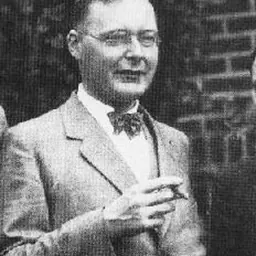
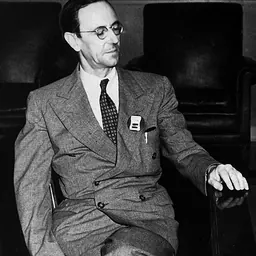


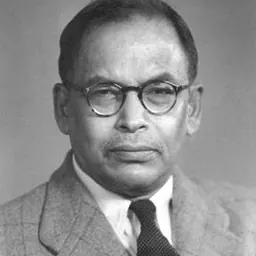
Related people
Same field, nearest in time



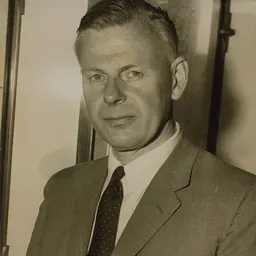
Contemporaries
People whose lives overlapped Harold Urey's




Frequently asked questions
Who was Harold Urey?
American physical chemist (1893-1981)
When was Harold Urey born?
Harold Urey was born on 29 April 1893 in Walkerton.
When did Harold Urey die?
Harold Urey died on 5 January 1981 in La Jolla.
What was Harold Urey's occupation?
Harold Urey was an astronomer, chemist, physical chemist, physicist, university teacher and writer.
What nationality was Harold Urey?
Harold Urey was American.
Sources & further reading
Cite this page
APA: Biography.guide. (2026). Harold Urey. https://biography.guide/harold-urey/
MLA: "Harold Urey." Biography.guide, https://biography.guide/harold-urey/.
Chicago: "Harold Urey." Biography.guide. https://biography.guide/harold-urey/.
Data last updated: 2026-09-20 · Spot an error? Report a correction.
Page generated 2026-09-27 05:25 UTC