
About Francis William Aston
Lived 1877 – 1945 (aged 68). Francis William Aston was a British physicist and chemist, known for Aston Dark Space, Mass spectrometry and Whole Number Rule.
Research With a scholarship from the University of Birmingham, he pursued research in physics following the discovery of X-rays and radioactivity in the mid-1890s. Aston studied the current through a gas-filled tube. The research, conducted with self-made discharge tubes, led him to investigate the volume of the Aston dark space.
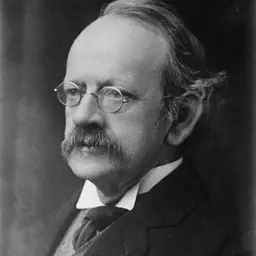
After the death of his father, and a trip around the world in 1908, he was appointed lecturer at the University of Birmingham in 1909 but moved to the Cavendish Laboratory in Cambridge on the invitation of J. J. Thomson in 1910.
Birmingham University awarded him a BSc in Applied/Pure Science in 1910 and a DSc in Applied/Pure Science in 1914.
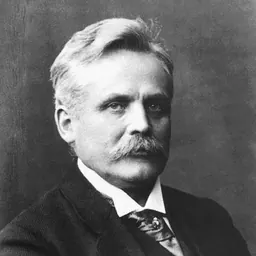
Joseph John Thomson revealed the nature of the cathode ray and then discovered the electron and he was now doing research on the positively charged "Kanalstrahlen" discovered by Eugen Goldstein in 1886. The method of deflecting particles in the "Kanalstrahlen" by magnetic fields was discovered by Wilhelm Wien in 1908; combining magnetic and electric fields allowed the separation of different ions by their ratio of charge and mass. Ions of a particular charge/mass ratio would leave a characteristic parabolic trace on a photographic plate, demonstrating for the first time that atoms of a single element could have different masses. The first sector field mass spectrometer was the result of these experiments.
It was speculations about isotopy that directly gave rise to the building of a mass spectrometer capable of separating the isotopes of the chemical elements. Aston initially worked on the identification of isotopes in the element neon and later chlorine and mercury.
In 1912, Aston discovered that the neon splits into two tracts, roughly corresponding to atomic mass 20 and 22. He named the mass 22 one "meta-neon", a name he took from Occult Chemistry.
First World War stalled and delayed his research on providing experimental proof for the existence of isotopes by mass spectroscopy and during the war, Aston worked at the Royal Aircraft Establishment in Farnborough as a Technical Assistant working on aeronautical coatings.
After the war, he returned to research at the Cavendish Laboratory in Cambridge and completed building his first mass spectrograph that he reported on in 1919. Subsequent improvements in the instrument led to the development of a second and third instrument of improved mass resolving power and mass accuracy. These instruments employing electromagnetic focusing allowed him to identify 212 naturally occurring isotopes. In 1921, Aston became a member of the International Committee on Atomic Weights and a fellow of the Royal Society
His work on isotopes also led to his formulation of the whole number rule which states that "the mass of the oxygen isotope being defined [as 16], all the other isotopes have masses that are very nearly whole numbers", a rule that was used extensively in the development of nuclear energy. The exact mass of many isotopes was measured leading to the result that hydrogen has a 1% higher mass than expected by the average mass of the other elements. Aston speculated about the subatomic energy and the use of it in 1936.
Isotopes and Mass-spectra and Isotopes are his most well-known books.
Private life and death
In his private life, he was a sportsman, cross-country skiing and skating in winter time, during his regular visits to Switzerland and Norway; deprived of these winter sports during the First World War he started climbing. Between the ages of 20 and 25 he spent a large part of his spare time cycling. With the invention of motorised vehicles he constructed a combustion engine of his own in 1902 and participated in the Gordon Bennett auto race in Ireland in 1903. Not content with these sports he also engaged in swimming, golf, especially with Rutherford and other colleagues in Cambridge, tennis, winning some prizes at open tournaments in England, Wales and Ireland and learning surfing in Honolulu in 1909. Coming from a musical family, he was capable of playing the piano, violin and cello at a level such that he regularly played in concerts at Cambridge. He visited many places around the globe on extensive travel tours starting from 1908 with a trip to Australia and New Zealand which he visited again in 1938–1939.
Aston was a skilled photographer and interested in astronomy. He joined several expeditions to study solar eclipses in Benkoeben in 1925, Sumatra in 1932, Magog in Canada on 31 August 1932 and Kamishari Hokkaido, Japan on June19th 1936. He also planned to attend expeditions to South Africa in 1940 and Brazil in 1945 in later life. He never married.
Aston died in Cambridge on 20 November 1945 at the age of 68.
Legacy The lunar crater Aston was named in his honour.
The British Mass Spectrometry Society awards the Aston Medal in his honour.
Don’t just read it —
keep it.
Full-length biographies made to live with: read them, listen on the way to work, watch them tonight.
- E-book
- Audio
- Video
Instant download · yours to keep · every purchase keeps this site free
Important facts
People in Francis William Aston's life
Named in this biography and alive at the same time



Related people
Same field, nearest in time

Contemporaries
People whose lives overlapped Francis William Aston's


Frequently asked questions
Who was Francis William Aston?
British chemist (1877-1945)
When was Francis William Aston born?
Francis William Aston was born on 1 September 1877 in Harborne, Birmingham.
When did Francis William Aston die?
Francis William Aston died on 20 November 1945 in Cambridge.
What was Francis William Aston's occupation?
Francis William Aston was a physicist and chemist.
What was Francis William Aston known for?
Francis William Aston was known for Aston Dark Space, Mass spectrometry and Whole Number Rule.
What nationality was Francis William Aston?
Francis William Aston was British.
Sources & further reading
· Wikipedia: Francis William Aston
· DBpedia: Francis William Aston
Cite this page
APA: Biography.guide. (2026). Francis William Aston. https://biography.guide/francis-william-aston/
MLA: "Francis William Aston." Biography.guide, https://biography.guide/francis-william-aston/.
Chicago: "Francis William Aston." Biography.guide. https://biography.guide/francis-william-aston/.
Data last updated: 2026-09-20 · Spot an error? Report a correction.
Page generated 2026-09-27 05:23 UTC