
About Gregorio Ricci-Curbastro
Lived 1853 – 1925 (aged 72). Gregorio Ricci-Curbastro was an Italian mathematician and university teacher, known for Covariant derivative, Ricci calculus and Ricci curvature.
Gregorio Ricci-Curbastro (; 12January 1925) was an Italian mathematician. He is most famous as the discoverer of tensor calculus.
With his former student Tullio Levi-Civita, he wrote his most famous single publication, a pioneering work on the calculus of tensors, signing it as Gregorio Ricci. This appears to be the only time that Ricci-Curbastro used the shortened form of his name in a publication, and continues to cause confusion.
Ricci-Curbastro also published important works in other fields, including a book on higher algebra and infinitesimal analysis, and papers on the theory of real numbers, an area in which he extended the research begun by Richard Dedekind.
Early life and education Completing his high school studies privately at only 16 years of age, he enrolled on the course of philosophy-mathematics at Rome University (1869). The following year, the Papal State fell, and so Gregorio was called by his father to the city of his birth, Lugo di Romagna. Subsequently, he attended courses at University of Bologna during the year 1872 - 1873, then transferred to the Scuola Normale Superiore di Pisa.
In 1875, he graduated in Pisa in physical sciences and mathematics with a thesis on differential equations, entitled "On Fuchs's Research Concerning Linear Differential Equations". During his various travels, he was a student of the mathematicians Enrico Betti, Eugenio Beltrami, Ulisse Dini and Felix Klein.
Studies on absolute differential calculus In 1877 Ricci-Curbastro obtained a scholarship at the Technical University of Munich, Bavaria, and he later worked as an assistant of Ulisse Dini, his teacher.
In 1880, he became a lecturer of mathematics at the University of Padua, where he dealt with Riemannian geometry and differential quadratic forms.
He formed a research group in which Tullio Levi-Civita worked, with whom he wrote the fundamental treatise on absolute differential calculus (also known as Ricci calculus) with coordinates or tensor calculus on Riemannian manifold, which then became the lingua franca of the subsequent theory of Albert Einstein's general relativity. In fact, absolute differential calculus had a crucial role in developing the theory, as is shown in a letter written by Albert Einstein to Ricci-Curbastro's nephew. In this context, Ricci-Curbastro identified the so-called Ricci tensor, which would have a crucial role within that theory.
Influences The advent of tensor calculus in dynamics goes back to Lagrange, who originated the general treatment of a dynamical system, and to Bernhard Riemann, who was the first to think about geometry in an arbitrary number of dimensions. He was also influenced by the works of Elwin Bruno Christoffel and of Rudolf Lipschitz on the quadratic forms. In fact, it was essentially Christoffel's idea of covariant differentiation that allowed Ricci-Curbastro to make the greatest progress.
Recognition Ricci-Curbastro received many honours for his contributions.
He is honoured by mentions in various Academies, amongst which are: The Veneto Institute of Science - Istituto veneto di scienze - letters and articles (from 1892), of which he was then president from 1916 to 1919. The Lincei Academy - Accademia dei Lincei - of which he was a member from 1899. The Academy of Padua - Accademia di Padova - from 1905. The Science Academy of Turin - Accademia delle Scienze di Torino - from 1918. The Galileian Academy of Science - Accademia Galileiana di Scienze, Lettere ed Arti - letters and articles, of which he was then president from 1920 to 1922. The Academy of Sciences of the Institute of Bologna - Reale Accademia di Bologna - from 1922. The Pontifical Academy of Sciences - Accademia Pontificia delle Scienze - from 1925.
He participated actively in political life, both in his native town and in Padua, and contributed with his projects to the Ravenna-area land drainage and the Lugo aqueduct.
An asteroid, 13642 Ricci, is named after him.
Publications
Don’t just read it —
keep it.
Full-length biographies made to live with: read them, listen on the way to work, watch them tonight.
- E-book
- Audio
- Video
Instant download · yours to keep · every purchase keeps this site free
Important facts
more
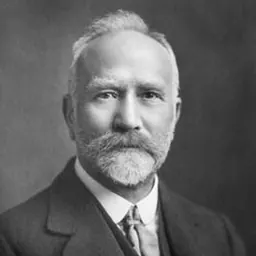
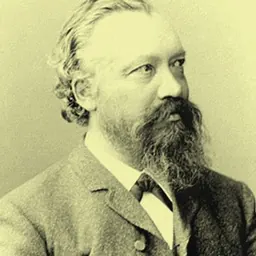
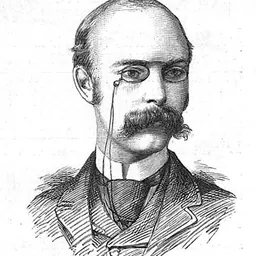
Web (differential geometry)People in Gregorio Ricci-Curbastro's life
Named in this biography and alive at the same time
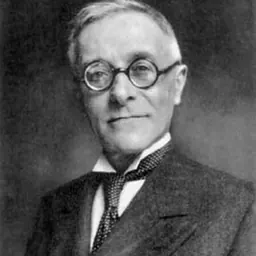

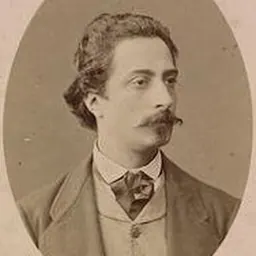




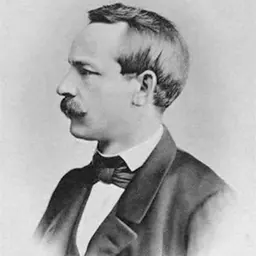
Related people
Same field, nearest in time
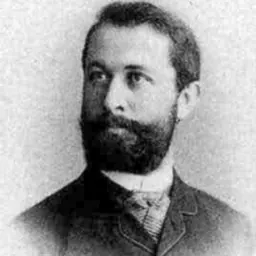


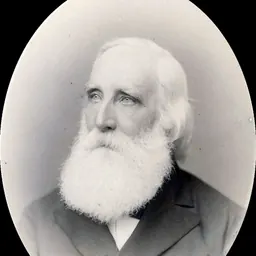
Contemporaries
People whose lives overlapped Gregorio Ricci-Curbastro's

Frequently asked questions
Who was Gregorio Ricci-Curbastro?
Italian mathematician (1853–1925)
When was Gregorio Ricci-Curbastro born?
Gregorio Ricci-Curbastro was born on 12 January 1853 in Lugo.
When did Gregorio Ricci-Curbastro die?
Gregorio Ricci-Curbastro died on 6 August 1925 in Bologna.
What was Gregorio Ricci-Curbastro's occupation?
Gregorio Ricci-Curbastro was a mathematician and university teacher.
What was Gregorio Ricci-Curbastro known for?
Gregorio Ricci-Curbastro was known for Covariant derivative, Ricci calculus, Ricci curvature, Ricci decomposition, Riemann curvature tensor and Tensor calculus.
What nationality was Gregorio Ricci-Curbastro?
Gregorio Ricci-Curbastro was Italian.
Sources & further reading
· Wikipedia: Gregorio Ricci-Curbastro
· DBpedia: Gregorio Ricci-Curbastro
Cite this page
APA: Biography.guide. (2026). Gregorio Ricci-Curbastro. https://biography.guide/gregorio-ricci-curbastro/
MLA: "Gregorio Ricci-Curbastro." Biography.guide, https://biography.guide/gregorio-ricci-curbastro/.
Chicago: "Gregorio Ricci-Curbastro." Biography.guide. https://biography.guide/gregorio-ricci-curbastro/.
Data last updated: 2026-09-20 · Spot an error? Report a correction.
Page generated 2026-09-27 05:30 UTC