
About Hans Kramers
Lived 1894 – 1952 (aged 58). Hans Kramers was a Dutch theoretical physicist, physicist and university teacher, known for Bohr–Kramers–Slater theory, Klein–Kramers equation and Kramers' degeneracy theorem.
Hendrik Anthony "Hans" Kramers (17 December 1894 – 24 April 1952) was a Dutch physicist who worked with Niels Bohr to understand how electromagnetic waves interact with matter and made important contributions to quantum mechanics and statistical physics.
Background and education Hans Kramers was born on 17 December 1894 in Rotterdam. the son of Hendrik Kramers, a physician, and Jeanne Susanne Breukelman.
In 1912 Hans finished secondary education (HBS) in Rotterdam, and studied mathematics and physics at the University of Leiden, where he obtained a master's degree in 1916. Kramers wanted to obtain foreign experience during his doctoral research, but his first choice of supervisor, Max Born in Göttingen, was not reachable because of the First World War. Because Denmark was neutral in this war, as was the Netherlands, he travelled (by ship, overland was impossible) to Copenhagen, where he visited unannounced the then still relatively unknown Niels Bohr. Bohr took him on as a Ph.D. candidate and Kramers prepared his dissertation under Bohr's direction. Although Kramers did most of his doctoral research (on intensities of atomic transitions) in Copenhagen, he obtained his formal Ph.D. under Ehrenfest in Leiden, on 8 May 1919.
Kramers enjoyed music, and played cello and piano.
Academic career He worked for almost ten years in Bohr's group, becoming an associate professor at the University of Copenhagen. He played a role in the ill-fated BKS theory of 1924-5. Kramers left Denmark in 1926 and returned to the Netherlands. He became a full professor in theoretical physics at Utrecht University, where he supervised Tjalling Koopmans.
In 1925, with Werner Heisenberg he developed the Kramers–Heisenberg dispersion formula, and in 1926 he was one of the authors of the WKB method. He is also credited with introducing in 1948 the concept of renormalization into quantum field theory, although his approach was nonrelativistic. He was an International member of the American Philosophical Society. Kramers won the Lorentz Medal in 1947 and Hughes Medal in 1951.
Don’t just read it —
keep it.
Full-length biographies made to live with: read them, listen on the way to work, watch them tonight.
- E-book
- Audio
- Video
Instant download · yours to keep · every purchase keeps this site free
Important facts
more
Kramers–Heisenberg formula, Kramers–Kronig relations, Kramers–Wannier duality, Superexchange, Transfer-matrix method, WKB approximationPeople in Hans Kramers's life
Named in this biography and alive at the same time

Related people
Same field, nearest in time

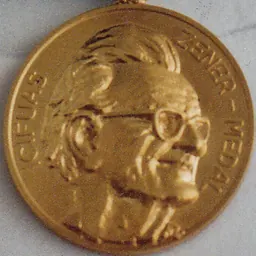
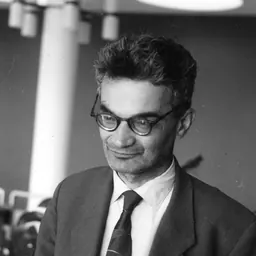

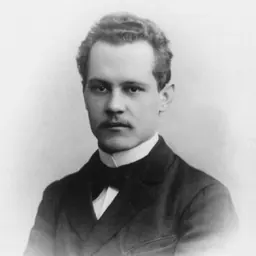
Contemporaries
People whose lives overlapped Hans Kramers's
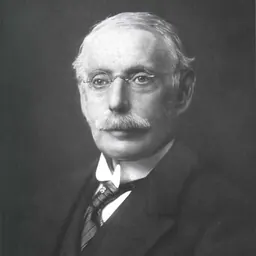


Frequently asked questions
Who was Hans Kramers?
Dutch physicist (1894–1952)
When was Hans Kramers born?
Hans Kramers was born on 2 February 1894 in Rotterdam.
When did Hans Kramers die?
Hans Kramers died on 24 April 1952 in Oegstgeest.
What was Hans Kramers's occupation?
Hans Kramers was a theoretical physicist, physicist and university teacher.
What was Hans Kramers known for?
Hans Kramers was known for Bohr–Kramers–Slater theory, Klein–Kramers equation, Kramers' degeneracy theorem, Kramers' law, Kramers' opacity law and Kramers-Moyal expansion.
What nationality was Hans Kramers?
Hans Kramers was Dutch.
Sources & further reading
Cite this page
APA: Biography.guide. (2026). Hans Kramers. https://biography.guide/hans-kramers/
MLA: "Hans Kramers." Biography.guide, https://biography.guide/hans-kramers/.
Chicago: "Hans Kramers." Biography.guide. https://biography.guide/hans-kramers/.
Data last updated: 2026-09-25 · Spot an error? Report a correction.
Page generated 2026-09-27 05:12 UTC